‘Would you like to try the worst case of mousiness I’ve ever tasted?’ asked a natural-wine producer, standing in the cool of his cellar on a warm afternoon on Etna, June 2017. It was an odd proposition. Most winemakers tend to hide their faulty wines when international buyers come to visit. This bold – almost gleeful – offer was therefore highly intriguing.
At the time, mousiness had become a frequent topic among my colleagues and me, thanks to the surge of natural wine in Norway. Yet for all the talk, few of us had actually experienced it – or more accurately, knew whether we had or not. Now, here we were – my colleague and I – facing a small tank of white wine with a reputation, ready for our initiation.
The producer, eyes gleaming with childlike anticipation, poured us each a glass. We took a sip. Then it hit: a revolting blend of rodent-cage shavings, curdled milk and the kind of festering football socks found at the bottom of a teenage boy’s laundry basket. The aftertaste was so intense, it felt like it had been brewed for the sole purpose of torment. We bolted from the cellar, gulping down fresh air and doing our utmost not to be sick.
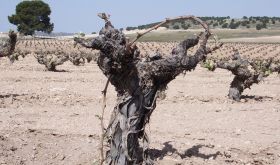
It was our final winery visit of the day. The sky was tinged with pink, the volcano puffed smoke into the twilight and the grasshoppers were singing. Surrounded by a vineyard steeped in the scent of wild Mediterranean herbs, we burst into laughter. That surreal moment marked a turning point in our professional lives. Mousiness was no longer an abstract concept – it had a taste, a face, a memory.
Naturally, I wanted to learn more.

Despite a lack of hard data, mousiness appeared to be on the rise. Usually microbial in origin, it was most commonly associated with Dekkera/Brettanomyces and certain strains of lactic acid bacteria. Low-intervention wines with little or no added SO2 seemed more susceptible, which may explain its increasing prevalence alongside the rise of natural wines.
Furthermore, wine literature noted that around 30% of professionals couldn’t detect mousiness at all. If true, that could spell financial trouble for producers with this specific anosmia, unknowingly bottling and selling mousy wines. Although many consumers, due to unfamiliarity, wouldn’t necessarily identify mousiness as a fault, it could still negatively influence their perception of quality, ultimately impacting repurchase rates.
Could repeated exposure to clear benchmarks improve detection? That one vile benchmark in Etna had certainly worked for me. Some of my colleagues needed just one vivid example to make the connection; others, who had previously identified as anosmic to mousiness, required several tastings to ‘open their receptors’. Even so, all showed improvement over time – though with varying sensitivity levels.
These informal experiences became the foundation of my final Master of Wine research paper, completed seven years after that fateful trip to Sicily. The findings were illuminating: wine professionals can increase their sensitivity to mousiness through repeated exposure, echoing earlier research on compounds like diacetyl and linalool. In fact, just a few benchmark tastings were enough to ‘induce’ sensitivity in most participants.
Given that mousiness is absent from most international wine-education programmes, it’s hardly surprising that so many professionals struggle to detect it. They simply haven’t been taught what to look for.
That said, true specific anosmia likely exists. In my study, however, only one out of 80 participants remained unable to detect mousiness after multiple exposures – suggesting that the real percentage of specific anosmics is far lower than the oft-cited 30%. What seems more relevant is the combination of individual sensitivity thresholds and the varying concentrations of mousy compounds in wine. Rather than a binary ‘can or can’t detect’, it’s more accurate to think in terms of a spectrum – and many who initially appear anosmic are, in fact, inducible.
If you reflect on your own ability to detect cork taint, chances are it has improved over the years – and your tolerance for it has likely diminished. I remember, once upon a time, drinking corked wines quite happily, none the wiser. Now, even faint traces are intolerable. The same principles apply: awareness, familiarity and repeated exposure are key to identifying wine faults.
Many of us have been in that awkward position, tasting a wine with another wine professional who can’t detect the mousy off-flavour, making any discussion feel futile. But understanding your own blind spots is essential, especially if you’re selling or making wine. I was reminded of this during a recent visit to a charming Italian restaurant in London. The sommelier enthusiastically recommended a red Aleatico by the glass: ‘It’s so incredibly fruity’, he said. Would I like to try it?
I did. To me, the wine reeked of mouse urine, baby sick and decaying meat. Our descriptors could not have been more different. I won’t take wine suggestions from him again – and I’ll likely skip the restaurant next time, too.
Back to basics
Detecting mousiness |
|
Mousiness is a wine fault caused by three key compounds: 2-acetyltetrahydropyridine (ATHP), ethyltetrahydropyridine (ETHP) and 2-acetyl-1-pyrroline (APY). These compounds are generally not volatile at the wine’s low pH but become perceptible when exposed to the higher pH of saliva. As a result, mousiness is rarely noticeable on the nose and is instead detected in the wine’s aftertaste – setting it apart from most other wine faults. Very low concentrations can sometimes first be perceived as long as 20 seconds after the wine has been swallowed. Individual differences in oral pH may help explain why some people are more sensitive to it than others.
Descriptors of mousiness vary depending on its concentration and the taster’s sensitivity. At high levels, it can resemble mouse-cage bedding, buttery popcorn, overcooked basmati rice, vomit or rotten meat. At lower levels, it may present as earthy, nutty or simply as a muted fruit profile. |
Photos are the author’s own.
Tone Veseth Furuholmen’s MW thesis, Mousiness in wine: an investigation into the effects of repeated exposures and systematic training on wine professionals’ sensitivity to mousiness, is available at mastersofwine.org.