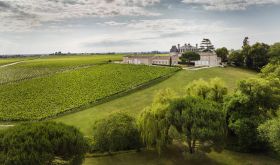
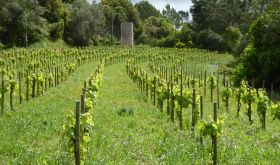
Anyone keen to buy into the 2007 vintage but less than enthusiastic about bordeaux should think seriously about Germany’s exceptional 2007 vintage. Europe’s weird weather pattern last summer may have made life difficult for vintners growing red wine grapes on the Atlantic coast but played nicely into the hands of those growing Riesling on the banks of the Mosel and Rhine.
The key was the extraordinarily warm April that speeded up the vines’ development so much that the flowering was a full three or four weeks earlier than anyone had ever known, in May. If the summer had been hot this would simply have moved the entire process forward so that some fairly rapidly-ripened grapes would have been picked earlier than usual.
But for German vine growers the low temperatures of July and August last year were a blessing. Thanks to the early flowering, the vines were already relatively advanced but the cool summer slowed down the ripening process so that the grapes, especially the all-important and usefully hardy Riesling, always the last to be picked, could take full advantage of the fine weather in September and October, with some of the last grapes not harvested until early November.
If there had been serious rain, or continued cool weather, in September and October, then the grapes might not have ripened fully at all but this was a perfect autumn – much drier than in Bordeaux, for example – during which the most patient vintners benefitted from the grapes’ long, slow maturation on the vine. Dry weather, daytime temperatures around 20 deg C and cool nights kept the grapes healthy but not overripe and allowed vintners to take their time. This was in stark contrast to the 2006 harvest that had to be crammed into a two week window once the grapes were sufficiently ripe but before the rot set in.
That said, there were many that were panicked into picking immediately after the rain at the end of September 2007. Sugar levels were already impressively high and the official advice from the wine institutes was to pick rather than risk further rain and subsequent rot or dilution. Fortunately the most fastidious quality-conscious growers held on until acidities, still seeringly high at the end of September, fell to more harmonious levels. “Real ripeness began at the beginning of October, says Helmut Dönnhoff, “and by mid October the balance was perfect.”
The result was that the growing season was the longest anyone has known. The classic length of time from flowering to picking was once 100 days but Erni Loosen of the Mosel reports that his last-picked grapes, for an Erdner Treppchen Auslese, clocked up 170 days of ripening.
There was some noble rot, which can be tasted in about one in four of the Auslesen I have so far tasted, but 2007 will not go down in the history books for its very sweet wines. Spätlese, both dry and fruity styles, seems to be the vintage’s forte. Egon Müller managed to make some Beerenauslese from his legendary Scharzhofberg vineyard which is still fermenting, but admits that he should have picked his Eiswein on 16 Nov, rather than wait until the 22nd. Just one valley down the Mosel at Maximin Grünhaus, Carl von Schubert did manage to pick his frozen grapes on 16 Nov, but after investing 40 man hours in an attempt to make a Beerenauslese, ended up with just two litres of sticky juice.
The 2007s are – glory be – wines to enjoy drinking rather than wines to notch up ripeness and auction records.
This seems entirely fitting in view of the most wonderfully inspiring tasting I took part in two months ago at Schloss Johannisberg in Germany which proved once and for all just how magically long lived German Riesling can be.
This tasting, on a sunny April morning in the old stables of this historic estate, was of 22 Rieslings from some of the best vineyard sites via renowned cellars. It took us back through the 20th century from a sumptuous 1999 dry Riesling from the late Georg Breuer in the Rheingau to a rather faded 1900 Bassermann-Jordan from the Pfalz, made in an era blissfully unaware of the intricacies of labelling imposed by the German Wine Law. (It was trumped by an 1899 tasted later than day in the cool depths of the Cistercian Kloster Eberbach.)
Virtually all of Germany’s most revered wine estates were represented, certainly all those mentioned above plus Bürklin-Wolf, Castell, Christoffel, Fritz Haag, Heyl zu Herrnsheim, Karthäuserhof, Koehler-Ruprecht, J J Prüm, Niederhausen-Schlossböckelheim, Schloss Schönborn, Schloss Reinhartshausen, Dr Thanisch and Robert Weil.
Seven of us wine writers had been lured from as far away as Ohio and Japan because of the persuasive powers of one of our number, Gian Luca Mazzella of Italy. Italy is not famous for its consumption of German wine but Sr Mazzella is clearly a man to be reckoned with. He had decided he wanted to write an article and make a documentary film about a century of Riesling “as a contribution to the so-called Riesling renaissance”. The VDP association of top German producers said that he would have to share the experience with the rest of us (numbers being limited by the number of tastes that can be squeezed out of a single bottle) and then the Italian apparently set about cajoling his favourite producers to give up one of their most precious bottles. Several of them told me ruefully that he had “pushed very, very hard”.
He tried to push me too – into tasting without either spittoon or laptop because neither was deemed aesthetically pleasing by his cameraman but I’m afraid I resisted, and I am delighted that I did because these amazing wines deserved every sober analytical sinew and every paltry word of description I could muster.
This was one of the most pleasurable wine tastings I can remember, with each wine so distinctively different from the last, and not just in terms of their structure. All but the oldest wines came with the usual Germanic set of vital statistics in tow. The original grape ripeness readings varied from 81 (for a dry 1931 Rheingau Cabinet) to 200 Oechsle (for one of the Rheingau’s greatest sweet wines. Steinberger TBA 1921). Alcoholic strength varied from many sweeter wines with just 8% to Koehler-Ruprecht’s Auslese trocken R 1990 that weighed in at 13.04%. But the most exciting differences were in flavour, always expressing the precise character of the vineyard where they were grown. This surely proves what I have long maintained, that Riesling the most eloquently expressive grape in the world. I simply cannot imagine another combination of grape variety and country that could have yielded such an extraordinary array of different sensations. And all of this without a trace of new oak.
There was the most delectable line-up of great sweet Rieslings towards the end of the tasting but the two most memorable wines for me were examples from just before both world wars. The 1911 Auslese from Weil was quite dry because it was only after 1917, when German vintners learnt about filtration and stabilisation, that they could afford to leave unfermented sugar in their wines, while Castell’s 1937 Naturrein was quite incredibly youthful, utterly natural and quintessentially spring-like.
Gian Luca concluded this landmark event by observing that he hoped that our next tasting of such rariteis would be even better – cheeky boy.
See our tasting notes on these 20th century rarities and on about 450 German 2007s.