Will sweet wines ever come back into fashion?
One of the more admirable side-effects of the sluggish sales of 2001 red bordeaux is what those wine collectors left with some spare cash in their pockets have chosen to do with it. Many of them have decided to invest in wines that were more obviously successful in 2001 – not just the German wines I wrote about last month but, at long last, the great sweet white wines of Bordeaux.
To make a bottle of top-quality Sauternes or Barsac takes so much more effort and money than one of Pauillac or Margaux, it makes me weep that sweet wines have for so long been ignored by the world's wine drinkers. Sweet wines have also tended to be relatively overlooked in the world's newer wine regions, even those such as California whose customers are such enthusiastic consumers of other sweet things.
Even in Germany, a country whose whole wine-labelling system is historically based on degrees of ripeness and natural grape sugar in the bottle, Hugh Johnson and I got short shrift recently from a young Bavarian television director when we chose to rave about a local Auslese on her programme. 'But that's sweet, isn't it?' was her disdainful response.
The funny thing about sweet wines is that it tends to be only reasonably knowledgeable wine drinkers who have the confidence to profess a liking for them. Neophytes cling to the belief that only dry wine is truly sophisticated.
Poor-quality sweet wines are indeed pretty disgusting, their sweetness running to flab and stickiness. But good sweet wines refresh the palate, leaving it stimulated by their whistle-clean combination of natural grape sugar, lively fruity acidity and, often, the densely vegetal flavours of botrytis, the so-called noble rot, a mould that expensively concentrates the sugar and acid in grapes affected by it, dramatically reducing the quality of wine produced but equally dramatically increasing its quality and potential longevity.
Some of my favourite 2001 sweet white bordeaux on the basis of a first tasting last April were Châteaux Suduiraut and Rieussec followed by Coutet, Guiraud, Lafaurie-Peyraguey and then La Tour Blanche and Doisy Daëne, but Châteaux de Malle and Rayne Vigneau were pretty promising too. (I have not tasted Château Climens nor the famous Château d'Yquem, where picking this year started as early as September 12.)
The 2001s will not be bottled until next year but the 2000s are already in commercial circulation. This may have been a less glorious vintage in Sauternes but the Château Doisy Daëne 2000 (£11.99 a half bottle Waitrose/www.waitrose.com or $54 a bottle from www.finestwine.com which ships internationally) is pretty delicious: deep-flavoured, even savoury, clean and rich with the lovely undertow of botrytised grapes. This is the family estate of Denis Dubourdieu, Bordeaux's white winemaking guru, who also makes a particularly fine sweet white Cadillac at his more lowly property Château Reynon.
Another recent, very fine vintage for Sauternes and Barsac was 1997, in which Châteaux Climens, Coutet, Rayne Vigneau, Suduiraut, La Tour Blanche and Nairac are particularly delicious, with Châteaux Giraud, Sigalas Rabaud, Rieussec, Doisy-Daëne, Caillou and Clos Haut Peyraguey as well as Clos Daddy and, relatively new star, Cru Barrejats just a notch behind.
France has another sweet white wine producing region dependent on ultra-ripe Sémillon, Sauvignon Blanc and Muscadelle grapes just inland and north of Sauternes and Barsac. For years the Dordogne languished, making rather ordinary, sticky and often sickly wines because standards were set too low. But today in the sweet white wine vineyards south of Bergerac there are some truly ambitious producers who are slowly dragging their neighbours uphill with them, making great sweet wine that matures rather faster than top-quality sweet white bordeaux.
Most notable among these are Bruno and Claudie Balancini at Château Tirecul La Gravière in Monbazillac. On green slopes in the lee of the woods that separate them from the famous old Château de Monbazillac, they farm just over 20 carefully tended acres which they may pick through as many as 11 times in a single harvest in order to have every grape at optimal ripeness and concentration. Unusually, their predominant grape variety is Muscadelle. Their average yield is often below 10 hectolitres per hectare (less than a fifth the average in Bordeaux's great red wine district the Médoc, for example).
It is hardly surprising therefore that their top wine, the liquid gold Cuvée Madame made only in seriously successful vintages (so no 2000), costs 80 euros for half a litre at the cellar door, when there is some to sell.
Just down the road in the Saussignac appellation Englishwoman Patricia Atkinson is also making superb sweet wines. Her Sémillon-dominated Clos d'Yvigne 1997 is a slightly more modest £18 per half litre at Justerini & Brooks of London SW1 and Edinburgh. Unlike the best Sauternes of the same vintage, this, the product of a mere seven different pickings, is absolutely ready to drink: gorgeously soft, bouncy, broad and exuberant.
And if all of these seem too expensive, Waitrose (www.waitrose.com) is offering the explosively sweet bargain Monbazillac Château Les Sablines 1998 at £6.99 per half-litre. All of these wines are matured in barriques for extra density.
Peter Wylie Fine Wines in Devon, England ([email protected]) has stocks of the two 1996 Ch Tirecul La Gravière bottlings and is happy to sell by the single bottle. The regular cuvée is £20 apiece while the Cuvée Madame is £50 a bottle. Prices are subject to delivery charges and, for British residents, VAT.
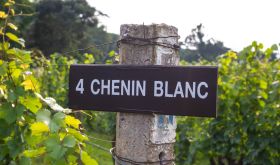
There are pockets of great sweet white wine production all over the world, of course – notably in Austria, Germany, Hungary (Tokay) and all over Italy – but France's third great sweet white wine region is the Loire, where some truly great, and particularly appetising, sweet whites are made from botrytised Chenin Blanc grapes carrying such appellations as Vouvray (where Huet and Domaine des Aubuisères are exceptional) and Coteaux du Layon (where Château de Fesles, Domaine des Baumard and Patrick Baudoin are names to seek out).
Sweet wines are best with foods just slightly less sweet than the wine – a fruit-based dessert perhaps. Serving your guests a bottle of seriously good sweet wine at the end of a meal will make that meal all the more distinctive, while leaving them with a deliciously sweet taste in the mouth.