As a wine lover of some years' standing, I am puzzled by one thing. Why in all the buzz and writing about wine is so much more attention paid to red wines than white?
It wasn’t always so. Readers as – ahem – experienced as me will recall the white wine boom of the late 1970s and early 1980s when Chardonnay was king and the produce of what little Chardonnay was planted then was stretched, almost infinitely in some cases, with wine made from whichever light-skinned grapes were most common: Thompson Seedless (aka Sultana) and French Colombard in California, Chenin Blanc in South Africa, and all sorts of grapes meant to be dried rather than fermented in Australia.
Then, inevitably, the white wine boom turned into a red wine boom and growers scrambled to plant new, fashionable dark-skinned varieties. First Cabernet Sauvignon and subsequently Syrah/Shiraz with a host of other, more exotic vines. The result in many regions however has been a shortage of grapes for white wine, because over all this time and despite all the focus on red winemaking by producers and wine commentators, demand for white wine has remained remarkably healthy.
Even Americans, who of all nations have been bombarded most vigorously with the ‘red wine is good for you’ message, have remained remarkably faithful to white wine. It was not until 2004 that red wine sales very slightly overtook those of white and even today only just over four bottles in every 10 sold in the US contain red wine. (The White Zinfandel phenomenon still accounts for nearly two bottles in every 10.)
To take another important market for the world’s wines, Britain, white wine outsells red by quite a margin, as of course it has always done in Europe’s other big wine importing country Germany. Despite the frenzied planting of red wine grapes in Australia, Australians still consume far more white wine than red and the picture in South Africa is remarkably similar.
But an analysis of wine literature might suggest that we live in a red wine drinking era. Or is it just that white wine is rather boring, mass market stuff not worthy of the attention of the world’s wine writers and wine aficionados? Surely not! There is a heck of a lot of extremely boring, mass market red wine too, and there are just so many great white wines which I think get rather short shrift compared with their red counterparts.
This is mirrored in my experience in wine lovers’ cellars. They are assailed on all sides by advice on which red wines to buy, and in general by more red wine offers than white wine offers from the wine trade, so the result tends to be wine collections skewed out of all proportion to consumption towards red wines. White wines are much more likely to be bought at short notice.
It is true that in general red wines tend to need longer to mature than white wines, so it probably makes sense to have more reds than whites in total but most wine collections I know comprise between 80 and 90 per cent reds even though they are owned by people who drink and serve no more than 60 per cent reds.
This state of affairs is all the more bizarre when we consider the evolution of our taste in food. The classic red wine foods – big chunks of meat – seem to me to be well in retreat. Most of us are eating lighter foods, much more fish, more vegetables and salads, and more spicy dishes, none of which is a natural partner for the full bodied, tannic red wines that command so much attention from wine writers and wine lovers. Meanwhile, more and more authorities are recommending white and not red wine with cheese.
And there is surely yet another reason why we should be turning our attention to alternatives to big, beefy reds: the small matter of global warming. I don’t know about you, but I find there are whole months of the year when my fancy turns very definitely away from bodybuilder reds towards wines that can provide more refreshment, preferably wines I can chill that will in turn cool me.
This, I’m sure, is a factor in the third wine boom I have so far witnessed, the perhaps inevitable rosé wine boom which has been very noticeable in the last couple of years in my native Britain where pink wine now accounts for eight per cent of all wine sales (having tootled along at less than three per cent for years). And I see a real opportunity for lighter weight reds which in hot weather can be served cool and give some of the satisfaction of a red wine.
But my main purpose here is to restate the virtues of white wine. I’ll restrict myself to dry whites here; sweet wines are in a delicious if underrated compartment of their own. Dry white wine can be every bit as ‘serious’ as red. I have always wondered, for example, why conventionally white wine glasses are smaller than those for red wine when many a full bodied white benefits from aeration just as much as a red. In fact I often decant whites, and reckon they look far more beautiful in a decanter, all glistening and gold, than a dark, brooding red.
Many a white wine deserves cellar space too. Australians need no lecture from me about the magic transformation of Hunter Semillons after eight or so years in bottle. White burgundy has always been a candidate for bottle ageing and I have memories of two nineteenth-century Montrachets that should serve as encouragement to the producers of today’s white burgundy to make wines as dense, rich and ageworthy as these. It is true that for some time the exciting progress in average red white quality in the Côte d’Or has not been matched by a similar improvement in whites, but I detect a sea change here – perhaps encouraged by pressure from the Mâconnais to the south, where the average quality of wines such as Pouilly Fuissé and even some of the white Mâcons has risen so spectacularly over recent years. All the more reason then to lay down the best Meursaults and various Montrachets in the future.
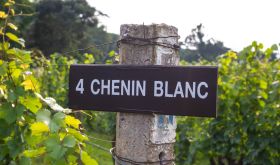
More good news for white wine lovers is a noticeable increase in quality in practically all other French white wines, even in regions not immediately associated with whites such as the Rhône Valley and Bordeaux. In the last two or three vintages, wines such as white Châteauneuf-du-Pape, white Vacqueyras, even some white Côtes du Rhônes, seem to have a new lease of life and the best can be better than the average white burgundy. In Bordeaux too, the best white Pessac-Léognans, oaked blends of Sauvignon Blanc and Sémillon, are now great wines by any standard – particularly in the 2004 and 2006 vintages, and not just the famous Haut-Brion Blanc, Laville Haut-Brion and Domaine de Chevalier Blanc. And in the Loire, Dry Chenin is the new excitement, complex, full bodied dry wines made from the grapes that were once destined for sweet Anjou, Saumur and Vouvray – a development mirrored in Tokaj in Hungary where Dry Furmint is the latest fashion.
Then there is Italy. Okay, Italy like France and Spain is a red wine country overall, but the single most exciting recent phenomenon in Italian wine for me has been the revolution in white winemaking. It is now just so easy to find fantastically fruity, nervy, exciting whites such as Verdicchio, Soave, and a host of varietals and blends from all over Friuli and Alto Adige.
Even Spain and Portugal are becoming more white wine conscious – and I haven’t even mentioned the Riesling revival yet. Both in and outside Europe, a white wine revolution is being conducted. We’d be foolish to ignore it.