
The second course of our dinner at the Tawaraya ryokan, a traditional inn where one sleeps directly on tatami mats, in Kyoto, Japan, contained a series of dried and pickled fish topped with a hiragi leaf, very similar but smaller than a holly leaf. (The picture is of just part of a room service meal at another traditional hotel, the Tokiwa in Kofu, renowned for its garden.)
Our kimono’ed waitress explained that this was a signal that winter had recently given way to spring. She then pointed to a painting on the wall, which, she added, had been hung at the same time and showed in figurative terms seven gods driving out the devil, another symbol that the cold months were finally over.
The following day these sentiments were echoed with the delivery of the fourth small dish at Tenmatsu, a small tempura restaurant in Kofu, a city an hour and a half west of Tokyo that offers spectacular views of nearby Mt Fuji.
This ingredient was round, crisp and brown on the outside from its brief immersion in sesame-oil batter and most closely resembled a walnut to my inexperienced eye. It was, in fact, fukinoto, the unopened bud of the Japanese butterbur, or sweet coltsfoot, that is on menus only at the end of February and early March. Soft and slightly bitter, like so many Japanese ingredients, it brought a smile to the face of my host and chef just across the counter. With the appearance of this ingredient, spring has finally arrived, they agreed and smiled in anticipation.
The rigour with which Japanese chefs follow the seasons is remarkable. The current season’s tightly furled plum blossom, as adjuncts to soups or decoration on plates, gives way to the far better known cherry blossom season in early April and then to peach blossom. But it is the manner and thoroughness with which these individuals make use of these ingredients throughout their menus and restaurants which continues to differentiate them from their counterparts in the West.
My recent trip to Japan left two other strong impressions. The first was that as Japanese restaurants are so neat and compact they exist in the most inconspicuous of settings. A simple-looking building may often house a small restaurant on the ground floor with perhaps only 20 seats at the most, uneconomical in the West, with the entire family in attendance.
The second distinguishing factor is the chef’s, or restaurateur’s, obsession – and I don’t think this is too strong a word – with one single cooking style or ingredient, again very different from the West.
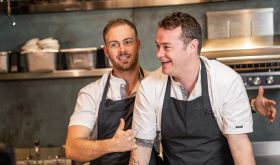
At Tenmatsu, the tempura chef, Masao Yokoi, elegantly attired in a crisp, white shirt and jacket with a black tie and sporting a genial expression despite standing for seven hours a day in front of his nabe, or pot, frying each ingredient for the requisite number of seconds, obviously derives great pleasure from his profession. But running such a one-man show does have two singular disadvantages, he explained. Firstly, as its only chef who often prepares menus of 15 different courses, he has to keep a careful eye on the bookings to ensure that not too many customers arrive simultaneously. And, far more costly, when he is unwell, the restaurant has to close.
It was to investigate Tokyo restaurateur Tetsuhiro Yamaguchi’s long-held obsession with rice that i found myself making my way up the most unlikely entrance to his restaurant, Kokoromai (Heart of Rice), in the Minato-ku district of the capital.
It is located in a corner building, of which the ground floor belongs to an estate agent, and it can be reached only by an outdoor, wooden staircase that faces across the street to a concealed, raised expressway.
The interior is more typical, at least by Japanese standards. A tiny, open kitchen with three chefs cheek by jowl facing a low counter; a few other tables that add up to a maximum of 20 customers at any one time; and the whole created out of plain brown wood with every available space used to great effect.
Yamaguchi opened this restaurant six years ago, and subsequently its sibling Komefuku (which combines the Japanese words for rice and happiness) because he believes that rice is part of the DNA of the Japanese people but that they are in danger of losing sight of this and its integral value. 'Today, we are eating too much potatoes, pasta and bread instead', he explained.
My attempts to ask any more questions were quickly swept aside until I had been made to work. On a long table to one side were six clay pots containing half of the dozen different varieties of Japanese rice he lists on his separate rice menu, which also describes the Japanese prefecture each was grown in, the name of the producer and the particular variety.
Although each variety is cooked in precisely the same fashion, on immediate inspection there was an obvious distinction between several of them even to the untrained eye, with one or two being definitely milkier in colour and two somewhat rounder than the others.
And there was a marked difference on the palate. The rice from the Yamanashi prefecture seemed definitely Japanese in that it was quite sticky; two different varieties from the Yamagata prefecture to the north of the country had a stronger, chewier feel to them; that from Miyagi was the most refined and an excellent foil for sashimi; while the bowl of rice from Fukushima was so easy to eat that I could have emptied the bowl immediately but that would have left no appetite for the rice from Shiga prefecture, to the west of Tokyo, whose small, nutty grains conveyed the strongest flavour, making it a subtle accompaniment to a small, grilled mackerel.
My enjoyment of his beloved rice now obvious, Yamaguchi revealed some of the secrets behind his passion. Each year he tastes around 80 of the 150 varieties of rice commercially available in Japan to create his rice menu which is offered alongside a daily changing list of main course dishes and a range of the crucially important pickles (the menus are, regrettably, only in Japanese).
He buys only unpolished rice, which the chefs then polish the day before they need it. The rice is then washed using, in part, a softened mineral water and then kept overnight in water in the refrigerator. It is cooked, simply boiled without any seasoning, only as it is ordered.
Sitting opposite Yamaguchi, his passion for the unique restaurant he has created and for rice was obvious. Putting his hand on his heart, he smiled and added, 'Ï love rice'.
Kokoromai, 2 F 6-18-7, Shirogane, Minato-ku, Tokyo, tel 00 81 3 108-0072. Dinner only. Closed Sunday.
Tenmatsu, 4-2-4 Iida, Kofu, 00 81 55 228 8277.