Winemaker David Guimaraens of The Fladgate Partnership (Taylor, Fonseca, Croft – but no Douro table wines) wrote:
These 2011s are such a lesson for us, and fundamental to guide us into thefuture. In the 1970s and 1980s the Port trade narrowed down to a very small number of grape varieties, in contrast to the old vineyards of the Douro where there was a controlled mix of many more varieties. Over the last 15 years, and in particular from the lessons learned from the Vargellas Vinhas Velhas (we first bottled the 1995) and other old vineyards in our quintas.
I have recovered many of our local grape varieties, to the point where we actively plant 12 different grape varieties today (In controlled blocks rather than mixed plantings). I also only do co-fermentation, in the belief that it is at this point that they complement each other, rather than later in the tasting room. This is a riskier route to take as I have to commit myself in the vineyard, rather than by trialing in the tasting room. However my belief is that if we get it right, the final goal should be greater.
To me the 2011s show a clear division in the Port trade between a traditional philosophy of either old vineyards or a larger mix of grape varieties, and a trend to use a small number of very colour-intensive and tannic varieties. This trend almost distinguishes between traditional style vintage Ports (my preference) and more of a new world style with more obvious and luscious fruit.
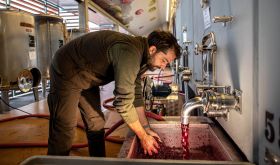
In the winery, I am very conservative with regard to our traditional foot treading in granite lagares. There is a delicate balance with this method that has been so well fine-tuned over generations, and where the influence of the winemaker is negligible. In this method we bring out the best of the grapes we are working with, and the winemaker concentrates in understanding his grapes. With the changes I refer to above, I am very happy not changing much with the traditional fermentation techniques, or when so, only in a very gradual form.
The spirit we use for fortifying is undoubtedly a quiet revolution and in my view responsible for the shining of the Vargellas Vinha Velha, where the much finer quality spirits we use today not only allow the fruit to express itself much more when young, but also the traditional 'dumb phase' of vintage [port] is nothing like it used to be in the past. This impacts the vintage Ports from 2000 forward. The Vargelas Vinha Velha is a good measure of this as both the extremely old vineyards and the fermentation in the same lagares as a century ago allow [us] to isolate the spirit as a differentiating factor.
The 2011s are also a testament behind the skill of the blending in the tasting room. This is also a critical part of preparing a Vintage Port. The 2011 year was not at all easy, and which components were put in the blend and their proportion, had completely different effects on the final result.
Your evaluation of our 2011s are a vote of confidence in our approach, and it is great to read how well you interpret in our Ports what we do.
Paul Symington of the family responsible for Graham, Dow, Warre, Smith Woodhouse, Vesuvio et al wrote:
Your article was especially important as there are 38,000 farmers in the Douro, of which 23,800 have an average of 800 sq m of vineyard, the size of a small garden. Only 857 farmers have over 8 ha of vineyard (their average is 17 ha each). The whole region has 141,000 people, almost totally dependent on grapes and wine. Tourism is in its infancy and there is no other viable economic activity. So an article like yours really does make a difference.
While Port actually grew slightly in the UK last year (volume and value), the long term trend in the standard Port qualities (France and Belgium particularly) is down. Total Port sales worldwide were worth €414 million in 2000 and were worth €359 million last year. So while we have done miles better than Sherry, these figures have meant very serious difficulties for many, many Douro farmers. Personally I think there is an excellent future for Port at the top quality end, [but am] more doubtful about the standard quality wines.
Some say that the natural laws of economics must be allowed free rein, and that it is inevitable that many will abandon their vineyards. But this means the destruction of a considerable part of the centuries of tradition in a very special region and a very great part of its social structure. These are the people who live in all our remote mountain villages.
What is helping, in a moderate way for the moment, is the growth of Douro DOC wines. Since about 2000, several companies and individuals have done a great deal to build the quality and standing of Douro wines in Portugal and abroad. But Douro DOC is still a long way from taking up the loss (in value terms) in the farmer’s incomes.
I do feel that somebody will champion the wines of the Douro in a significant way at some stage. These wines will eventually find a really prominent place in the world of wine.
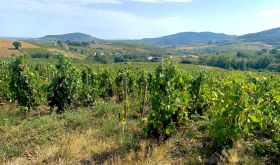
A whole subregion story is waiting to be told: wines from the Rio Torto versus the Pinhão valley; wines from the Douro Superior versus wines from the Alto Douro; north facing against south facing. Not one better than the other, just different. The grape varieties, the soil etc.
It is all quite special and above all the wines are getting really good.