
18 February 2020 Our man in Burgundy Matthew Hayes files this report on Burgundy today and the connotations of its most important road.
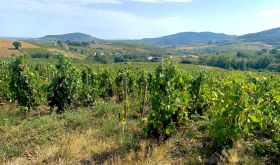
As you drive south out of Dijon you could be forgiven for thinking you were in a Steinbeck novel: an endless strip of down-at-heel tyre shops, empty furniture stores and a desperately forlorn miniature theme park. But if you blink, you are in Brochon, and Burgundy’s erstwhile Route Nationale 74 (now the prosaic D974) rolls out before you. To the east, the Saône plain (mostly cabbages, but a few vines), to the west, on your right, the Côte d’Or rises, relatively majestically, and it is vines all the way. Increasing in value and quality as you move up the slope.
As the RN74 scythes its way south-west, it neatly delineates the good and the very, very good, from occasional also-rans to the east. RN74 passes through every famous name on the Côte: Gevrey, Vougeot, Chambolle and Vosne. Nuits leads to Beaune and the final transition to whites after Volnay. Puligny and Chassagne are very much the end of the road.
I once had a mad-cap idea that I was going to cycle Route 66 in the US. My American brother in-law pointed out that, probable certain death apart, Route 66 was for cars, not bikes. Likewise, the RN74. The best way to see Burgundy’s vineyards is to take the Route des Grands Crus, which links all the villages from Marsannay to Chassagne. And the best way to travel it is by bike. There is nothing like getting down and dirty in a vineyard, especially in an effort to understand the notion of terroir, which is so essential to the Burgundian myth. With an electric bike it’s easy, mostly fairly flat, and you’ll be in Beaune for supper before a local train back to Dijon and bed.
Leaving Gevrey will give you a visual imprint of where is the Chambertin, and where the Clos de Beze. The exact geological why is no doubt too complicated and too much debated to fathom truly, but if you leave with just a what and a where, you will be more than two-thirds there.
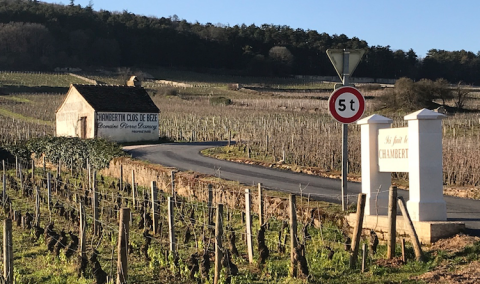
Terroir: Ici finit Le Chambertin, ici commence Le Clos de Bèze. Spot the difference.
As you stand, and you will, at the south-eastern corner of the Romanée-Conti vineyard (don’t pick the grapes), the notion of terroir will be revealed as at once compelling and confounding. Vosne-Romanée’s seven grands crus (73.35 ha/181.25 acres in total) are not much greater than the single grand cru Clos Vougeot (50.6 ha). Others have greater experience of the sheer variety of wine here than me, and, as ever in Burgundy, it is often the vigneron’s signature that marks the terroir as much as the soil. As Jasper Morris wryly notes of Burgundy and its intricacies in general, 'and so on'.
There are bumps here, hollows there, with well-trodden, dividing furrows in between. These are the differences that make up Vosne’s mosaic. You’ll probably leave none the wiser, but at least you will have witnessed terroir in situ.
If you time it right, you’ll hit Le Montrachet mid to late afternoon for a glorious bath of warm sunshine: perfect slope, perfect aspect, perfect exposure. At the very southern end of the RN74, it will all make sense.
The RN74 was also the name of a now-defunct wine bar and restaurant in San Francisco, and now Seattle; the brainchild of sommelier and winemaker Rajat Parr, with restaurateur Michael Mina. A rise and demise which neatly echoes the sentiments of my opening article. Reported on here by Nick in 2009, and clearly much regretted here by the San Francisco Chronicle in 2017, this particular RN74 was a hedonistic, raucous place where burgundy and, most laudably, its grands crus were served by the glass to a thirsty, engaged public.
It opened just when burgundy was hitting the big time. Burgundy was the collector’s choice, the sophisticate’s choice, and at RN74, on tap. The subsequently spiralling prices for burgundy, and particularly ‘collectible’ burgundy, put paid to the concept, and it closed in 2017. Hedonism had become prohibitively expensive, and prohibition is surely the nemesis of hedonism.
Now, I am as much a hedonist as the next person. RN74 seemed to me a really great idea: La Tâche by the glass for a hundred bucks? Who wouldn’t? When else am I going to drink it? I certainly couldn’t afford a whole bottle today.
In a similar effort to bring Petrus (called Ch Pétrus then) to the common man, Selfridge’s were once selling it £32 a shot, until they fell foul of weights and measures. Killjoys are another enemy of hedonism. Both were incredibly laudable services to the wine consumer, indeed to the very idea of what wine is and can be.
Happily, the game is not entirely lost. If you do get down the RN74 you can stop off at Le Soufflot in Meursault, a favourite of just about anybody interested in wine on the Côte de Beaune and beyond. (See Nick’s review.) You won’t be drinking Petrus or La Tâche, but you can have a fine stab at a wine list replete with wines rarely available elsewhere, and at prices definitively unavailable elsewhere.
In the vineyards
As for Burgundy and its weather, well today it’s blowing a gale. January has been France’s second warmest on record, and with only a couple of refreshingly clear, but short, cold snaps, it has been unseasonably mild. So far, so absurdly new normal. The C-word (climate, not coronavirus) is on everyone’s lips and I’ll have more on this coming up.
The vines are getting all the rest they can, but on Friday, in piercing sunshine, under a bright azure sky, pruning was well underway. For now, the vineyard staff are in the generic and village vineyards. The premier cru and the grand cru vineyards remain untouched. I asked a well-known producer for an explanation and this was the emailed reply:
'In general terms, and when there is a lot of vignoble to prune, well, you have to start somewhere, so start where any problems will cost you the least: generic and village level. March is the optimum month for pruning as it leaves new shoots, buds and secateur wounds less susceptible to frost and any ensuing complications. Pruning also sends a message to the vine to start growing with sap rising and shoot growth being provoked earlier if the pruning is done earlier. By leaving the most profitable vines until last, you limit the financial risk and give your top vines valuable extra zzzz’s.'
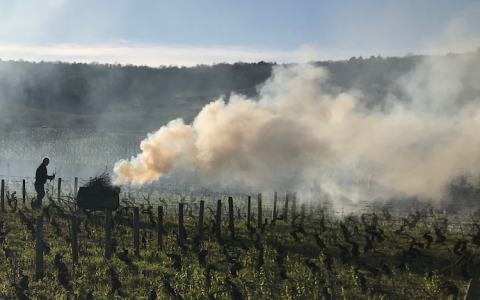
As my photograph below in Chambolle shows, the wind was a surprising spicy four on the Beaufort scale…