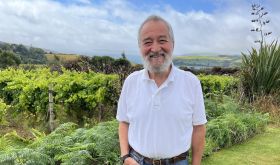
It’s 2008. Tine and Marc Verstreate have just set eyes on a neglected vineyard in the Haut Languedoc for the first time and have fallen in love. Over the next eight years and beyond, they will lovingly restore the vineyards and winery into Chateau Castigno. As their dream unfolds, they’ll also start to expand into the neighbouring village, breathing new life into its abandoned buildings.
These buildings are purchased, initially, to provide accommodation for those working the vineyards, but will eventually give birth to a hotel concept like no other. The result, Village Castigno – a Hybrid Organic Wine Village – is wine tourism at it’s very best.
We arrived in the tiny village of Assignan, in August 2018, after a cross-country drive from Nice. We had stuck to the main autoroutes, but it had been a scenic ride nonetheless, taking in the diverse landscapes of Provence from the Cote D’Azur through the Camargue flats and past the Cevennes, before finally arriving into the Languedoc. This was my first visit to the Languedoc region, and I was not prepared for its beauty.
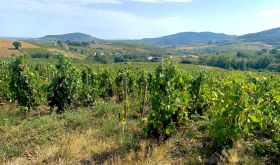
Turning away from the coast at Beziers, we head North West into winding roads, vineyards and a scattering of picturesque villages. Sometimes driving on holiday is not at all like you imagine it will be, but this is postcard perfect.
We were staying at Village Castigno for one night en route to our final destination – Cahors, a small wine region about 200km north west of here. I had chosen Castigno largely because the unique concept had me completely intrigued, and by happy coincidence it was pretty much at the halfway point of our road trip. The fact that it had a winery on site offering tastings was just the icing on the cake.
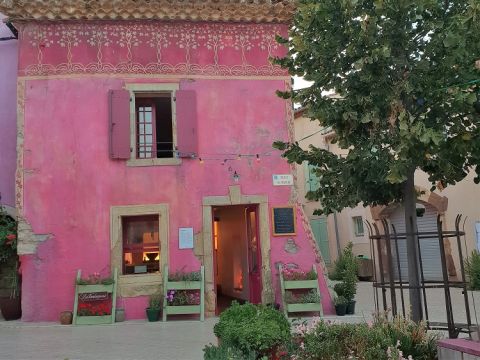
We park on the outskirts of the village square, and walk the rest of the way to reception – a bright pink building situated in an old épicerie. This is not a hotel as we know it, it is a collection of buildings dispersed across the winding alleys of this quintessential South of France village. All of the hotel’s buildings are painted in pinks, reds and purples – wine colours – highlighting them from the few which are not part of the complex. There are restaurants, rooms and suites, a private villa, a yoga and massage studio, and a little further out, the winery.
We are shown to our room, one of the hotel’s Vendangeur Rooms (vendangeur being the French word for grape pickers, or harvest workers). These are Castigno’s standard rooms, but there is nothing standard about them. Housed in old stable buildings a short walk from the village square, each room is named for a wine grape. We’re staying in Roussanne, a cosy room of opulent purples decorated with reclaimed furniture and upcycled materials, and featuring its own terrace.
What we don’t find in the room is a tv or the Wifi code – neither are offered as the hotel invites its guests to enjoy a digital detox. The ethos of Castigno offers guests more than just spending a night or two in a sustainable hotel to alleviate some guilt over their own carbon footprints. Guests are instead immersed in peaceful village life, a reminder of a simpler time and of what’s important. Here, sustainability is not a buzzword – it’s a way of thinking, a way of life.

After cooling off in the pool, enjoying its views of rolling greenery and vineyards, we head to the Chateau for a pre-booked tasting. The winery is the only building not to boast the hotel’s trademark colours. This remarkable building has been coated with cork to reflect the sun and provide optimum cellaring conditions. It’s also the shape of a bottle, if viewed from above, and blends sympathetically into the landscape (see main photo and photo below).

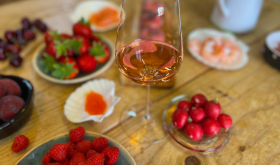
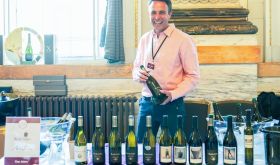
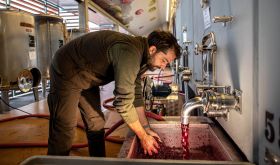
Our tasting includes five wines (white, sparkling rosé, three reds) and the estate gin. All of the wines, and the gin, are organic. The winemaking here is approached with careful consideration to the environment. As a relatively new winery, Castigno did not have the burden of adapting long held practices to be more sustainable or environmentally conscious. Rather, they had the privilege of designing all their practices with the environment at the forefront, and it shows.
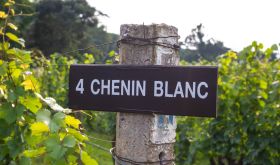
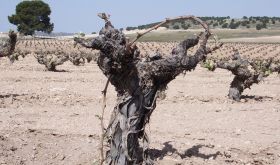
The vineyards here are free of artificial fertilisers, pesticides and herbicides. They use Percheron horses to farm the land and transport the grapes, which are harvested by hand, to the winery. They keep a small flock of sheep to fertilise the soil with minimal damage. Waste is reduced as far as possible – they've even found a use for excess wine residue by sending it to a brewery in Belgium.
The estate produces more than 100,000 bottles each year but the majority are consumed within the hotel grounds – surely giving this label one of the lowest carbon footprints around.
We spend the rest of our stay soaking up the atmosphere at La Petite Table, one of the hotel’s three restaurants. A bistro-style eatery serving comfort food classics and tapas, La Petite Table has a real focus on local produce – and of course it’s all washed down with the estate’s wines
On summer evenings, guests eat out on the terrace which fills the village square – the very heart of the hotel. With red parasols, purple blankets and a community feel, the vibe is warm, inviting and full of small-town charm. There are few better ways to spend a night in France than this.
The following morning, after a sublime breakfast of market fresh, local produce, we reluctantly check out. We are sent on our way with a complimentary bottle of the estate’s merlot and a feeling that we’ve only scratched the surface of Village Castigno.