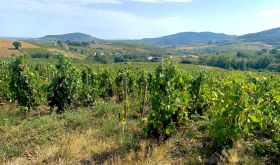
Our struggles can become our strengths. When we go through hardships and decide not to surrender, we cultivate and refine our assets. And couldn’t the same parable partially be used to explain the recent success of the Priorat wine region? I am convinced that an important reason for its triumph has to do with the perseverance, dedication, hard work and old vineyards of the people who stayed behind during the exodus of the young.
Priorat is a small wine region centring around twelve villages. The second smallest village is El Lloar, with only 105 inhabitants and five wineries. In 1900, just a few years after Phylloxera struck the region, the village was the home to 537 people, many of which were involved in the wine trade in one way or another. El Lloar is a typical example of how life in the region has changed over the years; from relative prosperity to hardship to the new age of fame. The Torres family established their Priorat cellar on the outskirts of El Lloar, and the tiny basement of a village house is the location of one of the region’s smallest wineries, Clos93. This is where the real story begins.
What do a poet, a young wine maker, and one ageing wine farmer have in common? A project called Garnatxa del Po. Meet Ximo Salvador, a wine farmer with deep roots in the black slate soils, or licorella, of Priorat. On his lands, he has a small vineyard of old vines of an unidentified variety that has always been referred to as Garnatxa del Po; Garnatxa being the Catalan name for Grenache. His nephew, Ruben Sabaté, is a talented young winemaker who has recently started the family cellar Clos93 with his brother Josep-Maria and another uncle by the name of Pepo, also a wine farmer. Add to this blend a family friend, the poet, winemaker, sommelier and food analyst Mar Galvan, and the cast is complete.
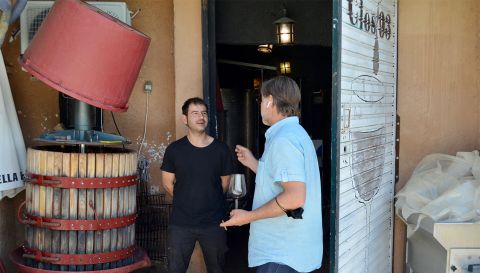
Let us imagine a late evening and a couple of nice bottles of wines from the family cellar as the genesis of the project. Someone blurts out “Let’s make a monovarietal wine - 100% Garnaxa del Po!”.
Ximo has tenderly cared for his old bush-vines during his whole life, yes, they were planted the same year that he was born, in 1941. He has resisted the trend of replanting his land with more productive varieties, but so far, the humble harvests have been sold to the local cooperative as the more common “Garnatxa Negra”, or a red Grenache. Still, Ximo knows that there’s something special about his Garnatxa del Po. And his young nephew agrees.
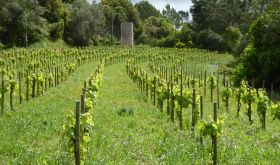
They have a very limited source of materia prima, the illustrious grapes of the Garnatxa del Po. The miniscule vineyard of 0.09 hectares consists of only 200 low-yielding vines. It’s clear that they need to make something truly special with these rare grapes, because rare they are.
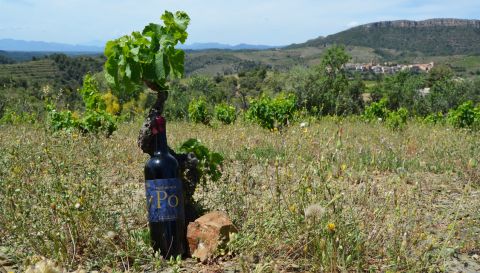
While the neighboring vineyards planted with the more common Grenache are generally harvested during the month of September, the grapes of these 200 vines do not mature fully until the end of October. The leaves and berries also differentiate these vines from their cousins. So, what are they? Our friends make a big thing of finding out the identity of these vines, yet in a typical quiet and modest Catalan way, and contact both the regulatory council of Priorat and INCAVI, the Catalan Institute for Viticulture and Wine. They want to know what they are dealing with before kick-starting the project with the first micro vinification. The outcome of the investigation shows that it is indeed a very rare Grenache clone, and that Ximo’s old vineyard is the only one so far recognized.
But this unique variety has a long history in Priorat; it was referenced by the Carthusian monks that settled here in the 12th century and manuscripts confirming this can be found at the Museum of History in Madrid. However, in the yearly statistics of Priorat, they are grouped together with the rest of the Grenache family.
Officially the project was initiated with a selective harvest in 2013. The grapes are picked manually and carried to the family cellar where they are foot-trodden and fermented in open barrels. Mar and Ruben take great care of the fermenting must, with a clear vision of how they want the wine to develop. The objective is a fruit driven wine, reflecting its terroir and the grape variety, and they decided not to go down the usual route of barrel ageing. However, they realized that the wine needs a minimum of two years in the bottle to smooth out the edges and fully develop its potential. A rare grape deserves a special treatment, so they decided to temporarily bury the bottles in a hidden and secret part of the vineyards of one of the uncles (location unknown to the writer). This underground ageing at a depth of two meters provides the perfect conditions for the wine, with tranquillity, darkness, a stable temperature and humidity.
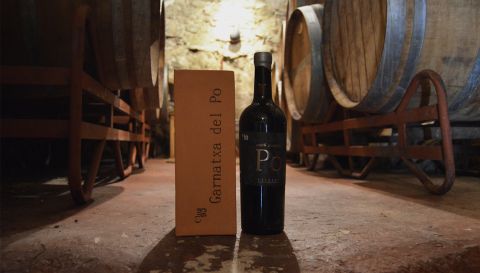
Once the bottles have been unearthed, they are carefully washed and labelled, and as a special wine requires an equally special packaging, they are individually wrapped in silky tissue paper and placed in hand made clay jars stamped with the name of the wine – Garnatxa del Po. Since the regulatory board does not officially recognize this grape variety, the wine can carry the peculiar name of this Grenache clone. As a final touch, Mar Galvan has composed an ode to this wine, which is attached to each bottle before it’s ready for delivery.
"La garnatxa del Po" by Mar Galvan
Brillaba coma la mas querida sol tras sol de trabajo duro,
Enamoraba por mi suculenta esencia y persistencia.
Arrancada de mi entorno fui desalojada por las manos que me cuidaron muchos anos,
Abandonada en un rincón de mi tierra.
Surjo del ayer con viveza y tenacidad
para recordar mis antiguos filamentos en textura y cremosidad.
Alojando mi viveza para quedarme en esta historia.
Soy de nuevo vigorosa, productiva, sencilla y complicada así soy yo …
____________________
In translation by Sinisa Curovic
I shone like the most beloved sun after sun of hard work,
I fell in love with my succulent essence and persistence.
Torn from my environment
I was banished by the hands that cared for me for many years,
abandoned in a corner of my land.
I emerge from yesterday with liveliness and tenacity
to remember my old filaments in texture and creaminess.
Accommodating my vivacity to stay in this story.
I am once again vigorous, productive, simple and complicated that's how I am …
This rare wine is sold long before it leaves the cellar, as it immediately attracted a dedicated following. In the first year of production our friends managed to launch 124 cherished bottles, the following year this fell to 84, but in 2015 it rose again to 115. From then on, production fluctuates at around 120 bottles annually. Of these rarities, a few bottles are reserved for the hero of this tale, Ximo the wine farmer for, without him, there wouldn’t have been any grape to vinify. And I’m sure that Mar and Ruben keeps a few bottles to themselves too.

If you get an opportunity to try this fine wine, I would say that you are in for a treat. It’s boisterous and complex. The period spent in its underground resting place has given the wine time to develop deep aromas of red and black fruit, cranberry preserve and ripe plum, with a hit of Mediterranean herbs, like a balsamic breeze from the sea. A good acidity provides freshness and liveliness to this medium to full bodied wine with soft tannins. With additional ageing, it shows even more complexity with a long and intense finish that leaves a lingering memory on the palate.
If this old Priorat had been a prosperous, highly regarded region, well known for its elegant and boisterous reds, then the situation today could have been very different. There simply was no incentive to plant new vines and modernize the production methods. The brave few who continued making wine in Priorat during the hard years were forced to make do with what they had at a time of great change within the wine world. They continued caring for the vines planted in Gobelet on narrow terraces and climbing steep hills. Despite diminishing outtakes, they didn’t shy away from the laborious work of a manual harvest. And regardless of the low yield, they kept on making wine. So, next time you sip on a velvety blend of Grenache and Carignane from one of the so called “Magnificent Five”, or any other of the many talented and successful winemakers in Priorat, send a grateful thought to the predecessors that planted and cared for the old vineyards that are still in production today.
The photos are provided by Sinisa Curovic.