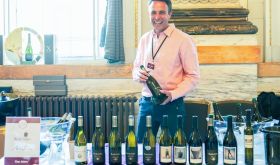
Tasting with Dominique Lafon in the unusually spacious cellars of Domaine des Comtes Lafon in the village of Meursault is always a pleasure but last December his grin was particularly wide. “These 2006s reds are so lovely,” he said while drawing a couple of samples of his Volnay from the top of a barrel, “I want to drink them straight away.”
At Lafon they picked reds slightly later than their neighbours and their whites slightly earlier, and seem to me to have thereby managed to make the most of the many challenges presented by the 2006 growing season. “Epouvantable” (appalling) is how Lalou Bize Leroy of Domaine Leroy described cool, wet August 2006, following a July that was “brutal” with its exceptionally high temperatures and threatened drought. Things were looking “catastrophic” until finer, warmer weather at last arrived in September to save the crop. Nevertheless, speaking admittedly a year ago, she dismissed the 2006s as “pretty but very small-scale”.
The big question over the 2006s is whether the red or the white burgundies are in general better. Proponents of the whites argue that the reds are too scrawny, uneven and marked by some rough, tough tannins. For proponents of the reds’ superiority over the whites, the whites lack acidity and will mature too early to be taken seriously.
Every Burgundian producer is agreed that that things were looking extremely bleak at the end of August 2006. At Domaine Leflaive, Anne-Claude Leflaive and her soon-to-retire winemaker Pierre Morey admit that their mildewed, biodynamically cultivated vines looked pretty awful, with leaves falling weeks earlier than usual, but that the grapes, picked from 20 Sep, were unharmed. Leflaive’s 2006s are certainly sumptuous.
Many growers, especially in the Côte de Beaune, had to deal with the threat of rampant rot after thunderstorms in early September when the grapes, despite an unusually rapid and therefore very successful flowering back in mid-June, were well behind schedule in terms of sugar levels. Worryingly, while the rainy August diluted colour and other phenolics, the hot July had reduced acidities. The grapes, in short, were at that stage short of everything, and in some cases the situation was exacerbated by the fact that the distinctly unsummery August had brought uneven ripening. The era when growers could take their holidays in August was clearly definitively over with vineyards needing more frequent attention in 2006 than in any year most of them could remember (not necessarily more than in 2007, however, but that of course is another story). Even more than in 2004, another year in which both ripeness and vine health were compromised, 2006 really sorted out the diligent vignerons from the rest. Any shortcuts in terms of excessive yields, shoots and leaves and insufficient healthcare were cruelly exposed.
To make matters worse, some vineyards were plagued by summer hail, a perennial threat in Burgundy. The village of Gevrey-Chambertin and in particular the Clos de Bèze vineyard suffered a bad hailstorm in July but, as so often, in the hands of good growers such as Bruno Clair and Drouhin-Laroze, and Louis Jadot, this seems to have had no harmful and arguably even a beneficial, concentrating effect on the quality of the wine produced. Rousseau’s yield in Clos de Bèze, for example, was only 19 hl/ha, but Charles Rousseau is pleased with the quality thanks to picking late, from 23 September. He is convinced that 2006 is a better vintage than 2004 when much more sorting had to be done at his famous domaine to pick out the rotten grapes.
Just two villages away in Chambolle-Musigny, on the other hand, Fred Mugnier was pleased to have picked almost a week earlier than this, because he felt his sugar levels were already impressively high (as high as in 2003, he says). His much-admired neighbour Christophe Roumier picked from 22 Sep, about the same time as he picked his grapes for the exceptionally easy 2005 vintage, chaptalising (adding a little sugar to the fermenting must to bump up the alcohol level) a few of his lesser 2006s.
The absolutely crucial factor in preventing 2006 burgundy of both colours from being a washout was the fine weather in September. Temperatures suddenly rose and, to the great relief of the growers, sugar levels rose too – in some cases, particularly in the Mâconnais in southern Burgundy, so fast that the grape skins started to shrivel, acid levels plummeted and wines with more than 14% alcohol, such as the Bret Brothers’ opulent Les Mures bottling of Poully-Loché were made. It is certainly true that wines like this, and a number of other particularly precocious, bumptious white burgundies, are unlikely to make old bones. But in the last 10 years, devotees of classic, slow-maturing fine white burgundy have had their faith shaken by a substantial proportion of wines that have succumbed to premature oxidation or, as in the case of so many 1996s, simply never shaken off their youthful acidity to reveal attractive fruit. For a certain segment of the wine buying public, particularly those without cellars and those who appreciate instant gratification, 2006 is a white burgundy vintage made in heaven.
Many of the 2006s of Chablis admittedly lack the nerve and precision that defines the best efforts from this Chardonnay region in northern Burgundy, but again there are many examples of very pretty wines that will give a great deal of pleasure in the short to mid term.
On the other hand, growers such as Lafon and his up-and-coming Meursault neighbour Arnaud Ente, who deliberately applied for permission to pick before the official Ban de Vendange, or harvest start date, on 18 Sep, seem to have been rewarded with white wines that are both friendly and yet have that definition and raciness that sets white burgundy apart from Chardonnay made in warmer climes.
There is even disagreement over whether better white burgundies were made in the troubled 2006 vintage or the easy and super-ripe 2005 vintage. According to Jean-François Coche of the elusive Domaine Coche-Dury, “the 2005s are superb whereas the 2006s are charming and tender but lack 2005’s weight”. In some other producers’ 2005s however, this weight can verge on flab and those who like their whites to refresh above all may prefer the 2006s. Etienne de Montille for one is a supporter of 2006, as shown here. For Pierre-Yves Colin-Morey, the exciting new offshoot from Domaine Marc Colin, the 2006s are “very good – quite rich with a lovely freshness too. I don’t find 2005 and 2006 that different frankly. It’s unusual to have two consecutive vintages so similar”. On the other hand importer Roy Richards, who has been importing a range of fine burgundies into the UK for many a long year, is dismissive of 2006’s “softness”, argues that the more austere 2004 whites are superior to the 2006s, and maintains that 2006 is a red wine year.
Which neatly brings us back to Dominique Lafon salivating over the charm of his embryonic reds (while worrying about the increasingly closed nature of his 2005s – “I take the leftovers back from opening the 2005s for visitors and we just don’t want to drink them”). One thing is sure: the 2006s of both colours will mature before the 2005s, and probably before the tarter 2004s too.
Next week I shall report on my own observations and favourite wines when tasting in Burgundy and during London’s frantic programme of primeur tastings just ended comprising at least 23 tastings, of which eight were held on a single day. One common refrain from many of the merchants making 2006 burgundy offers listed here is that 2006 reds are wines whose lighter (aka ‘more delicate’) charms should appeal to the true burgundy lover. This may well be true. But it does make me wonder what sales pitch will be left to them for the even more problematic and rot-affected 2007 Burgundy vintage.