Fashions in white wine come and go.
When I started writing about wine 50 years ago, everyone was mad about white wine in general and Chardonnay in particular. Every vintner and their dog wanted to make a copy of the white burgundy that was commonly viewed as the world’s greatest white wine. The only problem was that, outside Burgundy and Champagne, there were relatively few Chardonnay vines in the ground.
In California there were only 300 acres (124 ha) of the variety in total in the 1960s. However, such was its popularity in the 1980s and 1990s that by 2000 there were around 100,000 acres (c 40,500 ha) and it remains the state’s most-planted white-wine grape.
In Australia, now synonymous with Chardonnay and enjoying restoration of its reputation as master of the variety, it was not until the early 1970s that the grape, then labelled Pinot Chardonnay, was put on the map by a lone example, Tyrrell’s Vat 47. Towards the end of the last century, nurseries made a fortune selling cuttings of this most fashionable variety.
Then came ABC, the ‘Anything But Chardonnay’ movement of the early 2000s. (Bridget Jones’s Chardonnay addiction and cheap, sweet, oak-chipped versions did their worst for the variety.) Pinot Grigio (though not its French equivalent Pinot Gris) had its moment. Viognier, too, although it has much more flavour than most white-wine grapes that become popular. Picpoul (de Pinet, a tiny village in the Languedoc) has been much in demand, in the UK anyway, and it conforms much more to the Pinot Grigio model of being pretty bland. Quite how the highly aromatic Sauvignon Blanc became so popular, I’m not sure. Perhaps warmer summers have made its high acidity more acceptable than it used to be. (I have resigned myself to the fact that my beloved Riesling will never become fashionable; it just has too much flavour and character.)
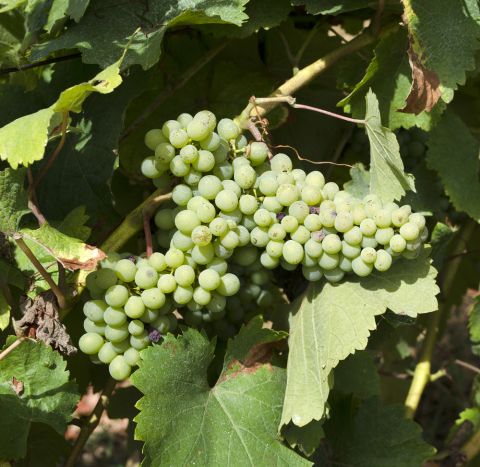
I’d like to propose a new white-wine fashion, for Chenin Blanc. Like Sauvignon Blanc and Riesling (and unlike Chardonnay and various related white Pinots) its wines are not short of acidity, which makes them extremely appetising, versatile partners for food and obvious candidates for ageing. They are rarely overpriced. Alcohol levels are reasonably friendly, too. Provided yields are kept in check, the wines have real appeal with subtle and not overpowering flavours hovering on a spectrum between honey, apples and damp straw. With time, these become more complex but the wines retain their refreshment value.
Chenin’s homeland, from the Middle Ages, is the middle stretch of the Loire, especially round Angers and Tours, where it is still the most common white-wine grape making such still wines as Anjou Blanc, Saumur, Vouvray and Montlouis as well as a range of sparkling wines.
There was a time when rather ordinary medium-dry and sweet Vouvray was Chenin’s most common representative abroad, which did nothing for the reputation of the grape. But now, exciting dry wines, some oaked for longevity and depth, abound, as I outlined recently in The Loire regains its gloire.
In the 1970s before Chardonnay took over, Chenin Blanc was California’s most-common white-wine grape. What’s ubiquitous is rarely valued, as we have seen at various points in the wine histories of Australia (with once-scorned Shiraz), then Argentina (Malbec) and, until recently, Spain (Garnacha). When California was short of Chardonnay, whites labelled Chardonnay were routinely bolstered by unacknowledged additions of the much cheaper Chenin Blanc – and sometimes Colombard, there called French Colombard. So, until recently, Chenin was virtually ignored by California winemakers except for Dry Creek Vineyard and others, which made the most of the characterful Chenin Blanc planted in the Sacramento Delta.
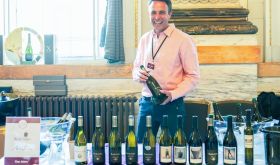
But the grape is now enjoying a renewal of interest on the West Coast. Last month saw the second Hella Chenin fest in Berkeley, at which more than 70 examples from all over the world were poured with the aim of ‘giving Chenin Blanc the spotlight it deserves’. This time, eight wines from France, three from Oregon and one from Australia were added to the original roster of wines from all over California and the country with the most Chenin in the world, South Africa.
Indeed, Chenin Blanc is the most-planted grape variety of all in Cape winelands, which earned it little respect locally. Towards the end of the last century, growers were much keener to plant the Sauvignon Blanc and Chardonnay that were viewed as more international and more glamorous. But then in 2002 came the beginning of the Old Vine Project, a uniquely South African initiative that, like the Old Vine Registry does now on a global scale, registers all vineyards that are over 35 years old with the aim of keeping those vines in the ground.
The four vine varieties that feature most in the Old Vine Project’s listing are all dedicated to white wine. This preponderance was explained to me recently by leading Cape wine producer Eben Sadie of The Sadie Family Wines in Swartland. During apartheid, the country had such difficulty exporting its wines that there was a big switch to distilling brandy, and the distiller’s raw material is white wine, not red.
Almost half of the total of over 5,000 ha (more than 12,350 acres) of old Cape vines are Chenin Blanc – and it became increasingly clear that these delightfully senior vines, mostly untrellised bush vines producing particularly concentrated fruit, could make extremely serious wine. South African wine producers started to take pride in their most-planted variety.
In early May, I took part in the second version of a new initiative in London, capital of the main market for fine South African wine, whereby 69 of the best wines were tasted blind in groups at 10 years old. This year it was the turn of the 2016 vintage, a difficult one on the Cape, plagued by heat and, especially, drought. The wines in general did not show as well as those of the excellent previous year, but the Chenin Blancs sailed through and were still in great shape, demonstrating just how well the variety has adapted to South African conditions. It has had time to do so. Chenin was one of the first vine varieties to be imported by the Cape of Good Hope’s first colonial administrator Jan van Riebeeck in 1655.
Do give Chenin a whirl, wherever it’s from.
Recommendations
The asterisked wines are not 100% Chenin Blanc but are fine white blends in which Chenin is the most important ingredient. All wines are dry and interesting.
South African Chenins
Stellenrust Chenin Blanc 2025 Stellenbosch 13.5%
£11.70 VINVM, £11.70 Winedirect
*Boekenhoutskloof, Goldmine 2024 Western Cape 13%
£21.95 Mr Wheeler, £21.95 From Vineyards Direct, £23 London End Wines and many others
Catherine Marshall, Fermented in Clay Chenin Blanc 2024 Voor Paardeberg and Bottelary, Stellenbosch 13%
£24.75 N Y Wines, £24.95 Lekker Wines, £25.25 Frontier Fine Wines, £27 Salusbury Winestore
Natte Valleij, Axle Chenin Blanc 2025 Darling 13%
£24.95 Vin Cognito, £26.99 Museum Wines, £27 The Vineking
Reyneke Estate Chenin Blanc 2024 Polkadraai Hills, Stellenbosch 13%
£25 Elementary Wine Co, £27.99 James Nicholson, £31 Hic!, £31.50 Highbury Vintners
*Rall, White 2024 Coastal Region 13%
£27 Hic!, £28 Berry Bros & Rudd, £28.27 Justerini & Brooks, £30.25 N Y Wines
*Momento Chenin Blanc/Verdelho 2022 Western Cape 13%
£29 Hic!, £29.99 DBM Wines
Roodekrantz, Donkermaan Old Vine Chenin Blanc 2023 Stellenbosch 13%
£30 Davy’s Wine Merchants
DeMorgenzon, Reserve Chenin Blanc 2023 Stellenbosch 14.3%
£32.95 Mr Wheeler, £33.95 Uncorked, £34.25 Frontier Fine Wines
Damascene, Old Bush Vines Chenin Blanc 2024 Stellenbosch 13%
£44.95 Lea & Sandeman
Rall, Noa Chenin Blanc 2024 Swartland 13.5%
£45.65 N Y Wines
Rall, Ava Chenin Blanc 2024 Swartland 13%
£45.65 N Y Wines
Mullineux, Granite Chenin Blanc 2024 Swartland 13.5%
£70 Hedonism
For tasting notes, scores and suggested drinking dates see South Africa’s star – Chenin Blanc. For international stockists see Wine-Searcher.com.
See also Jancis’s 14 other articles about Chenin Blanc.
Back to basics
Where to find exciting Chenin Blanc |
| South Africa vies with the Loire as source of the finest examples. Swartland benefits from a high proportion of old bush vines from which the new generation of producers are fashioning wines of real class and longevity. These are often wildly creative blends based on Chenin but with a cocktail of other grapes from equally ancient vines. The prototype is The Sadie Family’s Palladius. Its make-up continues to evolve and it’s so successful that it sells, on allocation, for $100 or over £70 a bottle. Chenins from the Cape’s traditional wine heartland of Stellenbosch tend to be a little tamer and to be inspired more obviously by the structure of white burgundy. The Chenins of the variety’s homeland, Anjou and Touraine in the Loire, vary much more than South African examples. Vouvray and Montlouis in particular come in all levels of sweetness (from bone dry to concentrated by noble rot), both oaked and unoaked. Chenin Blanc is also the basis of most sparkling wines in the Loire, especially Saumur, Crémant de Loire and sparkling Vouvray, an underrated treasure. Jasnières is usually, and Savennières is always, bone dry and delightfully stern. Chenin Blanc is also grown in south-west France and is a permitted ingredient in sparkling Limoux. The Clarksburg AVA has a long history of growing exceptional Chenin Blanc in California, where the variety is enjoying a renaissance and is enthusiastically produced by such revered producers as Littorai of Sonoma Coast and Rhys and Ridge Vineyards, both based in Santa Cruz Mountains. In the Central Coast, there are already two Chenin enthusiasts, Rococo and Zanoli. We don’t have as many tasting notes on Australian Chenin as on those of California in my website’s database – only 40 – but there is no shortage of enthusiasm for the best Chenins of Western Australia (where the variety played a major part in the success of the classic wine once known naughtily as Houghton White Burgundy) and McLaren Vale in South Australia. Most wine regions around the world have some Chenin; they just don’t make as much of it as they could. |
Both images courtesy of Shutterstock. Main image by tbroughton.