See my tasting notes on 70+ Grands Crus du Languedoc, and an update on the proposal from our forum.
Oh dear. Will wine and local politics ever blend into one harmonious cuvée? I fear not, and certainly not on the basis of the latest attempt to forge a financially sustainable future for France's biggest wine region, the Languedoc.
No one could want the best wines of the Languedoc to be better appreciated around the world more than I do. As someone who has spent every summer there since 1989, I have a deep love of the region and its superior vineyards – and a huge admiration for the hundreds of generally under-rewarded, quality-conscious producers in its wild, and delightfully underpopulated, terrain. The wine co-ops that have dominated wine production, especially in the less favoured, lower land, are forming bigger and bigger groups in a desperate attempt to survive, while more and more of their members abandon viticulture altogether.
The local trade body, the Conseil Interprofessionnel des Vins du Languedoc has accordingly come up with a plan. It has created a wonderfully neat, but thoroughly artificial, 'three-part pyramid'.
In the middle are the strangely smart-sounding Grands Vins du Languedoc, wines sold with well-known appellations such as Minervois, Corbières, Faugères and St-Chinian. At the bottom are the least expensive wines sold by big négociants such as Jeanjean (whose CEO is president of the CIVL), Val d'Orbieu, Gérard Bertrand and UCCOAR. These now carry the new, catch-all appellation Languedoc as well as, often, the name of a grape variety or two. The CIVL's aim is to control prices of this sort of wine by holding back stock if necessary, issuing short-term loans funded by the Languedoc-Roussillon regional council. (Cue indignant Italian and Australian wine producers who would love to see a similar scheme rescue them from the effects of plummeting grape prices.)
At the top of this utterly theoretical pyramid are the new Grands Crus du Languedoc, whose name (by no means approved by the Appellation Contrôlée authorities yet) sounds confusingly like that of the next layer down the pyramid. These wines are supposedly the crème de la crème of the region, 'complex, rare, expressive, terroir-led wines that possess an image' (I quote from the CIVL's new literature). To qualify as a Grand Cru, a region has to achieve a certain minimum average selling price and has to demonstrate that a significant proportion of wine is sold in bottle rather than in bulk to the mass-market bottlers. Yields should be no more than 45 hl/ha for reds and 50 hl/ha for whites. Languedoc Grand Cru wine must be bottled in the area of production. Reds must be aged for at least 12 months before bottling, whites for six months. There are to be quality checks on individual batches post bottling and apparently each Grand Cru's commitment to the concept is to be assessed at the end of next month.
The pricing criteria for these Grands Crus almost make me weep. 'The target bulk price must exceed €250 per hectolitre' (that's €2.50 a litre) while 'the recommended retail price (incl VAT) must exceed €10 a bottle'. Whatever do the vignerons of the Languedoc think when they see Ch Lafite, whose owners also own a property, Ch d'Aussières, in the Languedoc, going for more than £1,000 a bottle, I wonder?
When I learnt about these top-drawer Grands Crus du Languedoc on paper, my main gripe was that they seemed so arbitrary. Within the Minervois appellation, only Minervois-La Livinière is deemed to be of Grand Cru status. Really? Do the best wines of Minervois come solely from this area? What of Château Coupe-Roses on wonderfully characterful high mountain vineyards near La Caunette east of La Livinière? Or the widely admired 'natural wines' of Dom Jean-Baptiste Senat of Trausse to the west?
In the Corbières hills the proportion of vineyard land that is obviously of top quality is arguably even higher, and the appellation has already been carved into many subregions, each with its own distinct geographical and geological character. But only the Corbières-Boutenac subregion is deemed to be officially of Grand Cru status. I would suggest that Ch Pech-Latt, Clos de l'Anhel, Ch Mansenoble and the Rothschilds' Ch d'Aussières all produce wines distinctly superior to some of those within Boutenac.
And in St-Chinian, things are even less promising. St-Chinian Roquebrun has been chosen as a Grand Cru, yet it is controlled almost entirely by the local co-operative, and the rules state that the wines must consist of at least 40% Carignan, a grape variety whose influence has, often with good reason, been systematically reduced in most of the rest of the Languedoc. This outlaws such stars as Mas Champart, Canet Valette and Clos Bagatelle.
And then there are such exceptionally fine Languedoc specialists as Hecht & Bannier, Les Clos Perdus and Dom Gayda who buy grapes more widely than from a single appellation and vinify in a single cellar outside the region of production in some cases, so their wines would automatically be barred from Grand Cru status.
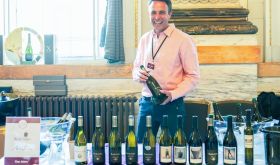
Other confirmed Grands Crus are Limoux (for whites), with the following denominations of the former Coteaux du Languedoc appellation: Pic St-Loup, La Clape, Grés de Montpellier, Pézenas and Terrasses du Larzac. All of these indubitably produce some of the Languedoc's finest wines – but to judge from a recent showcase of Grands Crus du Languedoc wines in London, they produce some pretty ordinary stuff too. I tasted all 70 wines that had apparently been selected to put the best possible spin on the apex of the new pyramid and I'm afraid I could muster real enthusiasm about only a handful (those listed below).
I found myself looking for the likes of Dom d'Aupilhac, Léon Barral, Dom du Grand Crès, Dom de la Grange des Pères, Mas de l'Ecriture, Virgile Joly, Mas de Daumas Gassac, Thierry Navarre, Ch de la Négly, Ch d'Or et de Gueules, La Pèira, Dom Peyre Rose, Dom de la Sauvageonne and Ch La Voulte Gasparets. Some of these are based within a Grand Cru du Languedoc but others such as Léon Barral of Faugères just happen to be in an appellation that did not meet the criteria laid down for a Grand Cru – because the average selling price and/or the proportion of wine sold in bottle rather than bulk is too low.
There is a substantial budget available for promoting this theoretical pyramid, even though it is a chimera as far as the INAO authorities go, although some local observers worry about the amount of generic funding that goes towards listings and promotions at the bigger retailers.
As I say, wine and local politics are poor partners.
Superior Grands Crus du Languedoc
WHITE
Dom Les Aurelles 2007 Coteaux du Languedoc
REDS
Celliers d'Orfée, B 2007 Corbières-Boutenac
Mas de Martin, Ultreia 2007 Grés de Montpellier
Ch de Camplazens, Premium 2008 La Clape
Dom de Nizas 2008 Pézenas
Dom Les Aurelles, Solen 2007 Pézenas
Ermitage du Pic St-Loup, Tour de Pierres 2009 Pic St-Loup
Ch Maris, La Touge 2009 Minervois-La Livinière
Clos Centeilles 2007 Minervois-La Livinière
Clos de l'Escandil 2007 Minervois-La Livinière
Dom Combe Blanche, La Chandelière 2009 Minervois-La Livinière
See my tasting notes on 70+ Grands Crus du Languedoc, and an update on the proposal from our forum.