When I boarded the plane for Aotearoa New Zealand in 2017, I suspected there was more to the country than Marlborough Sauvignon Blanc. But, like many others, if you’d asked me to name a low-intervention New Zealand wine producer, I wouldn’t have been able to do so. (Like many winemakers, I too shy away from calling such wines ‘natural’.)
The movement was already in full swing in countries like Australia and the US, where winemakers were bucking convention left and right, but New Zealand was conspicuously absent from this movement (as Jancis noted in The newer Zealand in 2017). Several attributed the lack of experimental wine styles to New Zealand’s slightly conservative culture and, like many, I accepted this at face value.
That was until I arrived in Auckland five years ago.
While dining at a place called La Fuente I found myself in possession of an eye-opening wine list, from which I ordered my first skin-contact, wild-fermented New Zealand Sauvignon Blanc. As the months passed, I noticed other wine lists like this popping up around the city, but this was the first that really went there.
La Fuente opened at the tail-end of 2018 with a rotating list of unique wines from around the world. They also featured a few low-intervention NZ producers who were unfamiliar to me. That’s when I realised there was an entire cohort of New Zealand winemakers I hadn’t known existed, and I resolved to find them.
Local ingenuity
After working a couple of vintages on Waiheke Island, I decided to go down to Central Otago at the end of harvest. At the end of a long day of punchdowns, the winemaker handed me a purple can of local piquette from Alpine Wine Co. I’d been following the piquette explosion in the US, but this was the first NZ expression I’d encountered (and in a can, no less). It reaffirmed my earlier suspicions that the full New Zealand wine story wasn’t being told.
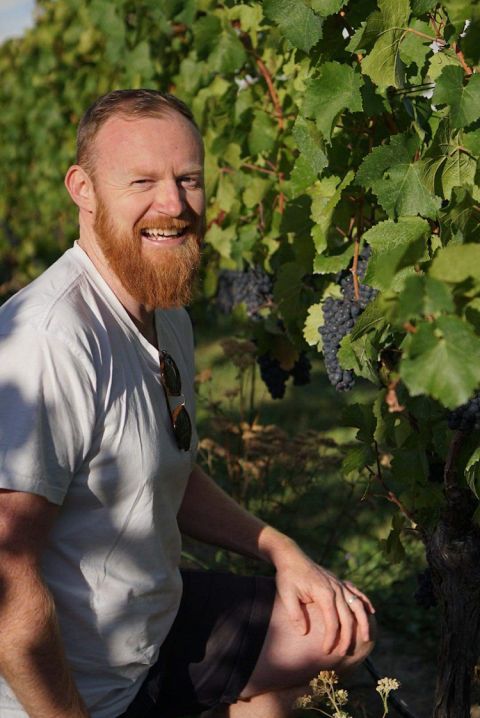
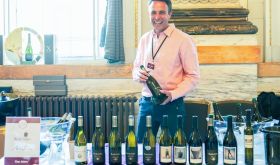
‘Central [Otago] is more focused on terroir’, says Ben Leen, Alpine’s winemaker, pictured above, ‘[but] we’re not as focused on a sense of place. We want to be slightly left of centre and thrive on being a wee bit disruptive.’ To those unfamiliar with Aotearoa’s innovative nature, Leen’s attitude may come as a surprise, but to me, it exemplified New Zealanders’ ingenuity.
‘There’s this sense of individuality in New Zealand. Kiwis are always trying to do something different’, says Edmundo Farrera, proprietor of La Fuente. Different for different’s sake is not always a good thing, though, and it’s important to note the winemakers experimenting and pushing boundaries haven’t lost sight of wine quality. For them, consumers are still top of mind.
‘No matter what, the wine has to be beautiful. It shouldn’t be clumsy or strange or leave people wondering: what is this wine?’ says Yoshiaki Sato, winemaker at Sato Wines pictured below with, in the foreground, Kyoko Sato who was once viticulturist at Felton Road.
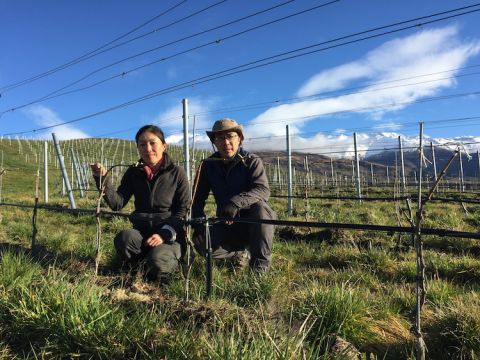
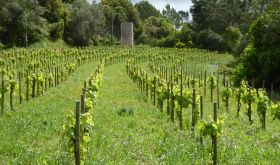
I learned about Sato, Gourmet Traveller NZ Winemaker of the Year finalist, on another visit to Central Otago from a friend in my winemaking programme. I noticed a vineyard high up on the hillside and, when he told me it was planted with Cabernet Franc, I was quite surprised. ‘When I first discussed planting Cabernet Franc here, they said I should not do it or it would be too brave’, Sato says, ‘but the wines over three vintages are great and now others are planting it as well.’
Given the region’s affinity for Pinot Noir and frequent comparisons to Burgundy, I will admit I hadn’t thought critically about whether its climate was suitable for non-Burgundian varieties besides Riesling.
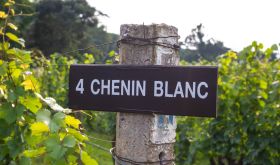
‘Central Otago has a beautiful cool climate and its total growing degree days are, I believe, almost the same as the Loire Valley, which has more grape diversity. Some of the Loire also has the same schist soil. So, all of these things made me want to plant Chenin Blanc, Cabernet Franc and Gamay, which do well here’, Sato explains.
Sato’s Cabernet Franc hasn’t been released yet, but its existence was yet another indication that this relatively young winemaking country was quietly evolving.
Organic grapes and no additions
When I arrived back in Auckland from Central Otago last year, low-intervention wines were suddenly everywhere. Clearly, this country of five million people had developed a thirst for these wines, and its winemakers were more than happy to oblige. Others doing some wild things in the winery include Amoise Wines, Black Estate, Cambridge Road, Deep Down, Garage Project, Kindeli, Organised Chaos, Pyramid Valley, Scout Wines, The Hermit Ram, Tincan Wines and early adopters of organic viticulture Millton.

‘When we first started [in 2018], we were only getting approached by small, fringe-y restaurants. Now, bigger, more mainstream restaurants are reaching out’, says Amy Hopkinson-Styles, winemaker at Halcyon Days, pictured above with her husband Olly.
I met Hopkinson-Styles for coffee in Hawke’s Bay to learn more about what was happening in the region. As we chatted, I was struck by her description of the tight-knit, low-intervention community that had sprung up there. Winemakers have their own definition of minimal intervention and keep their sulphur additions to a minimum. The producers I spoke to either grow their own grapes organically, buy from organic growers, or manage their contracted rows organically.
But, why was all this happening now?
Many are quick to point across the ditch and say that New Zealand winemakers were inspired by their Australian peers. This may be true for some, but Europe loomed large for those I spoke to.
‘In Europe, we were exposed to some amazing, traditionally made wines from Spain, Italy and Slovenia. The zero-sulphur wines in amphorae were quite the lightbulb moment. They made us think a little bit differently and question why we were adding [additives] and whether it was actually making a better wine or not’, says Hopkinson-Styles.
As for the timing of it all, it seems that New Zealand has finally achieved a critical mass of experienced, low-intervention winemakers. Instead of fostering competition, they are incredibly supportive of one another, which in turn encourages others to branch out into this winemaking style with confidence.
‘It takes years and years to perfect this style’, says Farrera. ‘Traditional producers are jumping on the natural wine train too now, and I think we'll see more wines coming out in the next decade and beyond.’
Kate and Rob Burley, proprietors of Unkel, agree. ‘I think we'll continue to see the emergence of smaller, environmentally conscious lo-fi wine growers/producers pop up, which will continue to move wine and viticulture in a more creative direction’, says Kate Burley.
Over land and sea
At the moment it’s unclear if many outside Aotearoa will get to enjoy these wines. Only a handful of the winemakers I spoke with export, but those who do have seen clear demand. ‘[We’ve] received great interest and support through our export channels, and it’s exciting to see our wines being enjoyed around the world’, says Burley.
Transporting any style of wine to markets thousands of kilometres away can be challenging, and some may believe that minimal-intervention wines are more difficult to transport or require stabilisation beforehand. However, others are confident these wines can make the journey unscathed. ‘We don’t export yet, but that’s a big goal for 2022 and beyond’, says Leen of Alpine Wine Co. ‘We may make sure it’s sulphured at low levels pre-bottling to help preserve that freshness and have peace of mind, but that’s about it.’
Those I spoke to haven’t had any degradation in quality reported by their importers, and it’s surely only a matter of time before more of these wines make their way around the globe to prove that Aotearoa New Zealand can be just as innovative as other winemaking nations.