
At the risk of straying into other writers' territory, I cannot help pondering the nature of fashion, and in particular how it affects wine consumption. I can easily understand why a few years ago hundreds, if not thousands, of wine drinkers fell in love with Cloudy Bay Sauvignon Blanc from New Zealand. It had a completely new and very distinctive taste, and a thoroughly novel and attractive label.
But why has pink champagne become so popular over the last year or two that many important labels are currently rationed or even unavailable? The rosé market leader Laurent Perrier has just been able to raise its suggested UK retail price to an almost incredible £37.99 a bottle. It was only £24.99 as recently as the late 1990s. So strong is demand for it that the Waitrose champagne buyer, for example, was able to tell me proudly last week that her allocation has been increased so that she will soon be able to offer it in perhaps as many as a dozen of their 130-odd stores.
I am as mystified as Andrew Willy, wine buyer at Selfridge's, arguably Britain's most important retailer of fine champagne, who was so surprised to see that sales of his own-label rosé champagne had risen by 46 per cent last year that he queried the figures.
In 1995 rosé champagne represented 3.2 per cent of all the champagne shipped to Britain. Last year the proportion was 5 per cent, and that was of a record-breaking total volume of champagne which crossed the Channel. And it is not just the British who are wallowing in the pink. The French and to a certain extent Americans are buying unprecedented quantities of rosé champagne too.
One theory is that it is a natural side-effect of prosperity. If people feel expansive, they expand into what we might call white champagne and if they feel very expansive apparently they might try the other colour. "It's a mood thing", according to one Master of Wine employed by a prominent champagne house. There was a previous spike in consumption of pink champagne, particularly in the drinking dens of London's financial district, during the Nigel Lawson loadsamoney era of the late 1980s, but the current wave of enthusiasm is even more marked.
When I expressed doubt to Laurent Perrier's Champagne Charlie that these testosterone-fuelled bars really tolerated a colour as frivolous as pink in their glasses he just leered. "The nice thing about rosé is that the boys don't mind it and the girls love it."
It is true that, not before time, pink wine in general is enjoying the spotlight of fashion, but I still wonder what it is that presses the button. Some cite behemoth Moët & Chandon's recent specific advertising of rosé. Others point to high profile consumption of pink champagne in the lifestyle magazines devoted to the public lives of footballers and pop stars. The official line among champagne producers is that we are simply growing up and realising that champagne comes in different styles. These same observers report a smaller but distinct increase in demand for sweeter, demi-sec champagnes to drink at the end of a meal – and certainly many a rosé is suitable for drinking with food.
But on the basis of tasting nearly 70 pink champagnes in London last week, I have to say that some rosés are pretty unsuitable for drinking in any circumstances. Some producers seem to feel that the way to jump on the rosé bandwagon is simply to blend in a bit of red wine for colour and much more sweetening than usual before final bottling. A disappointing proportion of rosé champagnes simply seemed too uncomfortably sweet to my palate, while others were based too obviously on underripe, astringent or stale fruit – and the colours varied wildly.
Unlike still wines, pink champagne can be made perfectly legally by blending red and white wine – indeed it is the most common production method in the Champagne region. Some rosé champagnes however are made from the dark-skinned Pinot grapes that constitute the majority of those grown in the region and tinted to the desired colour by leaving the juice briefly in contact with the skins. They are often labelled Rosé de Saignée, which might crudely be translated as bleeding pink.
There seem to be several valid styles of rosé champagne. There is a handful of seriously fine wines that happen to be pale pink. The most obvious examples are the pink versions of Billecart Salmon non vintage, Charles Heidsieck 1996, Jacquesson's Grand Vin Signature 1995, Krug, Laurent Perrier Grand Siècle 1997, Louis Roederer's still-youthful 1998 and Taittinger Comtes de Champagne 1996. These wines represent truly conscientious wine-making and luxury wine-tasting in bottle. Prices tend to be ultra-luxurious but the (currently very youthful) Billecart-Salmon rosé can be found for £32.95 a bottle from Berry Bros & Rudd (www.bbr.com) – the really high price is reserved for Billecart's top Cuvée Elisabeth Salmon Rosé. All these wines can be served with food as well as before a meal, and unlike most rosés can benefit from bottle age.
Then there are bumptiously fruity wines that work (as opposed to stale and/or sickly ones than do not). Good examples of these include Henri Abelé Cuvée de Prestige Rosé, Cru des Riceys NV (as much of a mouthful as its name), J Charpentier's Rosé Brut NV (just £14.99 from the Village Vintner of East Tisted, Hampshire), Delamotte NV, Duval Leroy's Fleur de Champagne NV, Gardet's 1998, Alfred Gratien's Cuvée Paradis NV, Jean Moutardier Brut NV (£16.95 when Great Western Wines of Bath receive new stocks at the end of this month), Alain Thiénot's precocious 1999, Pierre Vaudon Premier Cru NV from the adept Union Champagne co-operative and de Venoge NV.
Then there are particularly distinctive styles of rosé champagne such as grower Larmandier-Bernier's very dry NV which basically tastes like sparkling red burgundy, Pol Roger's big and fleshy 1996, Pommery's particularly delicate and silky NV and Tarlant's strangely tomato-flavoured, big-boned 1996.
Current rosé non vintage champagnes I have tasted but cannot recommend even as the height of fashion are Beaumet, Alexandre Bonnet, Philippe Brugnon, Guy Cadel, Canard-Duchêne, Guy Charbaut, Veuve A Devaux, Heidsieck Monopole, Jeeper, Lenoble, A Margaine, G H Martel, Moutard Père et Fils, Nicolas Feuillatte, Pannier Egerie, J P Secondé, Tribaut and Vollereaux. (If enough purple pagers tell me they would like full tasting notes and ratings of the 70 pink champagnes I tasted, I will publish them.)
Pink champagne – fashionable but too often dire
• 4 min read


Wählen Sie Ihre Mitgliedschaft

For the dad who loves wine
Start your membership this Father’s Day with 20% off a full year. Expert reviews, honest writing, no guesswork. Or, gift a membership and save 20%.
Enter code DAD20 at checkout. Offer ends 22 June.
Mitglied
$135
/Jahr
Ideal für Weinliebhaber
- Zugang zu 295,436 Weinbewertungen und 16,098 Artikeln
- Zugang zu The Oxford Companion to Wine und The World Atlas of Wine
- Access askJancis, our AI wine assistant


Inner Circle
$249
/Jahr
Ideal für Sammler
Everything in “Member”, plus:
- Early access to the latest wine reviews, 48 hours in advance
- Early access to the latest articles, 48 hours in advance
Professional
$299
/Jahr
Für Weinprofis (Einzelnutzer)
- Zugang zu 295,436 Weinbewertungen und 16,098 Artikeln
- Zugang zu The Oxford Companion to Wine und The World Atlas of Wine
- Access askJancis, our AI wine assistant
- Frühzeitiger Zugang zu den neuesten Weinbewertungen und Artikeln, 48 Stunden im Voraus
- Gewerbliche Nutzung von bis zu 25 Weinbewertungen und -punkten für Marketingzwecke
Gewerblich
$399
/Jahr
Für Unternehmen in der Weinbranche
Everything in “Professional”, plus:
- Gewerbliche Nutzung von bis zu 250 Weinbewertungen und -punkten für Marketingzwecke
- Access to submit wines for review
- Offer memberships to your employees and manage them from a single place
- API access available for an additional fee
More Gratis für alle

Gratis für alle
18 June 2026 Prizes announced! Académie du Vin Library, the sponsor of the 2026 wine writing competition, has just announced...
Gratis für alle
Here are the questions posed to those striving for those coveted two letters, among them our very own Sam Cole-Johnson...

Gratis für alle
Carefully cultivated wildness in the Home Counties. And an unmissable wine list. Farm to fish to fork to frying pan...
Gratis für alle
Jancis makes a suggestion. A version of this article is also published by the Financial Times. See also South Africa’s...
More from JancisRobinson.com
Verkostungsberichte
A taster of the quality potential in wines grown in the southern Rhône’s ‘north-west corridor’. Above, one of Domaine La...

Verkostungsberichte
A tour of the southern half of this Portuguese wine region. See part 1 for producers and wines from the...
Unverblümte Meinungen
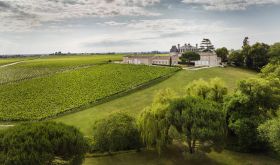
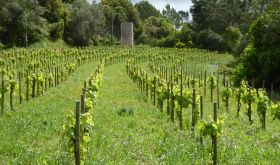
Nick Martin reflects as another en primeur campaign winds up. Château Grand-Puy-Lacoste (pictured above) bundled a visit to the property...
Verkostungsberichte
A tour of this underappreciated and sometimes misrepresented Portuguese wine region. Today, we cover the northern half – Encostas d’Aire...

Insider-Informationen
The wines of this Portuguese region are emerging from the shadows of their history. Above, Azenhas do Mar in Colares...

Getränke außer Wein
An exploration of the transparency of Japanese whisky – and how that sensibility is influencing whiskey-making back in Scotland. Above...
Verkostungsberichte
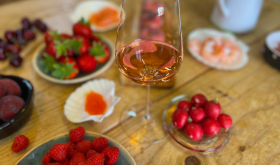
Rosés for every occasion, from poolside pinks to robust BBQ-ready versions. We at JancisRobinson.com view the world through rose-tinted spectacles...
Weine der Woche
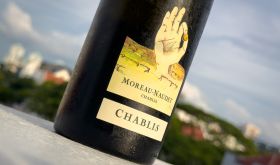
A reference Chablis, albeit in a riper style, available from $39.95, £31.95 . Prompted by our recent forum discussion about...