
Twenty years ago Spanish people used to drink an average of 32 litres of wine per capita and the Spanish market was experiencing a huge revolution towards quality. Recognised Denominaciones de Origen such as Rias Baixas and Bierzo were seeing their first vintages on retailers' shelves and wineries regarded as flagships today such as Artadi (Rioja) and Pazo de Señorans (Rias Baixas) were bottling their first wines.
Since then, the revolution towards quality has settled down and hundreds of outstanding wine producers have emerged in many different wine regions in Spain. Unfortunately this conjuncture has not been followed by Spanish consumers, whose per capita wine consumption has dropped to a worryingly low 12 litres. [Compare and contrast young Spaniards' attitudes to wine and that of their counterparts in France, as described by Yohan Castaing yesterday – JR]
In the meantime, we have also seen many changes such as the emergence of wine regions such as Priorat and Ribera Sacra from obscurity to prominence. Modern winemaking techniques have been adopted in traditional regions like Rioja and Rueda while international grape varieties today account for 5% of total plantings in Spain.
Unfortunately, we have also seen disproportionate investment in pharaonic wineries and a blind following of international winemaking standards that have led the Spanish wine trade into a critical situation, with notorious examples such as tens of wineries for sale today in Rioja, and an undefined wine style in many regions, even those as important as Penedès and La Mancha.
Spain still has a long way to go in terms of promotion. Despite the best efforts of ICEX in the face of savage cuts in funding, it has much to learn from countries such as South Africa and Chile in how to improve the understanding of its wines and the image of the country. However, there is certainly good news on export markets, with 66% of Spanish wines being sold abroad and the export value almost doubling between 2000 and 2012. This state of affairs makes people in Spain, however difficult the national economy, feel confident about the present and the future of Spanish wines.
Below is a short summary of the factors affecting the quality and style of Spanish wines and current trends in Spain.
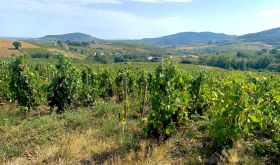
The first is the geo-climatic diversity, in which Spain is particularly rich. The wine regions spread from the rainy, cool Atlantic coast in the north west producing refreshing, aromatic whites to the extremely hot, dry Mediterranean coast where full-bodied, tannic reds are produced.
There are today a few regions that, thanks to their privileged location, are seeing growing interest on the part of both producers and consumers.
- Costers del Segre, where many producers have moved to the Pyrenees and have planted aromatic varieties such as Riesling or Gewürztraminer.
- Navarra's Baja Montaña subregion, where Garnacha grown at 700 m altitude is now showing a lighter but flavourful character.
- The Axarquia region in the Málaga mountains, where the cooler temperatures are producing outstanding dry Moscatel.
- The Sierra de Gredos west of Madrid that is now seeing a revolution with their Garnacha and Albillo wines (see Luis Gutiérrez on Gredos Garnacha).
- Cangas del Narcea in Asturias in the north west, where a range of local interesting grape varieties such as Albarín Tinto and Verdejo Tinto are exciting interest.
- Galicia that has always been famous for whites but today takes advantage of its privileged situation for producing light-bodied, low-tannin, refreshing, earthy reds.
Second is Spain's huge array of grape varieties, around 110 that are used regularly. There is a significant movement towards local grapes. The fashionable, up-and-coming grapes include:
- Bobal, the third most planted variety in Spain, is now starting to produce top-end red wines in the Levante region.
- Godello is all ready quite well known beyond Spain and produces light white wines with refreshing character and salty hints.
- Prieto Picudo produces a fruity red wine in Castilla y León with particularly fine-grained tannins.
- Treixadura is experiencing a recuperation of quality in Galicia and, although normally blended, its wines are now seen as a serious alternative to Albariño.
- Sumoll is a vastly productive grape with the capacity of retaining high acidity that is now giving fresh, delicate reds in Catalunya.
- Xarello, which is now a rising star in Penedès, capable of producing outstanding and distinctive wines.
- Sousón is seen as a top-quality grape for light but savoury red wines in Galicia.
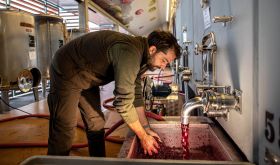
Finally the growers, the winemakers and all the people involved in the wine trade, Spain has never before had so many talented and passionate people who are now following these few trends:
- Understanding the importance of the correct use of oak and trying not to saturate the fruit.
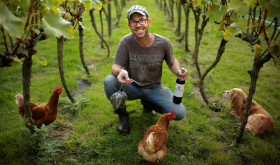
- Many wineries all over Spain are following organic viticulture and gaining government certification.
- Some are following biodynamic viticulture, most notably in Bierzo and Catalunya.
- Natural winemaking has become popular in regions such as Alicante, Cava and Toro.
- Many wineries have committed themselves to keeping the traditional winemaking legacy in regions such as Rioja, Málaga, Jerez and even Alicante.
- Pushing creativity in order to promote the whole industry.
All in all Spain has experienced a revolution in the past 20 years. This has considerably increased awareness of Spanish wine internationally but has also brought a drop in domestic consumption as well as consumer confusion. However, there are many new trends to follow and Spain is learning how to improve the authenticity of her wines and how to communicate effectively about them.