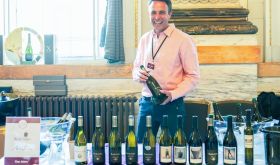
I sat with two Australian winemakers in Rowley Leigh’s Café Anglais last week cursing Bridget Jones. Phil Sexton, Steve Flamsteed and I, plus 14 bottles of wine, had met up to discuss the current state of Australian Chardonnay. We agreed that Chardonnay in general and Australian Chardonnay in particular is suffering a serious image problem, thanks to Ms Jones and her demotion of the category to singleton’s solace. “Even last night when we did a tasting at Hotel du Vin in Bristol, the people there weren’t too keen on Australian Chardonnay. It would be a tragedy if this ABC business really caught on”, said Sexton, referring to the Anything But Chardonnay movement begun at least a decade ago as a reaction to what looked then like Chardonnay-mania on the part of vine growers, wine retailers, restaurateurs and consumers.
I would argue that ABC sentiment is probably at its peak right now. From New Zealand to South Africa to South America, it can sometimes seem as though wine producers want to talk about every vine variety and varietal wine under the sun except for the world’s most planted white wine grape. Besotted by Sauvignon Blanc, Pinot Gris/Grigio, Viognier and a host of much more obscure varieties, the wine world seems thoroughly bored by Chardonnay at the moment – unless of course it is labelled Montrachet, Grand Cru Chablis or Blanc de Blancs Champagne. The popular conception of Australian Chardonnay is of a thoroughly industrial, acidified, full bodied, vaguely oaky, branded wine sold in high volume at heavy discounts to the undiscerning.
It is precisely this unpalatable perception that Sexton and his winemaker Steve Flamsteed at Giant Steps in the Yarra Valley outside Melbourne are trying to dispel. Sexton originally made wine in Margaret River but sold his Devil’s Lair winery to Australia’s then dominant wine company Southcorp in the mid 1990s and moved 1,800 miles east precisely because, he says, he couldn’t make the style of Chardonnay he admired in Western Australia. “ I wanted to get away from warmer climate Chardonnay, wanted to choose sites and clones specifically to produce really fine Chardonnay, avoiding the traditional sort that’s made with cultured yeasts, super-clean winemaking, more overt oak and automatic malolactic fermentation.”
It is precisely this unpalatable perception that Sexton and his winemaker Steve Flamsteed at Giant Steps in the Yarra Valley outside Melbourne are trying to dispel. Sexton originally made wine in Margaret River but sold his Devil’s Lair winery to Australia’s then dominant wine company Southcorp in the mid 1990s and moved 1,800 miles east precisely because, he says, he couldn’t make the style of Chardonnay he admired in Western Australia. “ I wanted to get away from warmer climate Chardonnay, wanted to choose sites and clones specifically to produce really fine Chardonnay, avoiding the traditional sort that’s made with cultured yeasts, super-clean winemaking, more overt oak and automatic malolactic fermentation.”
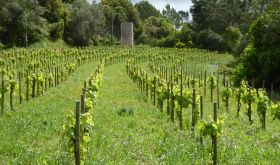
Today Giant Steps make their Chardonnay bottlings from grapes grown in single, specified vineyards in one of Australia’s coolest established wine regions so no acid needs to be added to make bracingly refined wines. The grape bunches are pressed whole as in so many of the finest Burgundy domains. No yeast is added. Instead they rely on the ambient yeast population that has built up in the atmosphere of vineyard and winery in an attempt to express more profoundly the local character, and to add a wider, less predictable range of flavours. The second, softening malolactic fermentation, converting harsh malic acid to softer lactic acid, is almost de rigueur for most Chardonnay producers around the world but Sexton and Flamsteed do all they can in the vineyard to keep malic acid levels so low that they don’t have to do this second fermentation, preferring instead to make wines so high in natural tartaric acid that they need a year or two in bottle to soften before being released, and have a respectably long life.
The result, to judge from the last three vintages of their Chardonnays from Tarraford and Sexton vineyards, is a series of wines with a very definite local character but with a build rather more like steely Chablis than, say, a rich Chardonnay from Sonoma or even Meursault. While the 2007s tasted so crystalline and pure, one of them almost reminded me of a dry Rieslng (high praise in my book), the oldest vintages I tried, the 2005s, still seemed youthful with lots to give, which is certainly not true of the majority of three year-old Australian Chardonnays. Sexton assured me that their 2002 is still “gorgeous”.
“But we don’t want publicity for ourselves,” said Sexton over sautéed morels on the toast. He and Flamsteed then proceeded to show me Chardonnays from five other Australian producers they admire, including an extremely tight, mineral-scented Reserve 2005 from their most high-profile neighbour in the Yarra Valley, De Bortoli. It was another Yarra Chardonnay that really stood out for me, a particularly dense, tightly wound one from a new producer I have been following with increasing admiration. PHI’s winemaker, as at De Bortoli, is the super-talented Steve Webber, who also makes wine in Burgundy and, much to the Victorian wine community’s relief, is currently shaking up the all-important Melbourne Wine Show. Like the Giant Steps wines, PHI’s whites are made from a single vineyard, the Shelmerdine family’s high altitude Lusatia Park, on light red volcanic soils which seem to leave their imprint in the wines (and their Sauvignon Blanc 2007 may be even better than this Chardonnay 2006).
The Shadowfax Chardonnay 2005 Victoria was a rather disappointingly simple bottle of a wine that has garnered much praise in Australia but Brian Croser’s Tappanappa, Tiers Vineyard Chardonnay 2007 Adelaide Hills, was a tense, introvert and lime-scented wine very much in Sexton’s new, tight style. The Giaconda Chardonnay 2004 Beechworth on the other hand, from one of Australia’s most highly regarded Chardonnay producers, Rick Kinzbrunner, who admits to being inspired by California’s more luscious way with Chardonnay rather than anything as lean as Chablis, was much bigger-scaled than any of the others. It had clearly been softened by malolactic fermentation and was much the richest wine we tasted, including the Martin Wassmer, Schlatter Maltesergarten Weissburgunder 2005 Baden, Coche Dury 2005 Bourgogne Blanc and Closson Chase Chardonnay 2006 Beamsville Bench from Ontario I had brought along for the purposes of comparison. Ex-chef Flamsteed particularly loved the German wine. We all found the Canadian impressively made but a bit sweet, while Sexton was convinced the burgundy had a cork problem. “When will the French ever learn?” he asked, fondly regarding his screwcaps.
Enquiring subsequently about how exactly the Tappanappa wine had been made, I found that the yeast had been a single strain isolated from a ‘wild’ fermentation seven years ago. Like the Sexton wines (and many burgundies), it had been fermented and left unsulphured on the lees until the Australian spring, although this wine did go through malolactic fermentation.
The real key to these leaner styles of Australian wine of course is less in the winemaking minutiae and more in the geography. An increasing proportion of Australia’s top Chardonnays are now grown in the country’s cooler wine regions such as the mist-shrouded Adelaide Hills or the cooler corners of Victoria and New South Wales. Curiously, Tasmania has yet to make a great still Chardonnay.
But to judge from my tastings of Chardonnays from the likes of Curly Flat, Kooyong, Leabrook Estate, Penfolds Yattarna, Shaw and Smith M3 Vineyard and Yering Station Reserve, the quiet revolution in wine style is well underway. Refined Australian Chardonnay is no oxymoron; it just needs a bit of attention.
Funnily enough, after our lunch, I heard again from Phil Sexton, who admitted wryly that the wine he had most enjoyed was in fact the Giaconda, the one that fits his lean, mean archetype least closely. There could indeed be a danger in making Australian Chardonnays that are too refined. Split the difference would be my advice. And presumably Ms Jones’ s tastes have become a lot more sophisticated nowadays?