Viticulture textbooks tend to ignore one vital element in their chapters about vineyard site selection and go on about climate, aspect, drainage and water supply. But in a world in which we are told consumers are more and more interested in experiences rather than just products, proximity to tourists is surely a more and more useful attribute in a winery.
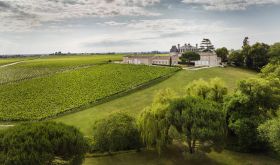
Chinese investors, mirroring the massive current Chinese investment in tourism in the Australian state of Victoria, realised this when they bought the historic Goona Warra vineyard in Sunbury just 15 minutes from Melbourne’s international airport, and not much more than half an hour of the city centre. So confident are they of the future of wine tourism that last year they announced plans to spend AU$45 million on creating a resort there which, if successful, would include a 76-suite hotel, group accommodation, revamped restaurant, ‘function centre’, brand-new winery, villas and a spa.

Last November I was told that the new owners were yet to cross the road and enter the gates above to visit their neighbours, admittedly their antithesis, at Craiglee Vineyard. As Melbourne wine writer Max Allen points out in his book The future makers – Australian wines for the 21st century, every cocky young winemaker should be sent to Craiglee, ‘to spend some time in the calm company of Pat Carmody, the most humble winemaker I’ve ever met'.
From my European vantage point, I’d like everyone I’ve come across who is convinced that history, terroir influence, restraint and longevity are exclusive to European wines to visit the four-floor bluestone winery built soon after the first vines went in here in 1864. It was gravity-fed (grapes then wine naturally flowing into barrels on the bottom floor) almost a century and a half before the term became so fashionable among winery designers. And the wines show no sign whatsoever of being subject to the whims of fashion.
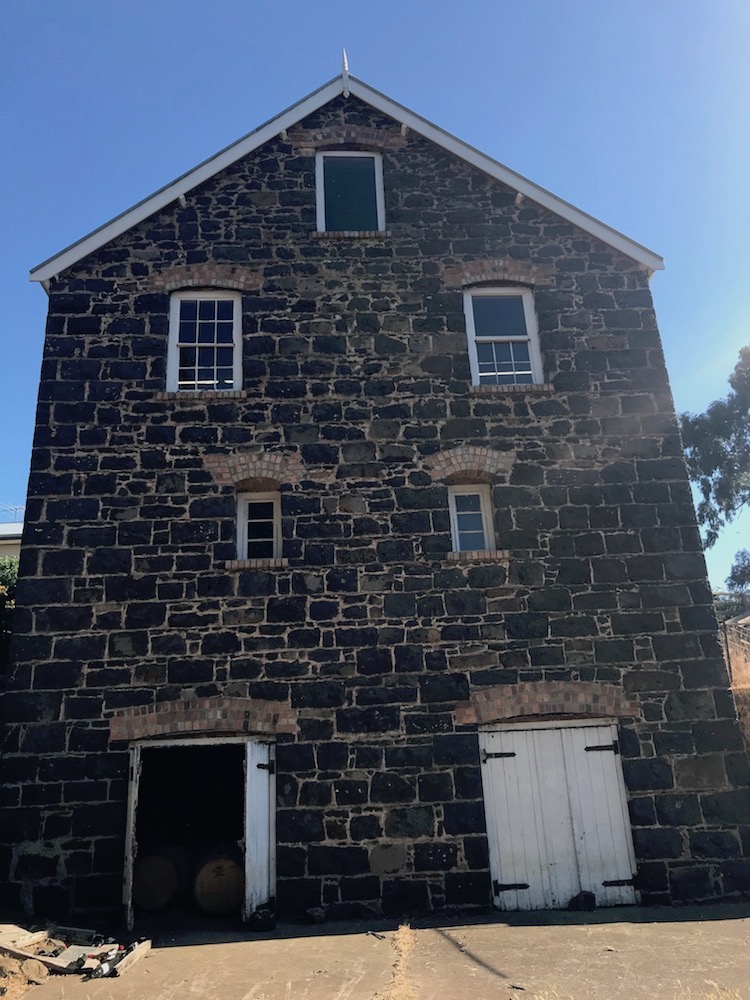
On my first-ever visit to Craiglee I felt immediately at home. The thick stone walls, the open rafters, the uneven exposed floorboards, the open wooden steps between floors, the cast iron hoists – they were all identical to the Victorian warehouse my great great grandfather, a seed merchant, built next to the Cumbrian house I was brought up in.
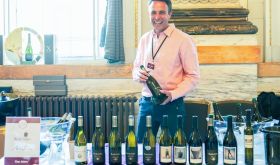
Pat Carmody, red-cheeked, white-haired, and with a constant quizzical smile as pictured above right, poured me a taste of the famous Craiglee Shiraz from the four most recent vintages in bottle, from 2015 back to 2012. I found an impressive common thread of freshness and delicacy. Carmody is clearly not scared of tannin; like its stablemates, the 2015 has been made for the long term, and won’t be released until the end of this year. I gave them all unusually consistent scores and tasting notes.
He then asked which other vintages I’d like to taste, before disappearing, amid much clanking of glass, in search of the 1997, 1996 and 1995. They proved to be more of the same plus the patina of age. As Allen writes of the French counterparts to this marvellously sophisticated wine, ‘finding a Cornas or Hermitage with the same finesse and complexity as a good Craiglee Shiraz would be a frighteningly expensive exercise'.
When vines were first planted at Craiglee, by a Victorian MP and newspaperman, Craiglee must have felt very distant from the city. By the late 1920s, sheep were much more attractive economically than the vines that were finally pulled out in the 1940s. The Carmodys were sheep farmers in northern Victoria and bought the Craiglee farm in 1961, intending in the long term to capitalise on land values in greater Melbourne.
But John Brown, paterfamilias of Brown Brothers, one of the more important Victorian wine companies, urged the Carmodys to revive the vineyard. Several bottles of the late nineteenth century Craiglee Hermitage (as Shiraz was then called) were unearthed in the 1970s and provided proof that this spot could make truly fine, long-lived wine. So Carmody took himself off to agricultural college to study wine science and planted the first vines of the new era in 1976.
He now has 10 ha (25 acres) of vines, five of them Shiraz, three Chardonnay, a little Viognier and a little Cabernet. ‘What do I know?’ he asked with typically wry modesty, when I asked which variety does best in his sandy, stony, alluvial soils. ‘If a proper winemaker was here, I don’t know what sort of wines they’d make. I only went to Wagga [the popular name for Riverina agricultural college].’
Strong winds off the cool Southern Ocean may well help to keep vines and wines fresh. If Craiglee Shiraz is extra-fine, the Chardonnay is rather idiosyncratic (and so is the Shiraz in an Australian context, so discreet is it). Instead of aping the current Australian Chardonnay super-skinny norm, Craiglee’s version is somewhat unreconstructed: exuberant fruit but remarkably high in natural acidity, partly thanks to suppressing the usual softening malolactic conversion. These too are definitely designed to age; a 1996 Chardonnay was starting to lose fruit but was still a pleasure to taste. With real weight on the palate, this 22-year-old white wine was very definitely still alive.
But the real key ingredient in the Craiglee story is probably Mrs Carmody, the wiry, even more laconic Dianne, who wandered into the winery from the vines she has tended all these years to look me up and down. I must have passed muster because Pat then poured me a taste of his richly smoky, award-winning 1987 Chardonnay, from a bottle with ‘Ants in Bottle’ scrawled on the label. As he pointed out, Chardonnay was a decided novelty in Australia in the 1980s. I wonder how on earth he latched on to it so early. He also tried Sauvignon Blanc and Pinot Noir but confessed, ‘My ego’s not big enough to grow Pinot.’

The original winery was condemned on health and safety grounds many years ago so the wine has to be made in a more modern and much less atmospheric building, but the coolest bottom floor of this cool historic structure built into the steep hillside still houses the barrels. (So higgledy piggledy are they that it would be inappropriate to call it a barrel cellar.) The ceiling is far too low for a forklift, so the traditional 225-litre barrels can be moved only by rolling them out of the darkness on to the bottle-strewn concrete in front of the old wooden door. ‘I know there’s a fashion for bigger barrels nowadays', Carmody acknowledged, ‘but they’d be too heavy for me.’
Young winemakers use the word artisanal in their publicity with abandon. They should all visit Craiglee, open once a month to visitors in search of one of Australia’s finest wines – and only 15 minutes from Tullamarine airport.
WHERE TO FIND CRAIGLEE SHIRAZ
One of Craiglee’s many distinctive characteristics is its idiosyncratic sales distribution. There is no sense of a marketing department here, although the online shop (for Australian addresses only) at craigleevineyard.com is surprisingly sophisticated. Shiraz LTV 2014 (with a ‘little touch of Viognier’) is just AU$35 a bottle.
Wine-searcher.com lists the following, very varied, offers outside Australia. The older the wine, the better the bargain.
2013 €46.65 Wines Direct of Ireland
2012 £40 Hic! Wine of Yorkshire; £34 in bond Berry Bros & Rudd; HK$445 Red Wine Village, Hong Kong
2009 HK$380 Red Wine Village, Hong Kong; £488 a dozen in bond Berry Bros & Rudd BBX
2001 £165 a dozen in bond Cellar Link Marketplace; £170 a dozen in bond BI Reserves
1998 €23.75 Vitis Epicuria, France; €47.80 Luxurious Drinks, Netherlands
See tasting notes in The cool Macedon Ranges with Max. Craiglee is in Sunbury rather than in the Macedon Ranges but is on the way to the latter.