A 26-hour, 1,845-km (1,146-mile) journey by land and sea will take you from New Zealand’s northernmost vineyards, perched near the very tip of the country, to its southernmost in the Alexandra Basin of Central Otago. It’s a distance equivalent to travelling from Edinburgh to Marseilles, however the northern-hemisphere journey has the convenience of the Chunnel instead of an increasingly unreliable 3.5-hour antipodean ferry crossing.
It is this sheer geographical expanse that means most years, any national vintage narrative is a generalisation risking inaccuracy. The 2025–26 season was no different, with at times striking divergence between regions: Hawke’s Bay had its earliest harvest start on record with the Chardonnay harvest underway on 12 February; Marlborough logged its warmest spring in over four decades alongside its second-equal highest growing degree days (GDDs) at 1,492, while Central Otago endured one of its coolest and latest vintages in recent memory, with Gibbston only just creeping over the 800 GDD mark.
Yet, while there were pronounced regional differences, there were some strong unifying threads woven into this season, too. These can be clearly seen in the accompanying line graph, charting deviation from long-term average GDDs across New Zealand’s seven principal wine regions.
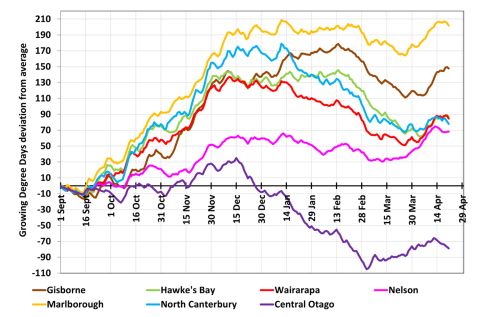
A warm, largely frost-free spring from mid September into November set the stage, accelerating vine growth and supercharging phenological development. Then, just as most Kiwis were digging out the board shorts, jandals and barbeque tools from the back of the cupboard, a cool, unsettled summer entrenched itself. Above-average rainfall was recorded across all regions, heightening disease pressure. Yet just as nerves were fraying, the season turned. An outstanding warm, dry autumn from March into April emerged in most places, restoring order and allowing fruit to reach full potential.
It was, in many respects, a season that read like a novel – opening with momentum and anticipation, drifting into tension through an awkward middle, before resolving with a compelling and satisfying end.
That said, it was the extremities (both north and south) that seemed to face the greatest challenges.
In canvassing perspectives from winemakers and growers across the country, what stands out is not uniformity of experience, but unity of sentiment. Across the board there is a clear confidence in the quality of the 2026 wines. While next week we’ll have a firmer idea about production volumes from our national wine body upon the publication of the annual harvest survey, the consensus is that volumes will be less than average, particularly so in the shadow of the abundant 2025 harvest.
In the wider context, there is a growing acknowledgement that New Zealand wine finds itself in a period of recalibration. Despite our geographical isolation, we are deeply exposed to global market forces, with approximately 90% of our production exported and most of that is, unsurprisingly, Sauvignon Blanc. We are not immune from the pain the global wine industry is experiencing right now. There’s excess inventory, weak demand in certain channels, rising costs and uncertainty.
For some, there are now existential questions about viability as fruit remains unharvested, vineyards are mothballed or grubbed up and difficult decisions are being made. New Zealand’s bulk market has crashed, the drop in demand for grapes leading to bulk-wine price below the cost of production.
Conversely, the strong brands are seeing healthy growth in sales. The market is clarifying what matters and is sending a signal. While the New Zealand wine style of freshness, purity and elegance is what global consumers want, the market is also rewarding wines with identity – those that speak of place, that are underpinned by long-term intent and quality rather than short-term opportunism.
It is tempting to frame this as a correction. I personally hope it is better understood as maturation.
Quality, after all, is rarely accidental. It is the product of sustained effort, discipline and belief over time. That builds reputation. And in moments such as this, those principles tend to reveal their worth. For wine lovers, there is clarity in that, too. Seek out the wines that carry a sense of place, of intention, of integrity. Because in a year like 2026, those are the wines that tell the real story.
Regional breakdown
See this World Atlas of Wine map of New Zealand’s winegrowing regions.
Northland and Auckland
Northland kicked off New Zealand’s 2026 harvest, with picking underway by 23 January. As Peter Jones of The Landing puts it, it was ‘a tricky vintage’, shaped by a La Niña-influenced season that brought clouds, humidity and intermittent rainfall, punctuated by two significant rain events that bookended the growing period.
Disease pressure required constant vigilance in the vineyard. Chardonnay emerged as the standout, with yields around 20% lighter than normal, delivering what are shaping up to be wines of clarity, freshness and drive.
Further south, Michael Brajkovich MW of Kumeu River describes the vintage as a quietly surprising success. Following what he termed an ‘ordinary’ summer, an early January hailstorm threatened to derail the season, stripping foliage and slowing ripening across affected blocks. Crucially, however, it was early enough that damaged berries dried and shrivelled well ahead of harvest, preserving overall fruit quality despite a 10–15% reduction in yield.
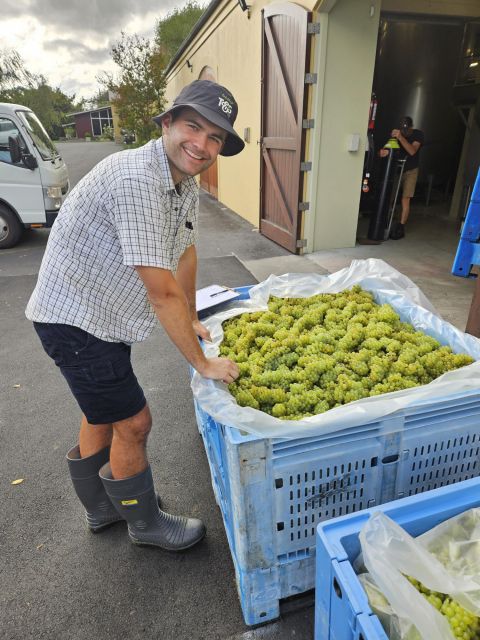
Kumeu River commenced picking for sparkling wine on 4 February, with still wines following from 16 February … And Chardonnay again leads the charge.
Hawke’s Bay
- GDD: 1,405 (≈ +85 above long-term average)
- Rainfall: 531.8 mm (LTA 449 mm)
- Evapotranspiration: 828 mm (LTA 831 mm)
For Warren Gibson of Bilancia, the enduring memory of 2026 is the record early start and an unprecedentedly early finish, allowing him, for the first time in 30 vintages, to enjoy an Easter free from grapes.
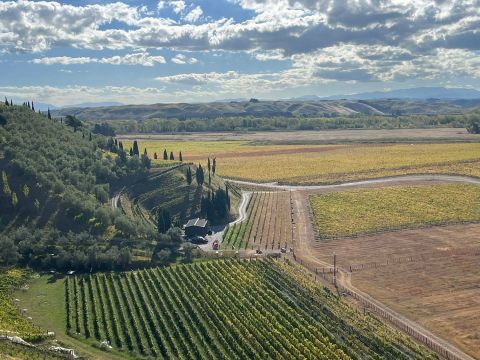
He describes it simply as ‘an extremely good vintage’, and notably the third in a strong run following 2024 and 2025, though stylistically a clear departure from those cooler, drier seasons.
Hawke’s Bay stood apart in 2026 for its consistently warm summer, with numerous days exceeding 30 °C (86 °F). Yet, like much of the country, it was not without moments of tension. Rain events in January and early February briefly resurfaced memories of the challenging 2022 and 2023 seasons, before conditions shifted decisively. What followed was close to ideal: seven to eight weeks of uninterrupted dry weather through harvest, creating what Gibson describes as a near-perfect set-up after the earlier rainfall.
Both data and instinct point clearly to red wines as the standout beneficiaries. In Gibson’s view, it is difficult to imagine a season delivering more favourable conditions – warmth, stability, and complete freedom in harvest timing. Picking decisions were, as he puts it, ‘dialled in by desire, not necessity’. The reds are expected to be fragrant, dense and structured, yet finely balanced.
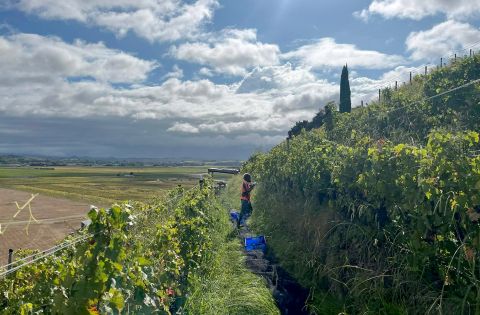
Chardonnay, by contrast, required quicker reflexes due to the combination of early-season timing, late-summer rain and lower acidities. Harvested earlier than usual, the wines are likely to show moderate alcohols, softer textures and a more accessible profile than the tighter line seen in cooler years.
Wairarapa
- GDD: 1,290 (≈ +68.3 above long-term average)
- Rainfall: 567 mm (LTA 452 mm)
- Evapotranspiration: 739 mm (LTA 852mm)
It was a roller-coaster growing season for the Wairarapa according to Escarpment winemaker Tim Bourne, who calls out the exceptionally warm spring and favourable flowering weather, especially for Pinot Noir. Like other regions, it was the absence of summer plus variable rainfall that caused fingernails to suffer before being left alone thanks to the same brilliant spell of autumn weather. Bourne goes so far as to rank 2026 as his ‘second-best vintage of the past five years, behind the exceptional 2024 harvest.’
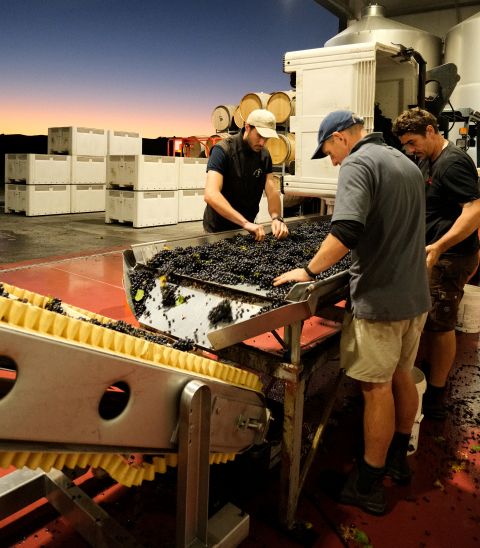
Like Hawke’s Bay, white varieties came on early in the Wairarapa, with Escarpment pressing and processing all their whites before even starting to press the reds – a first for Bourne in his time at the winery. He reports outstanding quality across the board, with Pinot Noir showing excellent depth of colour, ripe tannins, charm and vibrancy thanks to moderate sugar levels. Meanwhile the whites combine energetic natural acidity with impressive fruit weight and texture.
Marlborough
- GDD: 1,492 (≈ +205 above long-term average)
- Rainfall: 438.2 mm (LTA 369.3 mm)
- Evapotranspiration: 904.1 mm (LTA 877 mm)
Marlborough’s story is very similar to that of Wairarapa, with unsettled mid-season conditions coming after a record-breakingly warm spring. Intermittent rainfall and elevated humidity in January raised early concerns around botrytis. Yet, from mid February onwards, the weather stabilised, as cool nights and a long, dry autumn emerged. The vintage reminded Whitehaven winemaker Peter Jackson of some of his first in Marlborough in the mid 2000s, where acids remained ideally high through the ripening period.
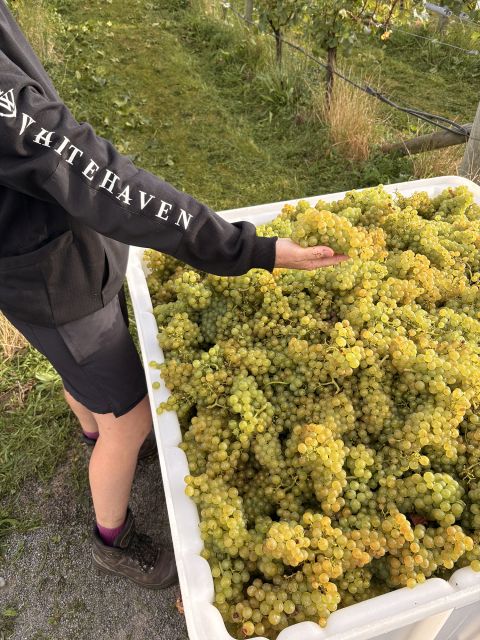
The growing season was warmer and wetter than 2024. The elevated GDD figure is particularly telling, sowing a trend of above-average heat accumulation in recent vintages. But importantly, this warmth did not translate into excess. Instead, it came alongside cooler night-time temperatures from February, which slowed ripening down so that what looked like a record early start became within a few days of the five-year average.
Rainfall might appear a concern but distribution matters more than totals. Much of this rain fell earlier in the season, supporting canopy development and berry growth.
It is this interplay of heat, moisture and then stability that underpins what many are suggesting was a ‘classic’ Marlborough vintage. Chardonnay, Sauvignon Blanc and other aromatic varieties show intensity and clarity, driven by a combination of moderate crop levels and the dry, favourable autumn. Pinot Noir, having weathered early-season dilution risks, regained concentration as berries lost turgor and flavours tightened through the cooler nights. In simple terms, as Matt Sutherland of Dog Point puts it, the flavour is ‘next level good.’
Tasman
- GDD: 1,124 (≈ +63 above long-term average)
- Rainfall: 674 mm (LTA 571 mm)
- Evapotranspiration: 845 mm (LTA 891mm)
Todd Stevens of Neudorf calls 2026 an ‘interesting’ season overall, also noting a greater diurnal shift than what Nelson/Tasman would normally expect. Ultimately this helped shape a long, unhurried ripening period, allowing fruit to develop flavour at moderate sugar levels while retaining clarity and freshness. He has high hopes for the Chardonnay and remarks on the poise and vibrancy in the wines in the cellar.
North Canterbury
- GDD: 1,199 (≈ +76 above long-term average)
- Rainfall: 420 mm (LTA 390 mm)
- Evapotranspiration: 817 mm (LTA 920mm)
Pyramid Valley winemaker Huw Kinch reports a similar weather pattern of early warmth resulting in a flowering two weeks earlier than normal, then a cooler and wetter period from mid December to early March which slowed down ripening. Harvest commenced about mid March. Lighter-than-average bunches in both Pinot Noir and Chardonnay made for lower-than-average yields, and Kinch reports that his fruit showed balanced natural acidity at relatively modest sugar levels, accompanied by excellent flavour development
Similarly, Paul Donaldson at Pegasus Bay was very happy with the whites, particularly Riesling, noting good yields and great quality.
Central Otago
- GDD: 978 (≈ -83 below long-term average)
- Rainfall: 294.4 mm (LTA 278 mm)
- Evapotranspiration: 845 mm (LTA 941mm )
Being New Zealand’s only semi-continental wine region climatically, Central Otago is often the outlier and in 2026 it lived up to that reputation.
A frost-free spring provided an encouraging start, but from there one of the coolest summers the region has experienced in over a decade arrived. Much of the growing season drifted by in the low to mid 20s (70–80 °F), occasionally dipping into the teens (55–66 °F). The late-season reprieve failed to materialise in any meaningful way which resulted in a delayed and compressed harvest, running approximately one to two weeks later than average.
Flowering proved a critical pivot point, particularly in Gibbston. A cold, windy spell in mid December caught Gibbston mid flowering, leading to significant millerandage and very low yields. The compounded effects of disrupted flowering and cool weather pushed the margins of viability – harkening back to ‘the old days’ of Central Otago grape-growing, as winemaker Austin Black put it. Some higher-elevation sites struggled to complete ripening, with blocks still part-way through veraison deep into April.
Yet, as is often the case in Central Otago, adversity did not preclude quality. Black, in his role overseeing fruit intake from across the region at Vinpro, acknowledged that the season could easily be interpreted as difficult, but notes that tannin and flavour ripeness are more closely aligned with sugars and acids than in the warmer 2025 season.
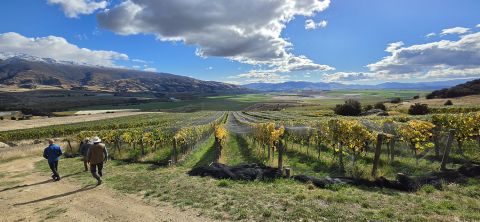
Subregional expression is also compelling. Bannockburn and Bendigo retain their signature fruit weight and structural authority, albeit with a slightly more restrained frame. Meanwhile, Pisa and Alexandra are emerging as early standouts. In many respects, 2026 harks back to an earlier era of Central Otago – before the run of warmer vintages that have shaped recent expectations. It is a vintage less about power and immediacy, and more about line, length and longevity.
All images were kindly provided by the wineries mentioned.