What Professor Roger Corder did on his holidays this year may have implications for the health and longevity of thousands if not millions of us.
Last July Professor Corder toured the mountainous Mediterranean island of Sardinia and brought back with him some rather unusual souvenirs, a collection of phials of various different Sardinian wines – not for drinking but for testing in his lab at the William Harvey Research Institute in London.
He and his team had already analysed a range of wines with much wider international distribution and showed, in a paper published by Nature last December, that different wines vary enormously in their potential to reduce damage to the lining of our arteries, a precursor of the common killer, cardiovascular disease. The white and pink wines he tested had no effect at all in suppressing the production of endothelin, a local vascular hormone that is thought to be implicated in so-called hardening of the arteries, and even the red wines were extremely varied in their relative potency.
Soft reds carefully engineered by Australian winemakers to be drunk young, for example, were much less effective in general than other Cabernets, and the most effective wine of all in this initial analysis was an Argentine red from Mendoza.
This is all connected with each wine's particular mix of polyphenols, the compounds responsible for its colour, tannins and flavour. Some of them are responsible for the effect on blood vessels that suppresses endothelin production and so helps prevent heart disease.
Professor Corder's work is inspired by something much less frivolous than a love of wine. As head of the Institute's Department of Experimental Therapeutics, Professor Corder is acutely aware of the costs, both human and financial, of cardiovascular disease. Like so many others, he sees an urgent need for early screening for heart disease (available so far only very selectively and expensively) and, most importantly, the means to treat those whose arteries show signs of early damage. It seems plausible that certain sorts of red wine may hold the key.
The two most important epidemiological studies of the effect of regular wine drinking on health have shown a 40 to 50 per cent reduction in deaths not only from heart disease but from all other causes – an effect completely absent in beer and spirit drinkers. Professor Corder speculated that a natural consequence of reduced deaths in wine drinkers would be an overall increase in longevity.
His next step was to look for a connection with wine consumption in a notable cluster of centenarians in Sardinia. In the hilly Nuoro region in the east of the island there are three times as many inhabitants over 100 years old as you would expect to find elsewhere in western Europe. Even more unusually, life expectancy in men (traditionally more enthusiastic wine drinkers than women) who reach the age of 85 in this region is greater than their female counterparts. And since in this part of the world, the populace drinks strictly the local wine, this seemed a fruitful line of enquiry for anyone as interested as Professor Corder in the connection between wine and longevity.
Helped by the annual Geoffrey Roberts travel bursary (a charity with which I am involved) he went to Sardinia last summer, visiting wineries in various different parts of the island, including the Nuoro winery in the heart of the region where centenarians are most common.
D H Lawrence was an early British visitor to Sardinia and even wrote about its wines. When Professor Corder expressed an interest in this he was amazed to find a friendly wine producer offering to find several locals who would certainly remember meeting the author in person in early 1921. Another winery in the region had apparently been founded by someone who lived to the age of 104. All this augured well.
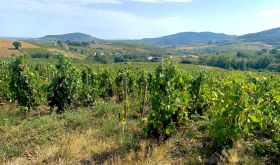
When the samples of Sardinian wines he brought back were analysed, it was found that they all scored highly in their likely ability to reduce artery damage but that the wine from Nuoro, made from the island's highest vineyards, was the most effective by far. Mendoza, which had supplied the most effective wine in the initial survey, is also notable for the altitude of its vineyards.
Professor Corder is beginning to suspect a connection here, not least because it is well known that the synthesis of polyphenols in grapes is stimulated by ultraviolet light. So the more intense levels of UV light encountered at high altitudes is likely to result in unusually high levels of polyphenols.
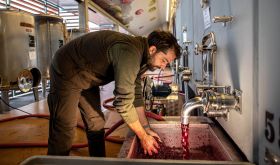
Winemaking methods in Nuoro wineries are also extremely traditional (in sharp contrast, say, to those of a sophisticated Australian exporter) resulting in relatively robust wines that are especially high in polyphenols with vascular protective properties.
Professor Corder is now keen to analyse the wines of the republic of Georgia which has a particularly long history of wine production and, in its most mountainous subregion, a particularly high concentration of centenarians.
An important catalyst for this research into the relationship between the regular consumption of certain red wines and longevity is the high incidence of heart disease in Britain and the United States. Increased consumption of grape polyphenols may be particularly important for certain ethnic groups, as well as others who do not consume wine, for whom fatal heart attacks among those in their 40s are by no means uncommon. This research may also throw light on approaches for preventing heart disease in the wider population.
As screening techniques improve and become more widespread, it may well be that individuals at high risk of cardiovascular disease can be treated with grape polyphenols, taken either as wine – traditionally vinified from the produce of high altitude vineyards preferably – or perhaps, in the case of non-drinkers, in the form of non-alcoholic grape extract. Alcohol, alas, seems to play no part in this potential modern miracle.
The Geoffrey Roberts Award is an international travel bursary of £3000 made annually to a potential achiever in the fields of food, drink and/or hospitality. For more details, see the 2003 Geoffrey Roberts Award.