
Even Bordeaux's château owners themselves admit to surprise at the sky-high prices of the 2009s, in a tortuous, bad-tempered campaign designed to attract as many euros as possible to France's fine-wine capital. It is finally drawing to a close, in time for France's long holidays, with some UK merchants even suggesting 2009 prices are designed to prop up those of the 2005s.
Four years ago the prices for Bordeaux's last exceptional vintage, 2005, seemed quite extraordinarily audacious and we thought we would never see their like again. In the event, the embryonic, unbottled 2009s have been offered at prices between 50 and 100% up on 2005 opening prices, and some are even approaching 2005 current prices.
What is sure is that the 2009 prices make the 2008 vintage look like the bargain of the decade. The 2008 versions of the first growths, the most famous wines of all and a sort of price barometer for any vintage, were initially offered to the Bordeaux négociants, or merchants (traditionally located on the Quai des Chartrons photographed above from a boat full of MWs at last week's Symposium), at around 100 euros a bottle. This may seem like robust pricing by any measure but the opening prices for the 2009 first growths varied between 450 euros for Lafite, Margaux and Mouton, 500 euros for Latour and Haut-Brion and an eye-watering 700 euros for Cheval Blanc.
These prices for the first tranche of wine from each property tell only a small part of the story, however. The top châteaux have got into the habit of offering their young, unbottled wines in at least two tranches during the primeur campaign, with demand for the first tranche dictating the price of the second. This year, the first-growth tranches were smaller than ever, making it impossible for those merchants around the world who bought it to set a price until the second tranche had been announced, generally at 100 euros (200 for Cheval and Le Pin) above the first. The really scary thing is that demand for the top wines seems to have been as exceptional as the vintage itself, even if it is not clear how many people are buying to drink and how many for investment.
To observers, the process of offering this particular vintage has seemed either infuriating or absurd, depending on their interest in actually buying the exotically ripe, yet usually pleasingly fresh, wines produced by the exceptionally propitious growing conditions of 2009. Never before have so many second wines been dripped on to the market in a coy attempt to gauge demand for their more serious stablemates.
The négociants report that by far the bulk of sales have been to merchants and traders in the UK – even if many of them are banking on selling on to Asia. As eighth-generation Bordeaux merchant Pierre Lawton of Alias put it, 'England has been massive. I've been surprised by how important the UK has been. Sales to the US have been much more modest than usual, although the weaker euro has helped.'
This is not the only thing that has surprised him about the 2009 primeur campaign. 'I thought demand would be spread across the board in terms of quality but it's been much more weighted towards the top end. In fact it has been quite difficult to sell wines below 40 euros a bottle – unless they came out at the beginning of the campaign. There seems to have been a lot of speculative buying.'
Below the top rank, prices have been all over the place. Some châteaux sold out immediately – Pontet-Canet, offered initially to the négociants at 72 euros (exactly the same as Léoville-Poyferré, Lynch Bages and Montrose), was a particular success this year with owner Alfred Tesseron able to place his entire and substantial offering in the space of 30 minutes. Ducru-Beaucaillou and Figeac, on the other hand, struggled to find buyers at their respective prices of 180 euros and 160 euros, nearly three times the 2008 opening price.
Pricing is clearly critical, although the means by which it is arrived at is still decidedly quaint, relying as it does on hundreds of oblique discussions between producers, Bordeaux's 300 négociants, and the 93 courtiers, or brokers, who negotiate between them. All interested parties may socialise together in Bordeaux's spacious nineteenth-century salons, but it would be more than a broker's career was worth to let slip to anyone a producer's intended opening price before it was announced or – worse – exactly how many cases were on offer in total.
Partly to retain this mystery, château owners use several different brokers to sell one year's wine. The most important quality in a broker, who receives a flat two per cent commission, from the négociant, for their pains, is tact. He (and they are all, so far, men although one young woman is in training) has to mediate between château owners, who invariably want to ask too much for their wines, and what the key négociants say they feel the wine is worth. As Alfred Tesseron says, 'If I price my wine too low, everyone thinks my wine is bad. If I price my wine too high, everyone thinks I'm mad. The brokers' job is to translate, in a very polite way, what I say.'
Prices are typically announced in the early morning in France, so the UK wine trade has had a series of particularly long working days over the last couple of months. In the US, according to Georges Haushalter of AXA's Bordeaux négociant Compagnie Médocaine, the time difference forces the really keen trade buyers to 'sleep by their phones' in order to take full advantage of opening offers. The French and the Belgians are much slower to react – in fact demand for top 2009s in France has been generally sluggish – while the Swiss are much more reactive.
After his series of calls, the broker then reports back to the anxious château proprietor. The bullseye is for all négociants to place orders immediately for their entire allocation. 'I'll think it over' is circumlocutory Bordeaux wine-trade speak for a sniggering 'you cannot be serious'.
Prize for the most ambitious price rises this year goes to the Haut-Brion stable, whose opening price of 540 euros for La Mission Haut-Brion is nearly three times more than the 2005 opening price, as shown on the revealing tables on www.liv-ex.com, while, as usual, the LVMH effect has inflated the price of Cheval Blanc to the truly luxurious level of 900 euros a bottle from the château.
Are the 2009s overpriced? One prominent, wine-loving Bordeaux wine négociant confessed to me over dinner in Bordeaux last week that his wife, reacting like so many others to the combination of low interest rates and the general excitement over the 2009 vintage, had been urging him to use his specialist knowledge to invest in it. 'I'm not buying any 2009s', he told me firmly, adding, 'Not now anyway. Maybe later.'
Most eye-watering prices
(in euros per bottle from the château to the Bordeaux négociants – second tranche where applicable)
Le Pin 1,050
Ausone 800
Cheval Blanc 700
Haut-Brion, Latour 600
Lafite, Margaux, Mouton 550
Yquem 540
NB Pétrus and Lafleur are not sold on the Bordeaux place, but would otherwise presumably feature towards the top of the this table.
See our tasting notes on more than 500 2009 bordeaux on Purple pages, and comments on the forum by our members on the subject.
How the most expensive vintage ever was sold
• 5 min read

This is a longer version of an article also published in the Financial Times.


Choose your plan

For the dad who loves wine
Start your membership this Father’s Day with 20% off a full year. Expert reviews, honest writing, no guesswork. Or, gift a membership and save 20%.
Enter code DAD20 at checkout. Offer ends 22 June.
Member
$135
/year
Ideal for wine enthusiasts
- Access 295,305 wine reviews & 16,095 articles
- Access The Oxford Companion to Wine & The World Atlas of Wine
- Access askJancis, our AI wine assistant


Inner Circle
$249
/year
Ideal for collectors
Everything in “Member”, plus:
- Early access to the latest wine reviews, 48 hours in advance
- Early access to the latest articles, 48 hours in advance
Professional
$299
/year
For individual wine professionals
- Access 295,305 wine reviews & 16,095 articles
- Access The Oxford Companion to Wine & The World Atlas of Wine
- Access askJancis, our AI wine assistant
- Early access to the latest wine reviews & articles, 48 hours in advance
- Commercial use of up to 25 wine reviews & scores for marketing
Business
$399
/year
For companies in the wine trade
Everything in “Professional”, plus:
- Commercial use of up to 250 wine reviews & scores for marketing
- Access to submit wines for review
- Offer memberships to your employees and manage them from a single place
- API access available for an additional fee
More Free for all

Free for all
Here are the questions posed to those striving for those coveted two letters, among them our very own Sam Cole-Johnson...
Free for all
Carefully cultivated wildness in the Home Counties. And an unmissable wine list. Farm to fish to fork to frying pan...
Free for all
Jancis makes a suggestion. A version of this article is also published by the Financial Times. See also South Africa’s...
Free for all
Pauline Vicard asks, can wine still justify its cultural relevance? The answer to this question, rather than economics, may become...
More from JancisRobinson.com
Tasting articles
A tour of this underappreciated and sometimes misrepresented Portuguese wine region. Today, we cover the northern half – Encostas d’Aire...
Inside information
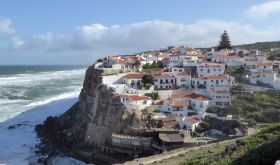
The wines of this Portuguese region are emerging from the shadows of their history. Above, Azenhas do Mar in Colares...

Drinks not wine
An exploration of the transparency of Japanese whisky – and how that sensibility is influencing whiskey-making back in Scotland. Above...
Tasting articles
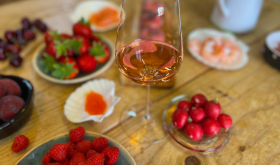
Rosés for every occasion, from poolside pinks to robust BBQ-ready versions. We at JancisRobinson.com view the world through rose-tinted spectacles...
Wines of the week
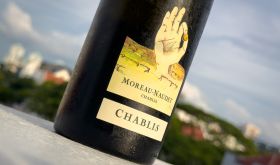
A reference Chablis, albeit in a riper style, available from $39.95, £31.95 . Prompted by our recent forum discussion about...
Tasting articles
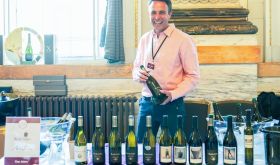
The many Cape Chenins and Chenin blends shown at a big South African tasting in London in May reviewed. Tertius...

Don't quote me
Chris Howard asks, if there’s such a thing as volcanic wine, can there be oceanic wine? Above, seals on the...
Tasting articles
Bien Boire (‘drinking well’) en Beaujolais is more fun than Bordeaux’s primeurs and offers plenty of excellent wines, reports Natasha...