
Even Bordeaux's château owners themselves admit to surprise at the sky-high prices of the 2009s, in a tortuous, bad-tempered campaign designed to attract as many euros as possible to France's fine-wine capital. It is finally drawing to a close, in time for France's long holidays, with some UK merchants even suggesting 2009 prices are designed to prop up those of the 2005s.
Four years ago the prices for Bordeaux's last exceptional vintage, 2005, seemed quite extraordinarily audacious and we thought we would never see their like again. In the event, the embryonic, unbottled 2009s have been offered at prices between 50 and 100% up on 2005 opening prices, and some are even approaching 2005 current prices.
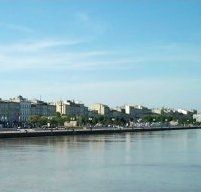
What is sure is that the 2009 prices make the 2008 vintage look like the bargain of the decade. The 2008 versions of the first growths, the most famous wines of all and a sort of price barometer for any vintage, were initially offered to the Bordeaux négociants, or merchants (traditionally located on the Quai des Chartrons photographed above from a boat full of MWs at last week's Symposium), at around 100 euros a bottle. This may seem like robust pricing by any measure but the opening prices for the 2009 first growths varied between 450 euros for Lafite, Margaux and Mouton, 500 euros for Latour and Haut-Brion and an eye-watering 700 euros for Cheval Blanc.
These prices for the first tranche of wine from each property tell only a small part of the story, however. The top châteaux have got into the habit of offering their young, unbottled wines in at least two tranches during the primeur campaign, with demand for the first tranche dictating the price of the second. This year, the first-growth tranches were smaller than ever, making it impossible for those merchants around the world who bought it to set a price until the second tranche had been announced, generally at 100 euros (200 for Cheval and Le Pin) above the first. The really scary thing is that demand for the top wines seems to have been as exceptional as the vintage itself, even if it is not clear how many people are buying to drink and how many for investment.
To observers, the process of offering this particular vintage has seemed either infuriating or absurd, depending on their interest in actually buying the exotically ripe, yet usually pleasingly fresh, wines produced by the exceptionally propitious growing conditions of 2009. Never before have so many second wines been dripped on to the market in a coy attempt to gauge demand for their more serious stablemates.
The négociants report that by far the bulk of sales have been to merchants and traders in the UK – even if many of them are banking on selling on to Asia. As eighth-generation Bordeaux merchant Pierre Lawton of Alias put it, 'England has been massive. I've been surprised by how important the UK has been. Sales to the US have been much more modest than usual, although the weaker euro has helped.'
This is not the only thing that has surprised him about the 2009 primeur campaign. 'I thought demand would be spread across the board in terms of quality but it's been much more weighted towards the top end. In fact it has been quite difficult to sell wines below 40 euros a bottle – unless they came out at the beginning of the campaign. There seems to have been a lot of speculative buying.'
Below the top rank, prices have been all over the place. Some châteaux sold out immediately – Pontet-Canet, offered initially to the négociants at 72 euros (exactly the same as Léoville-Poyferré, Lynch Bages and Montrose), was a particular success this year with owner Alfred Tesseron able to place his entire and substantial offering in the space of 30 minutes. Ducru-Beaucaillou and Figeac, on the other hand, struggled to find buyers at their respective prices of 180 euros and 160 euros, nearly three times the 2008 opening price.
Pricing is clearly critical, although the means by which it is arrived at is still decidedly quaint, relying as it does on hundreds of oblique discussions between producers, Bordeaux's 300 négociants, and the 93 courtiers, or brokers, who negotiate between them. All interested parties may socialise together in Bordeaux's spacious nineteenth-century salons, but it would be more than a broker's career was worth to let slip to anyone a producer's intended opening price before it was announced or – worse – exactly how many cases were on offer in total.
Partly to retain this mystery, château owners use several different brokers to sell one year's wine. The most important quality in a broker, who receives a flat two per cent commission, from the négociant, for their pains, is tact. He (and they are all, so far, men although one young woman is in training) has to mediate between château owners, who invariably want to ask too much for their wines, and what the key négociants say they feel the wine is worth. As Alfred Tesseron says, 'If I price my wine too low, everyone thinks my wine is bad. If I price my wine too high, everyone thinks I'm mad. The brokers' job is to translate, in a very polite way, what I say.'
Prices are typically announced in the early morning in France, so the UK wine trade has had a series of particularly long working days over the last couple of months. In the US, according to Georges Haushalter of AXA's Bordeaux négociant Compagnie Médocaine, the time difference forces the really keen trade buyers to 'sleep by their phones' in order to take full advantage of opening offers. The French and the Belgians are much slower to react – in fact demand for top 2009s in France has been generally sluggish – while the Swiss are much more reactive.
After his series of calls, the broker then reports back to the anxious château proprietor. The bullseye is for all négociants to place orders immediately for their entire allocation. 'I'll think it over' is circumlocutory Bordeaux wine-trade speak for a sniggering 'you cannot be serious'.
Prize for the most ambitious price rises this year goes to the Haut-Brion stable, whose opening price of 540 euros for La Mission Haut-Brion is nearly three times more than the 2005 opening price, as shown on the revealing tables on www.liv-ex.com, while, as usual, the LVMH effect has inflated the price of Cheval Blanc to the truly luxurious level of 900 euros a bottle from the château.
Are the 2009s overpriced? One prominent, wine-loving Bordeaux wine négociant confessed to me over dinner in Bordeaux last week that his wife, reacting like so many others to the combination of low interest rates and the general excitement over the 2009 vintage, had been urging him to use his specialist knowledge to invest in it. 'I'm not buying any 2009s', he told me firmly, adding, 'Not now anyway. Maybe later.'
Most eye-watering prices
(in euros per bottle from the château to the Bordeaux négociants – second tranche where applicable)
Le Pin 1,050
Ausone 800
Cheval Blanc 700
Haut-Brion, Latour 600
Lafite, Margaux, Mouton 550
Yquem 540
NB Pétrus and Lafleur are not sold on the Bordeaux place, but would otherwise presumably feature towards the top of the this table.
See our tasting notes on more than 500 2009 bordeaux on Purple pages, and comments on the forum by our members on the subject.
How the most expensive vintage ever was sold
• 5 min read
This is a longer version of an article also published in the Financial Times.


选择方案
会员
$135
/year
适合葡萄酒爱好者
- 存取 297,281 条葡萄酒点评 & 16,158 篇文章
- 存取《牛津葡萄酒指南》及《世界葡萄酒地图集》
- Access askJancis, our AI wine assistant


核心会员
$249
/year
适合收藏家
Everything in “Member”, plus:
- Early access to the latest wine reviews, 48 hours in advance
- Early access to the latest articles, 48 hours in advance
专业版
$299
/year
供个人葡萄酒专业人士使用
- 存取 297,281 条葡萄酒点评 & 16,158 篇文章
- 存取《牛津葡萄酒指南》及《世界葡萄酒地图集》
- Access askJancis, our AI wine assistant
- 提前 48 小时获取最新葡萄酒点评与文章
- 可将最多 25 条葡萄酒点评与评分 用于市场宣传(商业用途)
商务版
$399
/year
供葡萄酒行业企业使用
Everything in “Professional”, plus:
- 可将最多 250 条葡萄酒点评与评分 用于市场宣传(商业用途)
- Access to submit wines for review
- Offer memberships to your employees and manage them from a single place
- API access available for an additional fee
More Free for all

Free for all
这家领先的新浪潮南非葡萄酒生产商正在展望未来。本文的一个版本由金融时报 发表。另请参阅这篇 帕拉迪乌斯垂直品鉴,他杰出的白葡萄酒混酿。...

Free for all
杰西斯 (Jancis) 回忆她遇到过的最迷人的葡萄酒生产者。上图为尼尔 (Neill) 在他的双桨园 (Two Paddocks)...

Free for all
在第一轮评审之后,我们很高兴开始发布今年写作比赛参赛作品中的最佳作品。所有入选作品均未经编辑发布...

Free for all
非凡的海鲜和完美搭配的魔力在火箭仓库 (The Rocket Store)。上图为博斯卡斯尔港 (Boscastle harbour)。...
More from JancisRobinson.com
Wines of the week
Domaine Lafage’s Moutou from the Côtes Catalanes is not only delicious but also supports environmental research in this hot, dry...
Tasting articles
Jancis plunges into these distinctive wines, if not the distinctive country. Above, from producer Dugladze’s website, characteristically Georgian amber Rkatsiteli...
Tasting articles
大红葡萄酒继续在奔富王国占据主导地位,但变革即将到来。上图为奔富的玛吉尔庄园 (Magill Estate)。 澳大利亚葡萄酒管理局...

Tasting articles
沃尔特 (Walter) 关于这个显著易饮年份报告的总结部分。今天,评论来自南部和东部村庄卡斯蒂廖内法莱托 (Castiglione...

Tasting articles
关于这个棘手年份的最终报告,如今展现出非凡的清新和易饮性。今天,我们将评鉴来自多个村庄以及北部和西部村庄凯拉斯科 (Cherasco)、罗迪...

Inside information
墨西哥的葡萄酒产业为应对气候挑战提供了经验教训,常驻墨西哥的记者兼侍酒师卡洛斯·博尔博亚 (Carlos Borboa) 如是说...

Vinomakase
理查德 (Richard) 的新专栏 Vinomakase 探讨专家如何将葡萄酒与日本料理搭配...

Bite-sized
位于圣奥尔本斯 (St Albans) 大教堂区的一家 15 世纪酒吧,提供最新潮的美食盛宴。 前厅酒吧仍然令人安心地保持着酒吧风格...