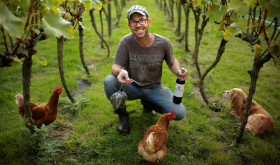
28 September Dr José Vouillamoz, grape geneticist and co-author of Wine Grapes, pictured above in his native Switzerland, is not pleased. At all.
The Italians have once more managed to protect what should not be protected! Back in 2009, they succeeded in protecting the name Prosecco for their own use by sleight of nomenclature: the grape variety’s name Prosecco became the wine’s name, and its Friulian synonym Glera became the grape variety’s name. This was done for obvious commercial reasons, ignoring international rules (the International Code of Nomenclature for Cultivated Plants) and any ampelographical logic (see our book Wine Grapes for details).
This time, the Italians have protected the name Vermentino for the white wine grape variety that has been cultivated for centuries in northern Italy, southern France, Corsica and Sardinia, often under local synonyms: Favorita in Piemonte, Pigato in Liguria, Rolle in southern France, etc.
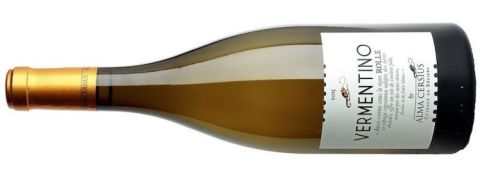
They have taken advantage of the EU directives of 2018 regarding labelling and protected designations of origin by justifying the protection of Vermentino with the Italian designations of origin Vermentino di Sardegna DOC and Vermentino di Gallura DOCG. Consequently, the variety name Vermentino is now exclusively allowed on labels for Italy, Australia, Croatia and the US (these last three having negotiated permission, on wines with protected origins) but not in any other countries. This is particularly difficult for Languedoc producers who have developed a market for their wines labelled Vermentino and will now have to use the local synonym Rolle instead. Producers on Malta, where Vermentino also has been on the rise over the past decade, will also be affected.
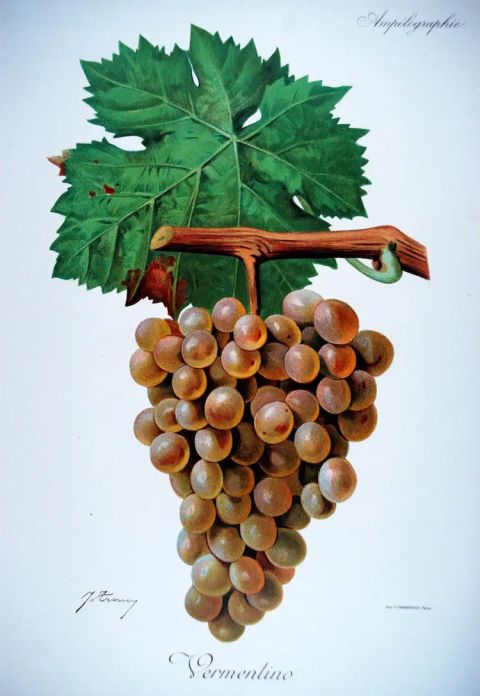
I strongly disagree with what I consider a sleight of hand in which the rules are used for purely commercial purposes. I am fundamentally against any protection of historical grape variety names. (The illustration above from Viala and Vermorel's famous early 20th-century ampelography shows how well established the name Vermentino was in France even then.) Established varieties such as Vermentino were born from natural crossings that occurred spontaneously in the vineyard, without any help from human hands. Therefore they belong in the public domain. The case is different with man-made crossings that are performed to obtain new varieties or hybrids, which can be registered and protected through the International Union for the Protection of New Varieties of Plants (UPOV), an intergovernmental organisation with headquarters in Geneva in my home country of Switzerland. Spontaneous crossings such as Vermentino, Merlot, Cabernet Sauvignon, Pinot and most of the varieties that are cherished by wine lovers should not be protected!
I fear that the Italian example will open a Pandora's box. If so, what's next on the list in Italy? I’m afraid that it's too late because the answer is already in the EU directives of 2018 referred to above, unfortunately. For example: Teroldego Rotaliano is a protected appellation, therefore the use of the grape name Teroldego is currently restricted to Italy, Australia and the US. Montepulciano is a protected denomination, therefore the use of the grape name Montepulciano is currently restricted to Italy. And, worst of all, because those same EU directives recognise Sangiovese di Romagna as a protected denomination, that fact currently and officially restricts use of the grape name Sangiovese to Italy, Australia, Croatia and the US – just like Vermentino!
According to UPOV, only recently bred varieties can be protected. In my opinion, the EU directives of 2018 are wrong, and denominations like Vermentino di Gallura and Vermentino di Sardegna should be self-sufficient, without the need to protect the name of the grape variety.
I am saddened to see that EU regulations are stronger than any international rule preventing regions from protecting the names of their traditional varieties. To demonstrate the absurdity of this, I suggest that the French create the following appellations and protect their grape variety names with EU directives: Syrah du Rhône AOP, Cabernet Sauvignon de Bordeaux AOP, Chardonnay de Bourgogne AOP, Gamay du Beaujolais AOP, etc. And let the party begin!