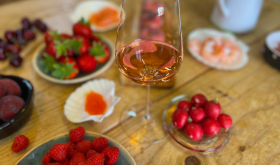

In early October I visited Jerez de la Frontera for the first time. Every morning around 7 am, rhythmic snatches of Andalusian Spanish would drift up and float through the open window of my Airbnb. When the smell of hot oil joined the conversation, I would swing my feet to the floor, pull on pants and a shirt and head out to the street.
Walking past tables laden with fresh produce, I’d take my place in a long line of people waiting to buy fresh churros from a large open-air kiosk. At the front of the line I’d be handed a quarter-kilo of churros, piping hot and wrapped in grey paper blossoming with oil stains. Jesús, who owns a separate kiosk, would bring me a café con leche as soon as I caught his eye through a mass of people pulling out chairs, kissing, hugging and calling for coffees for friends who had just joined them.
In the evening, I’d repeat this ritual, only instead of kiosks I’d visit a tabanco, and instead of churros there would be gildas (vinegar-marinated anchovies with manzanilla olives and pickled guindilla peppers on a toothpick), chicharrones, payoyo cheese and atun encebollado (a tuna and onion stew served with potatoes). Coffee would be replaced with pints of Cruzcampo lager or copas of sherry. Laughter and chatter would drown out flamenco music playing on overhead speakers.
Tabancos are famous for serving sherry from barrel. They’ll generally have at least one fino, manzanilla, amontillado, oloroso and cream sherry ‘de la casa’ that they source in bulk from a local bodega. Of course, the quality of the wine is only as good as the quality of the tabanco – and if you aren’t careful, the sherry can be pretty dismal.
The solution, when in doubt, is to skip the house sherry and order instead La Guita – the single best-selling Manzanilla in the world, at a price point that leaves plenty of pocket change for gildas.
In every shop I entered, in every tabanco I dined at, the friendly orange capsule waved at me from a shelf, promising a bone-dry sherry with pungent yeasty bread-dough notes, citrusy acidity and a saline finish. It might cost €0.5 more a copa but it never let me down.
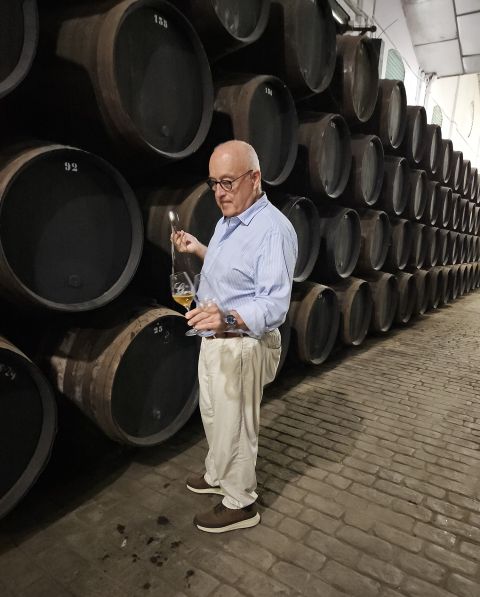
As fortune would have it, I got to visit La Guita. When Eduardo Ojeda (above) – until recently, the technical director for Grupo Estévez (owners of Valdespino, Bodegas Marqués del Real Tesoro and La Guita) – introduced me to the winemaker for La Guita, Beatriz Caballero (below), I immediately asked her how she managed to keep quality so high with such large production.
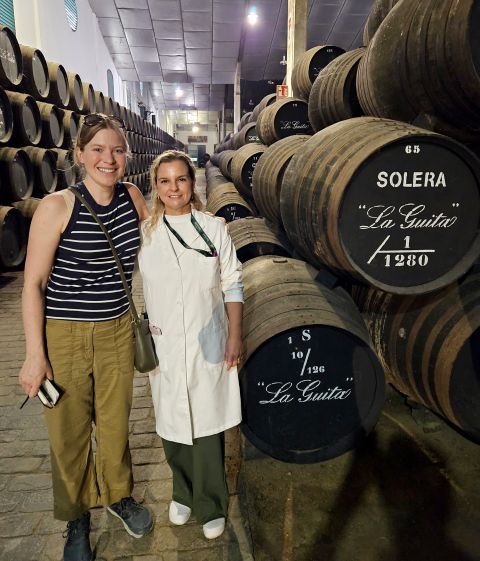
What ensued was a back and forth of Caballero answering in Spanish, Ojeda translating, and me asking for clarification every fifth word. But what it mainly boils down to is this …
- La Guita is the only large-production Manzanilla brand to source grapes exclusively from Sanlúcar de Barrameda.
I know. You’re thinking, ‘but Manzanilla is legally required to be made in Sanlúcar’. It is required to be made in Sanlúcar. But the grapes can come from anywhere in Jerez. And if you buy the idea that the cooler, more humid climate of Sanlúcar affects flor growth (the yeast that’s responsible for the delicious lightness and brightness of fino and manzanilla – Tara has described how it works here) – then you’d be daft not to believe that the climate also affects vine growth and grape chemistry – ultimately resulting in a lighter, crisper wine. - Grapes are sourced almost entirely from the famous pago of Miraflores.
Miraflores, which spans around 325 hectares (c 800 acres), has been planted to vines since at least the 18th century and is renowned for the quality of grapes produced. The albariza is purer here than in most of Sanlúcar and the vineyard slopes gently upward, facing the sea, allowing Atlantic breezes to flow through the vines. - The 96% grape spirit used for fortification is distilled from Palomino grapes from the Jerez DO.
Most brands use generic grape spirit (most of which actually comes from La Mancha). Grupo Estévez began sending declassified Palomino grapes to a local distillery years ago so that the aromatic quality of their fortifying spirit would be in line with the aromatic quality of their wines. - La Guita spends longer in cask than most Manzanillas.
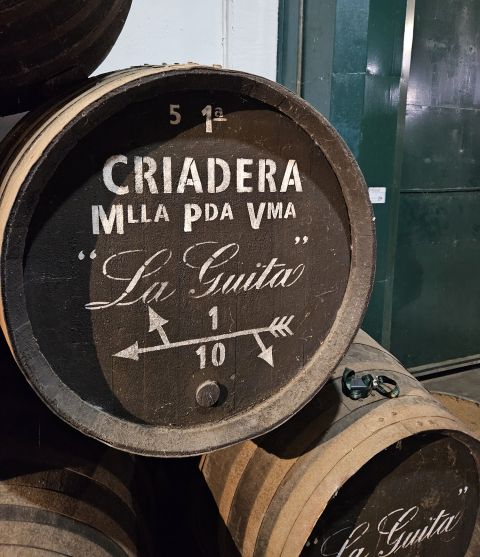
Manzanilla spends on average three years in cask, but La Guita is kept in cask for 4.5 years, giving the wine a sharper flor character. - La Guita is bottled six (yes 6!) times every year.
Once manzanilla is bottled, it’s best to consume it as fresh as possible. To help ensure this, La Guita bottles six times a year. This means two things: the manzanilla is continually fed with new wine to keep the flor yeast strong and vital, giving the wines more flor character; and the bottles on the shelves near you are as fresh as possible (provided the retailer turns over their inventory).
I know you’ve heard this from other wine writers, but good sherry is magic. It is also somehow, inexplicably, miraculously, inexpensive. But if we want to keep it that way, we’d do best to drink more of it. Ojeda wasn’t quiet about the challenges facing the agricultural industry. To put his worries in churro terms …
The wheat for churros is grown in Spain, sometimes in Andalusia. However, the wheat industry is seeing a downturn not unlike the wine industry’s as people consume less gluten. The oil the churros are fried in used to be sunflower oil grown in Andalucia, but now it’s mostly imported from Ukraine. The salt used to come from the Cádiz salt flats; now cheap salt is imported from China. The sugar you dip your churros in traditionally came from sugar beets grown in Andalucia. The last manufacturer of beet sugar will close in 2026. If you don’t use it, you lose it.
Ojeda reminded me that in 1973 there were around 23,000 ha (nearly 57,000 acres) of vineyard in Jerez. Today there are around 6,500 ha (c 16,000 acres). That’s not just a problem for wine drinkers – it’s a problem for anyone who loves the churro kiosks, cafes con leche and tabancos in Jerez that are built on the wine industry. Sherry built Jerez and sherry will keep Jerez alive. So please, next time you’re out shopping or sitting at a bar and you think you’d like a copa with your olives and almonds, order some sherry. And if you don’t know what you’re looking for, you can always count on that orange capsule waving at you from the shelf.

Find this wine
Members can find recommendations for many more sherries in our tasting notes database.