It’s a shame that wine seems to be becoming less popular with consumers just as we’re seeing so many exciting wine revolutions in terms of what’s produced. Or perhaps the two phenomena are related. Producers realise they have to change the status quo to attract new wine drinkers?
Of course wine has always evolved but the pace of change at the moment is faster than it’s ever been. We had the whole emergence of the natural wine craze, on an international scale even if France was at the forefront. Then, in terms of cohesive national movements, that called New Wave South Africa was arguably the first of the current era. And now in Britain, the very merchant who first championed it, Robin Davis of Swig, is going crazy about Italy, specifically ‘an exciting new wave of young talent and new ideas that challenge the large, powerful producers that have dominated the market for so long’. I’m looking forward to tasting the evidence.
France is coming to terms with both a lack of takers for many of its wines and the revitalising influence of a new generation of producers, as catalogued, for example, in the American wine writer Jon Bonné’s recent two-volume tome The New French Wine.
But France and Italy established themselves as estimable wine producers decades ago. Arguably a more significant development is the Spanish wine revolution. Spain is the world’s third most important wine producer, and is of course the source of a unique wine, sherry, as well as some sublimely ageworthy Rioja and innumerable dramatic reds from Ribera del Duero, a wine region on the Castilian plateau famous only for the long-lived classic Vega Sicilia until the late twentieth century.
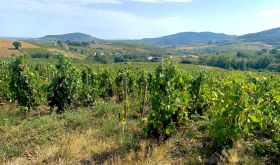
But today there truly is a revolution in vineyards – vineyards more than cellars – all over the country. Evidence of this was available in profusion in London at the end of last month in the form of almost 500 wines shown by producers considered Viñateros (literal translation ‘winegrower’). Importer Indigo Wine organised the first Viñateros tasting in 2017 and drew up this definition:
Viñateros is an event celebrating Spanish artisan growers who work with minimal intervention in the vineyard and the winery to make authentic wines reflective of their respective regions and wine cultures. The Viñateros all believe that great (and original) wine is made in the vineyard, and that site expression is more important than winemaking technique. Collectively, they are responsible for the significant increase in quality that Spanish wine has undergone in the last two decades.
A Viñatero must encompass many or all of the following qualities: independently owned, committed to site-specific and low-intervention winemaking and the principles of land stewardship, focused on indigenous grape varieties and the restoration of historical practices.
That nearly 100 producers met all or most of these requirements is surely evidence of a Spanish revolution.
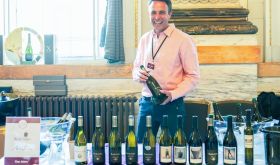
The first Viñateros tasting, with 50 wineries, was at Tate Modern. The 76 wineries who qualified for the second one three years later, just before lockdown, dictated a move to the vast Lindley Hall in Victoria, which was also the site of the third one this year. It was buzzing, with curious professional tasters lining up to be allowed in and a host of confident producers who had descended on London. This time as many as 20 UK importers participated (there were only seven first time around).
One of the most eye-catching attendees with his shock of stand-up hair was the American importer Eric Solomon of European Cellars. He’s already planning to stage an American version of Viñateros in the US in 2025 or 2026. The only vaguely similar event in Spain is the Salón de Vinos Radicales in Madrid, but only half as many wines are shown.
Viñateros exhibitors truly are alternative. Of the total of 92 producers this year there were just four from Ribera del Duero – Dominio del Águila, Bendito Destino, Goyo Garcia and Valdaya – and only nine from Rioja: Akutain, Alonso & Pedrajo Viticultores, Arizcuren, Artuke, Jose Gil, Lindes de Remelluri, MacRobert & Canals, José Luis Ripa (showing a single pink wine) and Tentenublo.
More representative of the wines featured were names as relatively obscure as Bizkaiko Txakolina, Ribeira Sacra, Méntrida, Valle de la Orotava, La Seca, Arribes, Cebreros, Valdejalón, Bullas and also Corpinnat, the new, artisanal version of Cava. (You can see how difficult it is for those of us responsible for The World Atlas of Wine to map the wine regions of Spain satisfactorily; they are scattered all over the country and extend as far into the Atlantic as the Canary Islands.)
For quite a time I used to rail against Spain’s dependence on just one grape variety, the Tempranillo that is the dominant grape of Rioja, Ribera del Duero, Toro and many other northern Spanish wines. But at Viñateros 2024 an amazing total of more than 80 Spanish grape varieties were responsible for the wines shown, with only minor incursions of the well-known international varieties such as Cabernet Sauvignon and Syrah/Shiraz. Many other wines were billed as ‘field blends’, based on vineyards so old that they were planted with an undisciplined cocktail of different varieties.
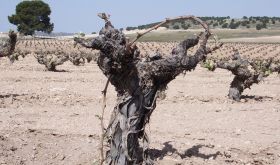
Garnacha, the Grenache of the southern Rhône, continues to be increasingly celebrated by Spanish wine producers, not least because the vines are old enough to have especially well established root systems and are able to produce wines of real complexity. One Garnacha-based wine stood out for me – Guix Vermell 2019 from Terroir Sense Fronteres in Montsant in the hinterland of Barcelona. But then I looked at the approximate price listed in the tasting booklet: closer to £300 than £200 a bottle. It’s based on a four-ha plot of 75-year-old vines just outside the famous Priorat wine zone unearthed by Dominik Huber, co-founder of lauded Priorat producer Terroir al Límit, in which star South African producer Eben Sadie once had an interest.
The exciting thing about the Viñateros collection, however, is that most of the wines are much more reasonably priced, and it is by no means an exhaustive selection of new-wave Spanish producers. My recommendations below are not based solely on the Viñateros tasting, which was so wide-ranging that I had to choose a theme so decided to concentrate on reds, mainly those from north-east Spain.
But Spain is also responsible for some great whites. The mainly Albariño-based whites of Rías Baixas in the far north-west are infinitely more interesting today than when they first became fashionable 10 or 20 years ago. White Rioja is now taken seriously, and there is a host of deep-flavoured whites based on grapes such as Albillo, Verdejo and Xarello.
My fellow Master of Wine and Spanish specialist wine writer Sarah Jane Evans cleverly invited the new Spanish ambassador to the UK to the Viñateros event. Apparently, he was hugely impressed and expressed himself determined to update the cellar at the embassy to reflect what he tasted, and plans to invite the next cohort of Viñateros to a reception at the embassy in order to showcase new-wave Spain there. Or was he just being diplomatic?
Recommended new-wave Spanish wines
Reds
Comunica, Vi del Mas 2022 Montsant 13.5%
£15.53 Les Caves de Pyrène
Finca Museum, La Renacida 2021 Cigales 13.5%
£23.60 VINUM
Dominio del Urogallo, Pésico Tinto 2018 Cangas 13.5%
£23.73 Les Caves de Pyrène
Antoine Graillot & Raúl Pérez, Encinas 2020 Bierzo 13.5%
£23.95 Yapp Bros
Finca Museum, La Renacida 2019 Cigales 13%
£25.81 3 Wines
Mas Martinet, Martinet Bru 2020 Priorat 14%
£27.20 Justerini & Brooks
Soca-Rel Escursac 2022 Mallorca 12.5%
£33.50 The Sourcing Table
Soca-Rel Manto Negro 2022 Mallorca 12.5%
£33.50 The Sourcing Table
White
Dominio del Urogallo, Pésico Blanco 2017 Cangas 12.5%
£28.08 Les Caves de Pyrène
Access to tasting notes, scores and suggested drinking dates for our 12,000 tasting notes on Spanish wines is included in membership of JancisRobinson.com. For international stockists, see Wine-Searcher.com.
Our Spanish specialist Ferran Centelles' 116 articles are also available to subscribers.