As the Bordelais wrestle with how much they can ask for their first good vintage in five years, after a slump in demand and with considerable sterling depreciation compared with the euro, it seems appropriate to consider what red bordeaux has to offer us. More than any other wine it presents reliable ageability, a well-established secondary market and is available in substantial quantities.
This means it is highly suitable as a candidate for a full-blown comparative tasting at 10 years old, the traditional age at which serious claret was always considered ready to broach. My predecessor as FT wine correspondent Edmund Penning-Rowsell demonstrated this principle with his annual series of first-growth dinners.
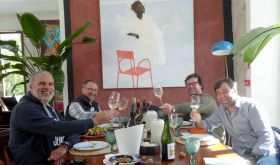
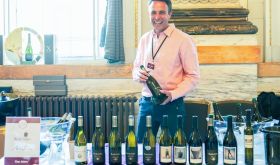
In today’s information-hungry age, Edmund’s leisurely dinner for six with seven or eight bottles has been replaced by a comparative blind tasting of 96 wines for 18 wine merchants and wine writers – all before lunch. This is fine-wine traders Farr Vintners' annual rite, depending mainly on bottles left over from the Southwold tasting of the same wines at four years old and my picture shows the first of these events in their smart new Thames-side offices. The Farr tasting is nowadays generally preceded by a rather smaller, sighted one organised for media and customers by their rivals BI. BI showed 69 2006s this year, including many that were not in the Farr tasting, so that in the last three months I have had the chance to taste well over 100 of the most famous 2006 red bordeaux, many of them twice. So what are they like?
As in 2015, the vines were affected by drought in July but August was cooler and wetter than usual. But the big difference was that the harvest in 2006 was beset by rain and some grapes were picked in haste. The deliciously ripe tannins so evident in the embryonic 2015s are notable by their absence in the 2006s.
The 2006s are definitely denser and more concentrated than the 2007s that we tasted blind last year while waiting for the tannic 2005s to mature. In many wines, particularly in St-Émilion, they end with uncomfortably rasping tannins – in many cases a sign of over-extraction. Again, particularly but not exclusively on the right bank, the wines smelt very much older than they tasted. In many a St-Émilion the nose was overripe, even porty, as though the wine might be over the hill, but on the palate there was still this great slug of drying tannins.
This was very much a Merlot vintage but it had nothing of the delightful freshness evident in the embryonic 2015s I tasted last month in Bordeaux. Tertre Roteboeuf was, as ever, a full-blown exception: the particularly ripe fruit was almost floral in its intensity but the wine had so much vitality it was almost throbbing. I admire some vintages of Pavie but this one was too Californian for me. In the same mould, Angélus seemed to have a bit more freshness. The finish of Ausone is still pretty austere but Cheval Blanc is already a lovely wine that seems to have a great future too.
The Pomerols, admirably, were much fleshier and had much better-managed tannins than the St-Émilions, made when St-Émilion producers still seemed to be in thrall to excessive new oak and alcohol. This group of Pomerols was more homogeneous, with a rather exotic Gazin, somewhat to the group’s surprise, the favourite overall other than Le Pin, which costs well over £1,000 a bottle. Certan Marzelle, the sort-of second wine of Hosanna, was one of the better-value wines from this relatively expensive appellation. I loved Vieux Château Certan, whose 2015 is also so good. Le Pin was obviously superior but our particular bottle of the equally luxurious Petrus, alas, was oxidised. (At Petrus prices, back-up bottles are an unaffordable luxury.)
The Pessac-Léognans, like all the left bankers, were noticeably deeper coloured than the St-Émilions and Pomerols. This was a very mixed array of wines with all sorts of different styles and too many of the wines worryingly evolved for a 10-year-old red bordeaux. Smith Haut Lafitte was its usual reliable self while Haut-Bailly was just the right side of overripe. Of the two wines from the Haut-Brion stable, I was particularly impressed by La Mission with its richly savoury beef extract flavour and massive concentration. Château Haut-Brion itself is another rich, beefy wine that is almost ready to broach.
We also tasted two Haut-Médocs, of which Cantemerle, hovering on the cusp of overripeness, was arguably one of the best-value wines of all.
Phélan Ségur often does well in these blind tastings and the 2006 with its welcome vitality was no exception, but the star of the St-Estèphe flight was, perhaps not surprisingly, Cos d’Estournel – although it tasted rather too pretty to be a typical example from this far northern commune of the Médoc.
The Margaux wines seemed rather sweet and Merlot-dominated (particularly the du Tertre that often beguiles me when served blind). We had two pairs of first and second wines – Palmer and Alter Ego together with Rauzan Ségla and Ségla – and in each case the second wines were, as one might expect, some of the most forward we tasted. The Ségla seemed to have a bit more character and vitality than the Alter Ego. Château Margaux itself showed extremely well: very fluid and noble but still a long way off its peak, I’d say.
In the St-Julien flight were many very respectable wines even if nothing much to set the heart racing. The terroir as usual shone out as being at a very high level but I found no wine that was absolutely compelling, even if Léoville Barton and Branaire-Ducru shone out above their peers.
The Pauillacs as a group showed very well, including those below first-growth level. They seemed to have more lift and sophistication than the slightly stolid St-Juliens. At the top end we were blighted by a badly cork-tainted bottle of Latour while the two Rothschild firsts were polar opposites: Mouton all richness and roundness while Lafite was elegant, a little withdrawn and set for the long term. From the same two stables, I’d back the Mouton stablemates d’Armailhac, Petit Mouton and particularly Clerc Milon before the rather brawny Duhart Milon from the Lafite Rothschilds.
The Lafite second wine, Carruades de Lafite, was a notable absentee from our array of 96 wines, together with Brane-Cantenac, Haut-Batailley, Trotanoy, Latour à Pomerol and L'Évangile. Of these only the silky Brane-Cantenac was in BI’s line-up.