Is alcohol the key ingredient in your wine or a necessary inconvenience? The way wine drinkers feel about the most stimulating component in their beverage of choice probably depends on how wine fits into their lives. For those few of us who are wine professionals required to taste hundreds of wines every week, and for anyone with a low tolerance of alcohol, wine's active ingredient can be something to be feared rather than relished.
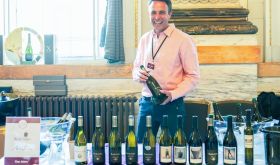
We professionals steadfastly, and completely unself-consciously, spit during the working day (Gerald Weisl of Weimax's photograph shows his fellow US wine merchant Charles Neal at work in Bordeaux), while someone with a history of bad reactions to really potent ferments presumably takes careful note of the alcoholic strength that has by law to be stated on all wine labels. An occasional, recreational drinker on a budget, on the other hand, might well actively seek out those bottles that promise the heftiest hit.
Alcohol levels in wine can range from as little as 5% for a really sweet Moscato d'Asti in which much of the grape sugar remains unfermented into alcohol to more than 20% for a port whose natural alcohol level has been boosted by added spirit. When I started writing about wine 35 years ago, wines that naturally reached more than 14% alcohol were rare, but now it is not uncommon to see alcohol levels of more than 16% cited on labels.
For a working paper published last May by the American Association of Wine Economists, tens of thousands of alcohol levels for wines imported between 1992 and 2007 by the LCBO, the powerful liquor monopoly of Ontario that buys wines from all over the world, were analysed and compared with actual temperature increases in their regions of origin. The wine economists were able to show that the increase in average alcohol levels was much greater than could be explained by any change in climate and concluded 'our findings lead us to think that the rise in alcohol content of wine is primarily man-made'. They cited in particular 'evolving consumer preferences and expert ratings' as more likely to have driven up alcohol levels. In other words, wine producers perceive that wine consumers and authorities alike want wines that taste riper and in particular have softer tannins and lower acidity (acid levels fall as grapes ripen) and have deliberately chosen to have grapes picked later than they once were.
In their study, mean actual alcohol levels over this long period were highest in American, Argentine, Australian and Chilean wines (13.88, 13.79, 13.75 and 13.71% respectively). The average for New World countries analysed was 13.65 while the European average was only 13.01, boosted considerably by Spain's 13.43%.
What was quite startling however was the difference between the alcohol percentages that appear on labels and the actual alcohol levels as analysed by the Canadian monopoly. 'The label claims on average', claim the researchers, 'understate the true alcohol content by about 0.39% alcohol for Old World wine and about 0.45% for New World wine'.
In conversation with winemakers, the economists found a general reluctance to admit quite how high alcoholic strengths have to be in order to achieve the imagined goal of gustatory fullness and roundness. It seems as though producers are aware of a general wariness of high alcohol levels (to which some Australian producers have recently responded by producing a wave of rather vapid but very early-picked wines) yet wish to deliver a velvety texture that they reckon can be achieved only by prolonged 'hang time' of grapes on the vine.
This under-reporting of alcohol is even easier in the US than in Europe. Stated alcohol levels can be up to 1.5% less (or more) than the actual alcohol in wines up to 14% in the US where the tolerance for wines over 14% is still a full percentage point whereas wines sold in the EU have to be labelled with an alcohol percentage no more than 0.5% different from the actual level. The study found that the countries with the most notable understatements of the alcohol content were Chile, Argentina, Spain and the US.
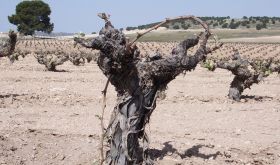
Although the average alcoholic strength of the French wines analysed was 'only' 13.01%, even France is home to some extremely potent wines in the hottest, driest southern wine regions. As I pointed out in The rock and Rhône of 2010 last week, some Châteauneuf-du-Pape 2010 was more than 16% alcohol and I have been alarmed recently by comments from some wine lovers who report they have already stopped buying Châteauneuf because they find it inconveniently potent. Part of the problem here in the southern Rhône is that the principal grape variety, Grenache Noir, in particular needs a very extended time on the vine before its full potential is realised. As Vincent Avril of the widely admired Clos des Papes argues, 'there is now 15 days between sugar and phenolic (tannin) ripeness, so we are forced to make high alcohol wines'.
He illustrated this with a taste of the most sublime, ethereal, spicy, even delicate young 2010 from a cask containing a blend of Grenache and Mourvedre grapes that apparently notched up 16.1% alcohol. Some high alcohol wines are marked by an uncomfortable burn on the palate or throat, but clearly not in the hands of a master winemaker. And herein lies the problem. That wine was so delicious I would be tempted to drink it in quantity, but I would curse it the next morning.
Producers in Châteauneuf are aware that they are in a very special position. They are allowed to use a wide variety of other grape varieties too and there are signs of increased plantings of lighter varieties such as Counoise, Vaccarèse, Muscardin and Cinsault. Other producers are experimenting with pruning times, carefully timed irrigation and leaf removal in an attempt to close that gap between sugar and phenolic ripening.
In the south west rather than south east of France, producers in Roussillon are also all too aware of how alcohol levels have risen. Producers such as Gérard Gauby have seen biodynamic viticulture help cram more flavour into earlier-picked grapes.
I think we can expect even more discussion of this issue over the years to come.
Wines that are naturally relatively low in alcohol:
Brachetto d'Aqui 5%
Moscato d'Asti and other light, fizzy Muscats 5-5.5%
Sweet German Rieslings 7-9%
Lambrusco 7-9%
Hunter Valley Semillon 10-11%
English still wines 10-12%
Loire wines 11-12.5%
Riesling in general 10-13%