I accepted an invitation to speak on ‘The future of restaurants’ in São Paulo from Prazeres da Mesa, the dynamic Brazilian food and wine magazine, because I had heard from numerous sources about the rapidly rising quality and number of this city’s restaurants. There are now almost as many restaurants in Brazil’s biggest city as in New York (12,500 to the latter’s reputed 13,000).
But there was an ulterior motive. A quick scan of the airline schedules meant that beforehand there was time to fly up to Salvador on the north-west coast of this vast country and, however briefly, explore the charms of Bahian cooking, about whose distinctive flavours and textures I had heard wildly enthusiastic reports. I little realised at the planning stage that I was setting myself up for an extraordinary surprise and the equivalent of a major, professional defeat.
Bahian cooking is distinctive because of the confluence of the Portuguese presence during their long administration, the strong if diverse African influence via the 4.5 million slaves imported on to the shores of Salvador’s famous bay, and the bounty of the sea, rivers and countryside that surround it. Bahian food is considered particularly hot and spicy, even across the rest of Brazil, but this is a misapprehension. Bahians like to add their local, hot pepper to whatever they eat but this condiment, whether dry or as a piquant sauce, is considerately always served on the side. I once added too much to a dish of shrimps stewed in palm oil, a cooking staple increasingly being replaced by the much lighter olive oil. I never repeated the experiment.
But a short stay in Bahia did convince me of one thing: that their breakfasts are the best I have ever encountered. In the two hotels we stayed in, Kiaroa, an ‘eco-luxury’ resort half an hour’s flight south of Salvador, and Convento do Carmo, a luxurious conversion of the largest Carmelite monastery in Latin America, it struck me that the combination of the Portuguese way with cakes and pastries alongside the indigenous ingredients underpinned by the Brazilian mastery of the art of frying, made for the kind of start to the day that could hardly be bettered. Green maize converted into either a warm custard or a warm cake; fresh tapioca puddings with intense fruit compotes; cashew nut and graviola juices and, best of all, the pineapple, mangoes and papaya that were just so much riper and sweeter than anything eaten only a few hours’ flight away in São Paulo let alone in the northern hemisphere.
Even a short run of these sumptuous breakfasts, however, led to the realisation as we were handed the menus for dinner at Convento do Carmo that I seemed to have met my match. Its Executive Chef, Alexander Vick, draws his culinary inspiration specifically from Portugal, in keeping with the fact that the Convento is managed by the Pousadas of Portugal. Although we were to eat very well, there was not only a moment’s hesitation during which we, most unusually, agreed to skip the first courses and concentrate instead on the main courses and desserts, but we even briefly considered the possibility of skipping either lunch or dinner the following day. Our spirits and appetites may have been somewhat restored by Vick’s creamy salt cod served in a coconut shell, creamy fried octopus and rice with tiger prawns as well as a clever reworking of various Portuguese convent desserts incorporating the local, fresh coconut, but I went to bed concerned that professionally, at least, the full weight of Bahian cuisine may have come to represent my Waterloo.
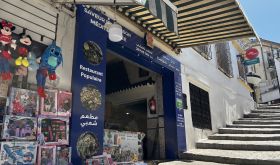
Happily, we were to manage both lunch and dinner the next day, although it was the particular charms of Salvador that were to reinvigorate us. They began to unfold at 10am when Jorge, an English speaking guide with an excellent grasp of his city’s extraordinary history and no obvious interest in the usual tourist stops, took us on a three hour walking tour that ended with a speedy descent down the Elevador Lacerda, the city’s landmark lift from the historic city on the cliff tops to the Mercato Modelo by the quayside, where capoeira, the African martial art that has come to symbolise the city along with its music, is practised. From there it was just a 10 minute walk along the sea front to Amado, a highly regarded restaurant which, since it opened on this site two or three years ago, has led to a renaissance of this area.
Physically, Amado is a most attractive space, its cube-like interior composed of dark Brazilian hard wood, masses of tropical vegetation inside and outside and one enormous window looking out on to the sparkling sea, where muscular young Brazilians swam. Amado boasts one of the best wine lists in the city and we drank a very fresh 2006 Brazilian Sauvignon Blanc from Villa Francioni. But it was unfortunately the case of a good bottle of wine let down by some rather disappointing food made even less enjoyable by some distinctly languid service.
Two places that night were to more than compensate and the bills for cocktails watching the most spectacular sunset and dinner were to come to considerably less than the 340 reais (£110) that our lunch had cost.
The first was Cafelier, a narrow coffee house 100 metres from the Convento that serves a dual purpose. While the front sells jewellery, prints and CDs of the music it plays, there is, past the small kitchen, just room for six ornate tables and a view across the city’s busy harbour. Watching the sun set with caiparinhas, the Brazilian cocktail now on a roll worldwide, costing four reias, and a wonderfully friendly waitress, was pretty close to perfection.
And it was only that night, our last in Bahia, that we discovered the place to initiate oneself in its distinctive cooking thanks to Senac, the Brazilian organisation responsible for the training of its country’s apprentices. The Salvador branch is on the notorious Largo do Pelourinho in the historic quarter, where millions of slaves were traded in the 18th century. Above its Gastronomic Museum is a restaurant run by the catering students, under their tutors’ management. The young waitresses, in traditional skirts and headscarves under which their dark eyes flash, look stunning,
The restaurant occupies a long room overlooking the city, similar to the sacristies of many of the nearby churches, with some lovely glass light fittings but one that overall has seen better days. But the great advantage for anyone wanting to learn about Bahian cooking and with limited Portuguese is that all the food is laid out on a heated table and labelled in English as well as Portuguese. There is a vast array of food to choose from with each dish cooked both with the traditional palm oil or with olive oil. Highlights included: stewed ray in palm oil; pumpkin puree; a spicy oxtail stew; fish in coconut milk; manioc to add crunch; a dark and sticky local version of coconut ice and myriad preserved and fresh tropical fruits.
With even cheaper caiparinhas our bill came to 110 raies (£33) for three, this simple dinner taught me a lot about Bahian cooking and made me yearn to return.
Kiaroa, www.kiaroa.com.br
Convento do Carmo, www.pousadas.pt
Amado, www.amadobahia.com.br
Cafelier, www.cafelier.com.br
Paraiso Tropical, 71-3384-7464, a restaurant specialising in bahie's rich diversity of tropical fruits which I was disappointed to miss.