For detailed tasting notes on well over 800 2004 burgundies see tasting notes
The 2004 vintage in Burgundy is already compromised by the 2005 about which trumpets are being sounded, perhaps prematurely. This is unfortunate since there are many good white wines and some much better-than-expected reds, almost all at reduced prices and showing much more geographical definition than the previous vintage. Even so, this is not a vintage that burgundy lovers absolutely have to have in their cellars.
The keynote of the vintage, in both colours, is acidity and no excess of weight – just the opposite in fact of its predecessor, the heatwave 2003. A 2003 was included in one of my tastings of 2004s and, boy, did it stand out for weight and richness. So probably the most sensible policy is to stock up on the most successful 2004 white burgundies, which can offer the sort of zesty refreshment and promise of reasonable development in bottle over the next five years or so that few 2003 whites seem to promise. The vintage it most closely resembles, in both red and white wines, may well turn out to be 2001.
That said, now that the similarly high-acid 1996 vintage in Burgundy has proved so much less rewarding than it seemed at first, there is a certain wariness about acidity in Burgundy, and much more detailed consideration of the precise level of antioxidant sulphur additions necessary to preserve the wine during ageing. The 2004s don’t look suitable for particularly long-term cellaring.
The crop level, as throughout France in 2004, was relatively high and among the thousand(!) samples of 2004 burgundies tasted recently in London, there were very few indeed one would describe as concentrated. Not that burgundy should be dark and alcoholic – finesse and vitality are to be treasured in Burgundy’s myriad expressions of Pinot Noir and Chardonnay – but 2004 is not a vintage to go long on if you are in search of beef and size, even if the grapes ended up reaching much higher natural ripeness levels than was expected even as late as early September.
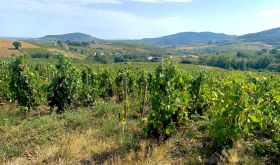
The vines made up for the short crop of 2003 by sprouting vast quantities of buds and growers too welcomed the prospect of having much more wine to sell and found it difficult to decide on the optimum level of debudding and summer pruning. Then a cool, grey early July set the scene for rampant oidium, or powdery mildew, in the vines. Conscientious growers had to work hard at their sulphur sprays to protect their crops, and the bigger houses which buy in grapes must have been presented with some decidedly dubious wine made from affected grapes. I would be very wary of 2004s from Burgundy’s less scrupulous producers.
But worse was to come, in the form of thunderstorms and sometimes hail which punctuated a pretty miserable summer and caused particularly notable damage on 19 jul and 23 aug – especially around Pommard/Volnay and in the north of the Côte de Nuits as far north as Chambolle Musigny. The anti-hail system of firing rockets into the threatening clouds has been abandoned in Burgundy for lack of financial support, but some may have regretted this in 2004.
The riper the grapes the more likely it is that hail will split the skins, exposing the grapes to rot, so the August storms did particular damage but, as Jacques Lardière the long-serving winemaker at Louis Jadot argues, hail can in some cases have a positive effect on the quality of the resulting wine, and not just because the crop level is reduced. Small hail spots may cicatrise and the grapes produce the resveratrol compound as a defence mechanism which can add extra vitality and richness to the wine. He cites some 1989s’ superiority over the same wines made in hail-free 1990 as evidence of this. Certainly Jadot’s Pommard Rugiens 2004, from a part of the vineyard badly affected by hail, was an impressive wine and there are many attractive Pommards and Volnays in 2004 no matter how badly hailed these neighbouring villages were.
Fortunately for the Burgundians, their luck turned after the late August hailstorms. Rain stopped and some north winds dried out the vines. The grapes appear to have made up sugar levels considerably in the fine period that lasted until all the grapes were picked, sometimes more than once through the same vineyard to maximise final ripeness. Those who picked late were rewarded with much more substantial flavours. But the recently-installed sorting tables were sorely needed and a high proportion of fruit had to be discarded by the better producers. There was fanatical settling of musts and maximising cleanliness and healthy fruit flavours among the most conscientious winemakers. Even so, some of the wines I tasted seemed less than 100 per cent clean and fresh.
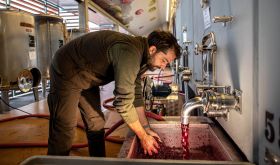
Although sugar levels picked up briskly in the fine, late summer, acid levels remained notably high, with sometimes four times more of the harsher, malic acid than in 2003. Winemakers hope to transform malic into the softer lactic acid by their second, malolactic fermentations but these, which are usually over in the spring following the vintage, have been almost incredibly prolonged and some 2004s shown in London last month were still obviously going through their ’malo’.
Producers of white wine were generally happier than those of red. I certainly tasted many very impressive Chablis – which in 2004 looks like a relative bargain – and some lovely whites from the Mâconnais, but the most exciting aspect of this vintage was the proportion of seriously successful whites from villages such as Meursault, Puligny and especially Chassagne, which is not always the case.
What with the exceptional quality of white wines from the Rhône valley too, 2004 in shorthand is a particularly useful year for those with gaps to fill in their French white wine stocks.
SUPERIOR WHITE 2004 PRODUCERS
Domaine Marquis d’Angerville
Domaine Jean-Marc Boillot
Domaine Michel Bouzereau
Bret Brothers
Domaine Marc Colin
Domaine Philippe Colin
Domaine Michel Colin-Deléger
Domaine Jean-Paul & Benoît Droin
Domaine William Fèvre
Domaine Vincent Girardin
Domaine Patrick Javillier
Domaine Rémi Jobard
Rémi Jobard
Domaine Vincent & François Jouard
Domaine Hubert & Olivier Lamy
Domaine Michel Laroche
Maison Deux Montille
Domaine Bernard Morey
Domaine Marc Morey
Domaine Morey-Coffinet
Domaine Michel Niellon
Domaine Rémi Rollin
Domaine Guy Roulot
Domaine Saumaize-Michelin
SUPERIOR RED 2004 PRODUCERS
Domaine Comte Armand
Domaine Robert Arnoux
Domaine Denis Bachelet
Domaine Ghislaine Barthod
Domaine Bertagna
Domaine Sylvain Cathiard
Domaine Drouhin
Domaine Drouhin-Laroze
Domaine René Engel
Domaine Sylvie Esmonin
Domaine François Faiveley
Domaine Follin-Arbelet
Domaine Fourrier
Domaine Geantet-Pansiot
Domaine Hudelot-Noëllat
Louis Jadot
Pascal Lachaux
Domaine Comte Liger-Belair
Domaine Hubert de Montille
Domaine Georges Mugneret
Nicolas Potel
Domaine de la Pousse d’Or
Domaine Nicolas Rossignol
Domaine Rossignol-Trapet
Domaine Roumier
Domaine Armand Rousseau
For detailed tasting notes on well over 800 2004 burgundies see tasting notes