
With a nod to the famous Hospices de Beaune auction the Consorzio of Barolo, Barbaresco, Alba, Langhe and Dogliani (hereafter 'the Consorzio', to speed things up) last month offered a preview of 'Barolo En Primeur' to a select few journalists including me. Barolo En Primeur is a charitable auction which will be held simultaneously in Grinzane Cavour and New York on 30 October 2021.
The Langhe has a long history of charitable institutions connected with wine estates, notably the Opera Pia Barolo, founded in 1864 by Marchesa Giulia Falletti di Barolo, whose wine reportedly was Carlo Alberto di Savoia's preferred drink. Selling off embryonic wine in cask as a way to raise money for charity is something new, however, and a clever way of combining PR with philanthropy.
The Consorzio is the 'face' of Barolo En Primeur, but the actual organisers are the Fondazione Cassa di Risparmio di Cuneo (CRC), the non-profit arm of this bank based in Cuneo. The foundation makes contributions to public and private non-profit organisations with resources derived from its assets, which exceed a staggering one billion euros. In 2021 the foundation set up CRC Donare, a charitable arm with a specific focus on Piemonte, while the CRC has a more national and international focus.

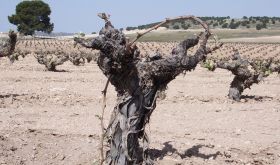
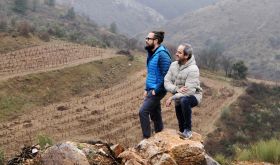
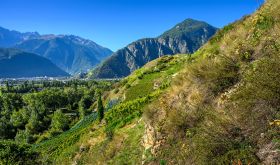
In order to diversify its portfolio, in 2020 CRC acquired Gustava, the Barolo vineyard pictured at the top of this article of 8.3 ha (20.5 acres) in Grinzane Cavour, right next to the splendid Castello di Grinzane, pictured immediately above and once the home of Camillo Benso Conte di Cavour, who in 1861 became Italy's first prime minister. According to its balance sheet, CRC shelled out €4.2 million for the vineyard (around £3.6 million or $4.7 million) plus a further €42,000 for its renovation and partial replanting. With this acquisition it not only secured the vineyard for Alba's school of oenology, which had historically used it to educate its students, but the acquisition also prevented its sale to potential foreign investors and falling prey to speculation.
Once the CRC had become de facto a wine producer, the idea of auctioning off the produce for charity was born. An ideal partner to help put the project on the rails was found in the Consorzio, whose current president Matteo Ascheri immediately saw its relevance for the entire region, and in whose cellar in Bra the wine is made. The well-known and respected consultant-oenologist Donato Lanati, whose client list includes Roberto Conterno of the Giacomo Conterno estate, is in charge of the winemaking.
Lanati runs Enosis, a highly specialised oenological research centre in Fubine (Monferrato), including a state-of-the-art, 50-seat tasting hall into which I and nine other Italian colleagues were ushered to taste 15 cask samples of the 2020 vintage of Gustava, each to be auctioned off in individual barriques at the end of October. With its advanced technology Enosis suggests everything is science-driven here. Lanati exclaimed that in wine there is always a need for science, but also said: 'tradition and innovation [as a single concept] doesn't exist. Tradition is continuation, research only tries to understand. Tradition is practice based on experience over time.'
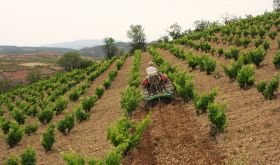
The Gustava vineyard takes up most of a hill between 220 and 275 m (720 to 900 ft) elevation with exposure in literally all directions. Against the backdrop of the Castello di Grinzane the vineyard makes an imposing impression, but so far it hasn't been known for outstanding quality. This was reflected in the price of the land which, at around €500,000 per hectare ($235,000 per acre), is less than half of that for a more illustrious cru. What plays a more decisive role, however, is that its true quality and characteristics are simply not known because until now the wine has never been bottled on its own. Alessandro Masnaghetti in his 2015 magnum opus Barolo MGA sees strong similarities, however, with the neighbouring Garretti and Castello vineyards, which are known for their cru pedigree.
'When they called [to ask me to oversee the Gustava winemaking] I felt timore, dread', Lanati confessed. But in the end he agreed because, in his own words, 'the project is a model for the region's agriculture. The charity part is important, while the third aspect is innovation, hence the involvement of the Scuola Enologica. What I like is that a bank is interested in wine and it reminded me a bit of the Rothschilds.'
'When I went to see the vineyard', Lanati told us, 'I didn't look at it in a technical sense. I looked at its 500 years of history.' This way of looking at Gustava he called a purely cerebral approach. This could signal anything but great wine, but the opposite is actually true. Lanati did extensive research into the vineyard and divided it into several plots according to potential quality and vine age. The latter appeared to be the most important quality factor in the flight of 15 wines we were served, with the first two wines, from vines over 50 years old, showing the most depth and complexity. But other, early-ripening plots did not disappoint, showcasing elegance and perfume instead. Cask sample number 16, the last, was made of everything rejected for the Barolos, but even this modest Langhe Nebbiolo was still a very attractive wine.
All charities looking for attention use gimmicks, and Barolo En Primeur is no different. US-based wine writer Antonio Galloni, who will be present at the New York auction, has encrypted his review of each cask in an NFT, or a non-fungible token, best described as a virtual, unique tasting note attached as a vignette to each cask, and will also publish his tasting notes before the actual auction.
No doubt his reviews, or perhaps his scores, will be reflected in the final prices of each cask. The organisers reportedly hope the sale total will be in the region of €900,000 ($1.04 million), equivalent to €60,000 ($69,500) per barrique or €200 per bottle. They point out (and actively emphasise) the charitable act of buying the wine which, once bottled, no doubt will increase in value.
One drawback may be the fact that Christie's, the auctioneer, will not be live-streaming the auction, which is curious as nowadays most auctions are. The actual event is by invitation only, limiting its reach. The organisers call the first edition of Barolo En Primeur, 'edition zero', and are considering it an important pilot to test the waters. They hope the event will serve to encourage other Barolo producers to contribute to future editions of the auction.
But the Consorzio assures us that anyone can bid even if they are not physically at the auction. They can bid online (presumably they mean by submitting a form online rather than in real time), or by telephone or by sending in a written bid. There are registration forms for these three options at the bottom of this page (in English).
Below, for what they are worth, my impressions of the cask samples.
The wines
The Grinzane Cavour zone does not render powerful wines, we were reminded by Gianni Fabrizzio, Gambero Rosso's editor-at-large who was asked by Lanati to comment on each of the samples. In Grinzane, he pointed out, one shouldn't expect power but rather elegance and harmony. He also warned us that the deeper a wine's colour, the greater the risk of losing finesse.
Cask samples numbers one and two are of Gustava's oldest vines, some 50 years of age, and which Lanati had identified. Grapes from a selection of 1,500 of these older vines were vinified separately.
Cask sample 16 is a blend of all the batches that didn't make the Barolo grade, and is sold as a Langhe Nebbiolo. Sample number 17, on the other hand, was not taken from cask but was an ad hoc blend of casks 1, 2, 5, 7, 9, 12, 14 and 15, which at least to me showed that their sum was greater than the individual parts.
Cask sample 1
Just mid ruby and luminous. Concentrated and focused cherry fruit with a peppery tingle and savoury, minerally notes. Elegant, with gripping tannins on the palate.
Cask sample 2
Similar colour with the same luminous shine, but this is earthier while displaying huge depth and a complex layer of spice. Similar depth while still closed and with coating tannins. Complex.
Cask sample 3
Quite pale in comparison with numbers 1 and 2. Sweet and floral rather than fruit-driven and concentrated. Slight peppery notes. Much less concentrated on the palate, but with plenty of crunchy tannins.
Cask sample 4
Pale ruby. Subtle and earthy and not very fruit-driven. Hints of garden herbs. Quite closed on fruit on the palate, but this is all about the texture of the tannins, which are light but gripping.
Cask sample 5
Quite pale. Perfumed but subdued, and more complex than sample number 4. Firm tannic palate with compact, embryonic fruit. Quite fascinating.
Cask sample 6
Pale ruby. Similar to number 5 but with a little more richness on the nose. Not super-complex. Quite immediately tannic on the palate and it could do with a little more fruit. Quite minerally on the finish.
Cask sample 7
Palish ruby. Much more depth, complexity and layered than number 6 and more in the league of numbers 1 and 2. Very tightly wound, powdery tannins that make their mark but are matched by lots of spicy fruit.
Cask sample 8
Very pale ruby. Subtly perfumed and not exactly a fruit bomb. Subdued. A layer of firm but finely ground tannins covering the fruit. Super-tactile, which is the fun part, while the fruit is not the most eye-catching aspect of this wine and plays second fiddle.
Cask sample 9
Lustrous but just mid ruby. Brooding and sweetly perfumed. Elegant and with depth. Gravelly tannins that are a little upfront and a tiny bit astringent as well as subdued fruit. Very slow to open up.
Cask sample 10
Healthy, just mid ruby. Brooding and yet subtle. Concentrated rather than elegant. Compact fruit packed with tannins that are slightly drying but not astringent. This is all about structure.
Cask sample 11
Just mid ruby. Perfumed and with minerally, iron notes and the merest suggestion of bell pepper and with little obvious fruit. On the palate it is all minerals and not pressing the fruit button. Great balance between still-slumbering but concentrated fruit and clay-like tannins.
Cask sample 12
Lustrous and just mid ruby. Concentrated, minerally and savoury rather than fruit-driven and with a minty garden-herbs note. Complex but subtle palate and with fantastic coating tannins rendering a thrilling wine.
Cask sample 13
Just medium ruby. Earthy and spicy with an iodine note. Subdued and lacking a little in proper depth on the palate leaving the entire playground to the heavy charge of coating tannins.
Cask sample 14
Pale ruby. Very light and minerally with stony, savoury hints. Supple fruit palate that is not enormously complex, while displaying beautiful richness of chewy tannins.
Cask sample 15
Very pale ruby. Brooding and quite deep with peppery notes. Richness on the palate that is minerally as well as subdued at the same time. Long, layered, coating tannins.
Cask sample 16
Very pale ruby. A little sweaty and then quite fragrant. Much simpler on the nose and also simpler on the palate compared with all other samples, but at the same time pleasant and with plenty of character.
Sample 17
Lustrous and just mid ruby. Perfumed and showing real depth. Sappy and concentrated on the palate with gorgeous gripping tannins. The sum is definitely greater than the parts.