
Don’t be fooled by the word ‘dry’, a linguistic rabbit hole if ever there was one, in wine generally but especially when it comes to port or champagne labels.
‘Dry’ is used to describe a wine that is not sweet, not one that is not wet. Most dry white wines have fewer than 4 grams per litre of residual sugar (ie sugar from the grapes that has not been fermented into alcohol) and many have less than 1 g/l, at which point the sweetness is imperceptible. For comparison, one level teaspoon of sugar is about 4 g of sugar. Dry champagne, on the other hand, can have 17–32 g/l and dry white port, 40–65 g/l. Even ‘extra dry’ white port can have up to 40 g/l residual sugar.
However, as in all food and drinks, the other components affect how sweet something tastes. Some grape varieties, for example Riesling, have such naturally high acidity in the berries that a little bit of sweetness brings perfect balance to the whole and sometimes seems to disappear entirely.
In this now rare style of dry white port, which has around 50 g/l of residual sugar, it is not just the acidity that affects our experience of sweetness but also the tannins in the grape skins, which influence the texture more than the flavour.
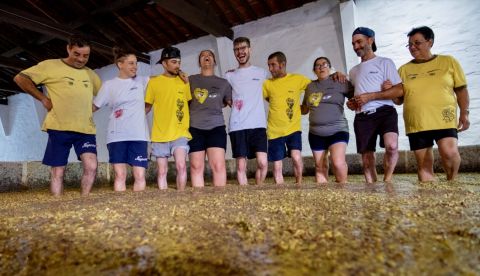
You could describe this full-flavoured and distinctive bargain of a wine as a cross between a fortified wine and a skin-fermented white because it’s made in a similar way to a traditional red port. The whole bunches, stems and all, are put into a stone lagar – a big, low-sided open tank – and the grapes are typically trodden by foot over a period of 5–7 days to break open the berries, set off the fermentation and start to extract all the grape components into the juice. Fermentation is stopped by the addition of high-strength neutral spirit, usually when the must has reached around 7–8% alcohol.
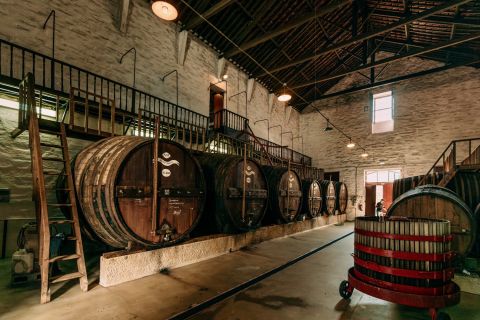
Another unusual aspect to this wine compared with a lighter unoaked style of young white port that is typically drunk with tonic and cucumber as a refreshing long drink – Graham’s No 5 Blend, for example – is that it is aged for an average of 3.5 years in a mix of large old oak vats and old oak port pipes (550 litres/145 gal), which means more oxidative ageing. This deepens the colour of the wine, reduces the fruity primary grape aromas and develops the broader and more complex flavours that exposure to oxygen can bring.
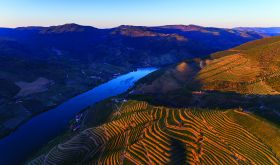
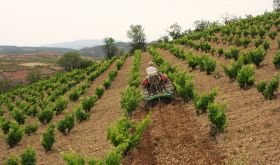
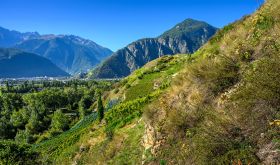
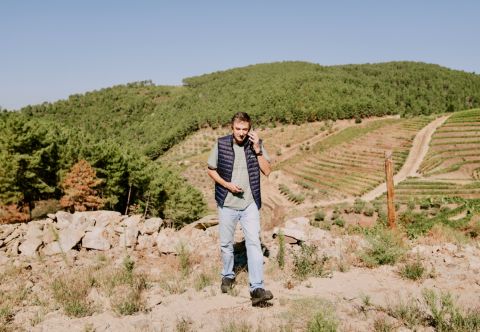
The grapes for the Niepoort Rabbit Dry White come from vineyards in Provesende high up in the Pinhão Valley (north of the town of Pinhão on this World Atlas of Wine map of the centre of the Douro Valley). As Niepoort port winemaker Nick Delaforce explained, the elevation of the vines increases the freshness in the wine. The acidity here is 4.48 g/l, which is higher than in many white ports. The 30-year-old vineyards are a field blend of many different varieties but the main ones would be Códega (aka Síria), Rabigato, Viosinho, Arinto and Gouveio.
The colour and flavours might be better described in an oil painting than in words but it’s deep orangey gold and smells of bitter orange and apricots, slightly nutty, though the aroma is not particularly sweet; the impression of sweetness seems to increase as it warms in the glass. There’s something else I cannot quite pinpoint, somewhere between mocha and pepper. Flavours and words can be equally slippery.
When you sip, it’s viscous, mouth-filling and the perception of sweetness is a roller coaster depending on what you drink it with or whether you drink it on its own or with tonic and lemon. The alcohol gives richness and roundness but the freshness and the tannins, which are lightly astringent (dry would be a good way to describe them …) counteract the sweetness. There’s also something like chamomile and spice on the persistent aftertaste.
There aren’t many wines that you could enjoy with tandoori chicken, lentil and chicken soup, creamy Baron Bigod cheese (a British classic) or salty parmesan. Mixed with tonic on ice, it’s equally shapeshifting with a bitter-sweet aftertaste. It’s hard to think of many wines at this price that are so unusual and so versatile. I prefer to drink it chilled but not too cold. Once opened, it will keep for a couple of weeks in the fridge.
With an alcohol level of 19.5%, a little goes a long way so a half-bottle is perfect.
On some markets the Niepoort Dry White is sold without the Alice-in-Wonderland-like image of the rabbit on the bottle and referred to simply as Dry White.
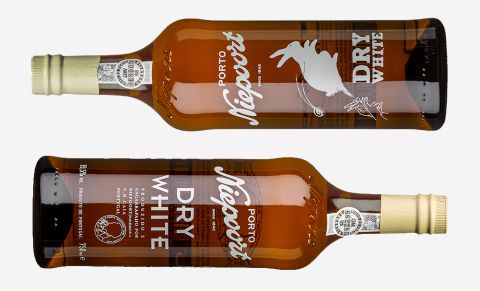
The image of the rabbit has a funny back story, as recounted to me by Susana Ferraz, Niepoort’s export sales manager:
‘The Rabbit is a character of the Niepoortland book … created by the Portuguese filmmaker and animator Regina Pessoa. Niepoortland tells the story of Port Wine and the differences between Tawny and Ruby styles, using characters inspired by Alice in Wonderland: The Ruby Dum and The Tawny Dee.
‘Many of the characters were linked to people at Niepoort. The Rabbit, for example, represented our Master Blender, Mr Nogueira, who carried a watch to monitor the time the Ports spent in pipas and toneis. So, at a certain point, we decided to expand the range based on the characters of the book and introduced the Dry White Rabbit.’
Niepoort [Rabbit] Dry White Port is widely available in the US, the UK, Canada, Brazil, the Netherlands, Spain and Ukraine. Niepoort’s two UK importers are Halo Wines and Raeburn Fine Wines; US importers are Polaner Selections in New York and New Jersey and Martine’s Wines for all other states.
Every Friday we tip you off to a good buy that’s available in both the US and UK – and often much further afield as well. Check out our past Wines of the Week.