From €23.95, £23, 219.95 Danish kroner, 31.50 Swiss francs, 391 Swedish kronor, $38.98
This wine jumped off the table at a tasting earlier this month of wines fastidiously chosen by my contemporary Mark Savage MW for his Gloucestershire wine merchant business Savage Selection.
I like Grüner Veltliner’s combination of fruit and veg but there are many disappointing examples lower down the ranks, youthful examples with more than a whiff of paint about them. But the combination of the excellent 2021 vintage in Austria, the results of Bernhard Ott’s wholesale conversion to biodynamics and regenerative techniques in the vineyard, and his traditional winemaking (including Stockinger casks) in the cellar shines through in this beautiful wine with an alcohol level of 13%, residual sugar of 3 g/l and total acidity 5.5 g/l. My tasting note:
Pale greenish straw. Really intense essence of Grüner! Definitely worth paying a premium for this over others’ entry-level examples. Mouth-filling fruit and blessedly natural acidity. 17 Drink 2022–30
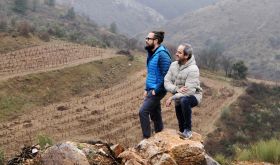
Bernhard Ott, pictured above, makes a range of single-vineyard Grüners, extremely competently, I’m sure. But my guess is that they need a bit more time in bottle to reveal themselves, to judge from the only one shown by Savage, the Feuersbrunner Rosenberg 2021, whose vines planted from 1954 inspired him to prove that great Grüner could emerge from pure, deep loess. This more expensive, richly concentrated wine has not yet developed the soaringly intricate nose and appeal of the fresher, blended wine sold as Der Ott.
Ott’s cellars are in the village of Feuersbrunn in the south-west of the Austrian Wagram region west of Vienna, coloured pink on this World Atlas of Wine map, and most of his vineyards are just north of here, but he also has some vines in the Stein vineyard over the border in Kamptal. Because Der Ott is a blend of wines from both Wagram and Kamptal, it carries the broader appellation Niederösterreich.
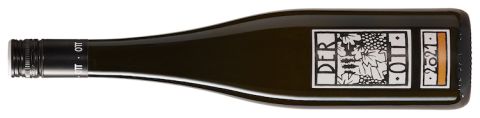
Der Ott bottling, distinctively labelled as all his wines are, is made from a blend of ‘young’ (15- to 35-year-old) vines from his best vineyards: the loess-dominated Rosenberg and Spiegel as well as Stein with its primary rock, some clay and some loess. From the 2019 vintage onward, Ott has considered it to be at the same quality level as his single-vineyard wines.
Savage has been importing the wines of Bernhard Ott since the 2002 vintage, so has followed his journey from conventional to biodynamic and regenerative viticulture closely. He comments, ‘The benefits really seem to begin to manifest themselves after about ten years I think, so I am pretty sceptical of claims from producers who say that they see the benefits immediately. A real plus seems to me to be the ability for the vines to achieve optimum physiological maturity in the fruit at lower levels of alcohol, say 13% rather than 14%. They also seem to become more resistant to disease problems (healthier soils, so healthier roots no doubt). His wines, certainly the top wine from the Rosenberg site, back in 2003 were more baroque (and alcoholic) than they are today and he has been aiming, and achieving, greater refinement as opposed to extravagant opulence.’
Bernhard Ott’s US importer is Skurnik, who also import my glasses into the US, so they have kindly allowed me to quote from their description of this exceptional specialist in Grüner Veltiner, which constitutes 90% of the family’s vines.
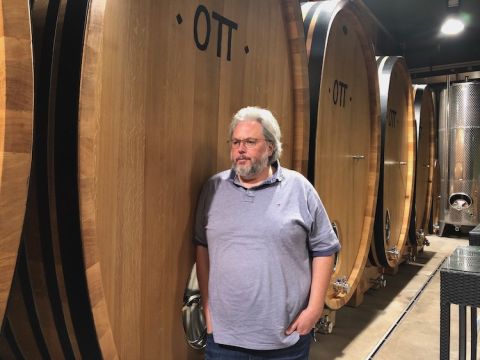
‘The Ott family has been growing and producing wine in the region of Wagram in Lower Austria since 1889. Bernhard Ott is of the fourth generation and has managed the winery since 1993 when he took the helm from his father. When he came home to the winery as a 21-year-old, he was interested in producing wines of the highest quality. Bernhard replaced the old wooden casks with stainless steel and began working the vineyards aiming for the highest high quality. In 2018, nearly 30 years after taking over and switching all vinification and élevage to steel, Bernhard began working with varying sizes of Stockinger fuders [seen below in a photograph by our German and Austrian specialist Paula Sidore].
‘In 2004 Bernhard began composting, using organic cow manure from a friend in the region. [Ott’s own literature boasts of “selfmade organic compost” which is a bit arresting.] In the past four years, he’s used so much manure that the EU contacted him because they didn’t think it was possible to use 100,000 euros’ worth of manure and thought there had to be some accounting mistake. In 2006 he took a trip to the legendary biodynamic property Domaine de la Romanée-Conti with his best friend, Hans Reisetbauer. There, after a marathon tasting in the cellars with Aubert de Villaine, Bernhard committed to move to biodynamic viticulture. In 2007, with Johannes Hirsch, Fred Loimer and a group of like-minded producers, respekt-BIODYN was formed. In 2014, after a very difficult harvest in which Bernhard didn’t bottle any single-vineyard wines, he decided to work whole cluster, saying “the stem is part of the grape. If you work without stems, you get more sweetness, more round fruit.”
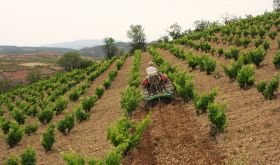
‘Today, Bernhard is looking back to previous generations for inspiration and to inform both his work in the vineyard and in the cellar. Grapes are picked at full ripeness, but thanks to biodynamic farming and composting, the sugar ripeness stays very moderate. “The compost helps with water regulation. Healthy soils give water when the weather is dry and take it back when there is too much. This also means no irrigation at all,” says Bernhard. In addition to working the soils with compost, Bernhard is a firm believer in not disrupting the eco-system under the soils too much, preferring to plough only 8 cm deep.
‘Harvest is done 100% by hand, something that is very important to note in a region whose rolling hills and flatter landscape allow for machine harvesting. After picking and a strict selection, the fruit is crushed in the press [they recently invested in a brand-new basket press in a return to traditional methods] and maceration is done inside the press. The length of the maceration depends on the vintage, but also on the vineyard and the quality of the fruit.’
The juice is ‘browned’ (exposed to oxygen so that initially it becomes brownish) and fermented by ambient yeasts without temperature control; minimal SO2 is used at harvest and bottling and the cellar is very cold, inhibiting malolactic conversion, which presumably helps to preserve freshness in wines that were previously sometimes regarded as dangerously rich.
Vineyard holdings continue to be expanded and now total 50 ha/124 acres. Investment in the cellar and public areas also continues, with a revamp of the shop, tasting room, event space and restaurant completed last year.
I commend this delightful wine to anyone who has already fallen victim to Grüner Veltliner’s charms. See Grüner Veltliner – distinctly groovy grape for an account of a comparative tasting in 2002 of top Grüners and top white burgundies that definitively proved the potential of Austria’s flagship dry white varietal, not just to beguile but to age.
UK-based wine lovers can buy this wine directly from Savage Selection for £23 by calling 01451 860896 or emailing [email protected]. And Richard Kihl is currently offering it at £120 for six in bond. The wine is widely available in the US and Europe, in Germany, Switzerland, Austria, the Netherlands, Belgium, Denmark and Sweden.
See also Paula’s Austria's top Grüners loved 2021 and these enthusiastic tasting notes on Herbert Zillinger’s certified biodynamic Grüners, including some stupendous 2021s. It’s crazy that he doesn’t have a UK or US importer.