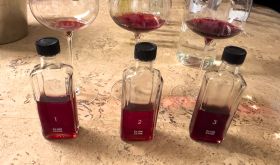
Now that the last grapes have been gathered off the vines in Bordeaux and are currently fermenting into what looks like an extremely promising 2009 vintage, this is the busiest time of the year for the most important father and son in wine of whom you have probably never heard. According to one of their 150 clients, Bruno Eynard of Château Lagrange in St-Julien, Jacques Boissenot, 71, and his 40-year-old son Eric,‘make the greatest wines of the world’. They are the Médoc’s leading consultant winemakers, responsible for the great majority of the region’s famous classed growths, and all the first growths, yet they never court publicity and rarely receive it, so entrenched are they in this, the greatest concentration of fine red wine estates in the world.
Yet Frédéric Engerer, director of first growth Château Latour and not known for his humility, admits, ‘I can honestly say that in my view, after working 10 years with them, their value in optimising the selection of our lots in order to make the best possible assemblage [blend] is very clear.’
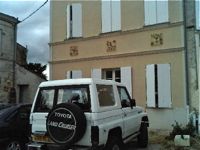
The Boissenots operate from a modest house on the main street – the street – in the sleepy village of Lamarque in the viticultural buffer zone between Margaux and St-Julien, where Jacques’ wife was the village teacher. Like the much more famous wine consultant Michel Rolland in Pomerol across the Gironde, they also run a laboratory whose two full-time employees run the vital analyses of all those tanks, vats and barrels full of purple liquid.
Jacques Boissenot became an oenologist by accident. Born in the Lebanon to a pilot who went on bombing raids from London during the second world war, he ended up in Bordeaux and failed in his initial attempt to become a vet. A friend recommended the oenology course at Bordeaux university and his initial job was looking after the official lab for the Bergerac region. In the 1960s he was invited to set up an official lab in Pauillac, where he did a bit of teaching and consulting. In 1971 he set up on his own and met up again with the late, great Professor Émile Peynaud, ‘the father of modern oenology’, who had taught him at university. Peynaud already had some clients in the Médoc and recruited Jacques to act as his right-hand man until he retired in the 1990s. There could hardly have been a better training, nor a better calling card.
As Corinne Mentzelopoulos of first growth Château Margaux explains, ‘when Émile Peynaud told me he was going to retire, it was only natural for us to start working with his “disciple”Jacques Boissenot. We feel it is very important to have an outsider's objective point of view for the blending process. After many tastings, the final blend is decided together with Jacques and Eric. I have known Jacques for quite some time now, and I appreciate his low-key attitude and his respect for the terroir: there is no "Boissenot" style, just like there was no "Peynaud" style – although there was much talk about it.’
Listening to Eric talking about their work in his small, paper-strewn office, I was struck by his unusual combination of sensitivity and humility. He too qualified in oenology at Bordeaux, but from the age of 14 he had been helping his father make wine on their two hectares of vines near Lamarque, sold as Château Les Vimières, Haut-Médoc, and, for the vines that qualify for the Margaux appellation, Le Tronquéra. They would be the first to admit that, however great their winemaking skills, the quality of their wine is forever marked by the limitations of the land that produces it.
‘Our philosophy is difficult to explain but it’s first of all to understand the cru. I need two years to understand a new property. You must capture what there is in that cru, its terroir, its expression, its faults and qualities, and then handle it delicately, to guide it to its most beautiful expression. We keep stressing finesse rather than power. We concentrate on the quality of the tannins. Sometimes you can accentuate the faults by having too low a yield; balanced vines are more important.‘
The Boissenots do far more than zoom in and out at fermentation time. ‘First we look at the vines and decide when to pick with the director, or regisseur. We discuss a lot and then we agree on the best date, taking into account not just the state of the vines and the weather forecast but the picking team, the equipment and so on. Then we go and taste all of the cuves [fermentation vats] just after fermentation. We advise especially on exactly how the extractions are done, temperatures and so on.’ I asked him whether they did any of this work electronically, for I have seen flying winemakers advising on fermentations in another hemisphere via their laptops. ‘No, we’re very available for our clients, but we are pretty busy from September to April. Mainly our work involves lots of tasting. We decide on date and order of the écoulages [when the new wine is transferred from cuve to barrel], which is a very, very important part of strategy – and one of our very important roles. Then we oversee the [second, softening] malolactic fermentations. Then from December to the end of February there are all the tastings for the final assemblages. And then we re-taste at the end of March for the primeurs season.’
Some days they will taste from 8 am until 10 pm, ‘but it’s so interesting it passes very quickly. There’s a new story at each place’. Eric takes notes but says in any case he has a good memory. Tasting brutal young wine all day, I assumed meant that he didn’t want wine in the evening? ‘Oh yes I do. I spit, after all. Wine is my great pleasure with a good meal', he assured me. But it would seem that the Boissenots are so wedded to the Médoc (they have only a handful of clients across the Gironde in St-Émilion and Pomerol, but are conveniently close to the Lamarque ferry) that as well as working locally and modestly, this is also how they drink. According to Eric, they typically drink second wines of their grander clients, or wines from Bordeaux’s more modest vintages. I asked him, probably stupidly, what proportion of white wine he drank. ‘Not much', he said evasively. ‘Ermmm, I like tannin [found much more in red wines than whites], I think that’s it.’ (They also consult on the white wines made at such Médoc properties as Châteaux Lagrange, Talbot, Chasse-Spleen, Margaux and Mouton-Rothschild.) ‘I exchange wines with properties in Burgundy, but I don’t drink them', he admitted with a self-deprecating chuckle.
I wondered whether he had travelled much outside Bordeaux? ‘Oh yes', he assured me. ‘As a student I went to Alsace and Roussillon.’
They calculate their charges on the basis of the area of vines they supervise, and their time. It is apparently rare that anyone hires a second oenologist and although Roederer already had Denis Dubourdieu at Ch de Pez when they bought Ch Pichon Lalande, the Boissenots work with him at Pichon, ‘but otherwise we don’t really like it. It’s complicated to have two opinions.’ I wondered what happened when there were disagreements. ‘At first we respect the work that’s done at a property. We give advice which they may not always follow. We have to understand why people want to do what they want to do and then explain why we don’t agree. But most people fully understand our philosophy and so they’re at ease with ours.’
Even in his much shorter working life than his father’s, Eric Boissenot has seen evolutions in wine-making in the Médoc. Fashions have included an excess of wood, tannins, over-extraction, malolactic fermentation in barrel, the so-called ‘200% new oak’ whereby a wine is matured in successive new barrels. ‘We’ve always reined them in over tannin and over-extraction. This century people talk a lot about fruit. People tend to concentrate on a single criterion and stress it, but it’s much better to go for balance.'
Here he is on various wine-making techniques. Reverse osmosis: ‘It’s not negative but it’s not indispensable.’ Micro-oxygenation: ‘No, I don’t advise it. I’m not against it. If a client has the equipment, I’ll help them, but I’ve never been convinced – especially in the Médoc. It works in some places but it’s not really extraordinary in terms of results for Cabernet Sauvignon. People do it to have more colour. I don’t really understand why they’d want more colour.’
I asked him what was the sign of success for them, wondering whether it was something as quantifiable as prices or points, but it would seem not. ‘We’re not the only actors, it’s a team thing. Perhaps we’re more important than some others – but you can never attribute a wine to one person. But the fact that we see so many properties means that we have more of a vision than someone who knows only their property.
‘Sometimes I come across wines where I know they didn’t follow my advice; they’re usually over-extracted. I sense it and tease them. Eventually they learn. You can’t go against Nature.’
BORDEAUX ACCORDING TO BOISSENOT
1999 – can be very good, especially in Margaux. It rained during the vintage. Lots of alcohol.
2001 – undervalued. People are discovering it now.
2002 – undervalued. There are some good wines too.
2003 – too hot. It’s evolved rapidly.
2004 – a very classic year; people were prejudiced because of the high yields. Not exuberant.
2006 – very firm.
2008 – very fruity, surprising. Very long season.