Good news, burgundy lovers! Ex-cellar prices for vintage 2016, the vintage to be shown at countless UK merchants’ tastings in London next week, are more or less the same as last year.
More good news: 2016 is a seriously delicious vintage.
Bad news, burgundy lovers: there is a serious shortage of wine.
The economic theorists among you may be bemused by this state of affairs, but vignerons in Burgundy tend to price each vintage on the basis of the likely size of the next crop. The 2016 vintage (precocious thanks to a mild winter) was cruelly shrunk by frost and, less discussed, mildew, and 2015 was widely regarded as a stellar vintage in terms of quality, so prices shot up for the 2015s.
But, not least because the Burgundians fought off frost so successfully in 2017, as I explained in early November, the 2017 crop was unusually generous in Burgundy, so vignerons there are feeling confident enough of their income in 2019, when they will be selling the 2017s, to ask for only the most modest of price rises for their 2016s. And there has been only a slight downward movement of sterling against the euro since UK merchants calculated their 2015 burgundy prices this time last year.
However, global demand for the distinctly limited-edition wines of Burgundy is at an all-time high. Liv-ex, the fine-wine price monitor, reported recently that interest in the wines of Burgundy, including from Chinese investors nowadays, boosted burgundy transactions to record levels last year, taking share from Bordeaux that for long completely dominated the fine-wine scene.
It must therefore be extremely tempting for wine merchants specialising in burgundy to (continue to?) add extremely generous margins to the prices that have been emerging, painfully slowly this year, apparently, from the cellars of the Côte d’Or. Some may argue that it is only fair compensation for the hell of deciding how to allocate the dramatically reduced quantities of 2016s they have at their disposal. Wine used to be sold in cases of a dozen bottles. Six-bottle cases have now become common. But three-bottle cases of 2016 burgundy are anticipated.
Some of the more dramatic examples of crop loss I came across when visiting Burgundy last autumn: Lafarge, Roulot and Bernard Moreau in Chassagne Montrachet lost 65 to 70% of their 2016 crop. Thierry Glantenay of Volnay usually makes 25 barrels of Bourgogne Rouge; he managed to fill just two in 2016. In the Côte de Nuits, Domaine de la Romanée-Conti used precisely half as many fermentation vats in 2016 as in 2017. Chambolle-Musigny and Marsannay were particularly badly hit. The fashionable, and soon-to-be-extended, Domaine Cécile Tremblay made just one barrel of Chambolle-Musigny, Feusselottes, instead of the usual seven. Flagship producers Comte de Vogüé and Armand Rousseau lost about two-thirds each of their respective great Grands Crus Le Musigny and Le Chambertin. No one I talked to could explain exactly why the frost devastated some parcels and spared others, but overall the message is clear: the 2016 vintage is tantalisingly rare. (Some producers in Puligny such as Jacques Carillon suggested that their vines, especially those in the north of the appellation, suffered less than those in Chassagne because of cloud cover on the early morning after the frost, so that buds that had been frozen were not burnt by the sun.)
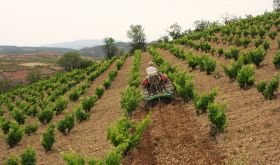
Mildew was a constant threat throughout the summer so that a producer such as the Ch de Puligny-Montrachet had to treat the vines 13 times in 2016 – as opposed to seven times in 2017. Limited amounts of copper and sulphur are allowed even for organically grown vines, but many a vigneron would like to find more wholesome alternatives. Étienne de Montille trialled spraying vines with organic milk. It worked on one hectare but would be difficult to scale up for all of his 18 ha. The Comte de Liger-Belair used saltwater solution to dry out the fungus. Cécile Tremblay is experimenting with seaweed extract.
But not all the news is bad. Here are some tips specific to the 2016 vintage.
Many lesser cuvées have been enhanced by blending in smaller lots of superior wines. For example, in badly hit Chassagne-Montrachet Alex Moreau of Bernard Moreau didn’t have enough of the Premiers Crus Vergers, Champs Gains or Chenevottes to bottle them separately, so what he made has been blended into his village Chassagne.
This was a late-ripening vintage, post-frost delays having been compensated for during a fine summer. 2016 has produced already-charming but potentially long-lived reds with a winning combination of bright, fresh, burgundian, expressive fruit with good but not insistent acidity. Alcohol levels are around 13% naturally, although some producers added tiny amounts of sugar to the fermenting must to prolong the fermentation.
Many producers blended fruit from the first buds that had been spared by the frost with the produce of a second crop that tended to ripen later than the first. This may have helped keep the wines as fresh as they are.
In Burgundy by late November 2017 there was delight at how well the wines had developed in barrel, and also a certain revisionism about the much-lauded 2015 vintage made with so much more ease and obvious ripeness. I encountered many a producer who declared a preference for the precision and terroir expression of the 2016s.
As for the whites, picked much earlier than the reds, many of them look and smell rather riper and more opulent than some recent vintages have done at this stage, without much reductive ‘struck match’ character in evidence. But the best of them retain the tension that characterises the best white burgundy. They may not be as immediately arresting as the reds but there is currently such a shortage of decent white burgundy that, as Jason Haynes of burgundy specialist Flint Wines puts it, ‘this vintage is not even going to touch the sides’.
He, incidentally, is recommending that those disappointed by the paucity of 2016s should look again at such 2014s as are still available. You may also decide to wait for the plentiful if apparently rather softer 2017s.
Louis-Michel Liger-Belair observed, ‘if there had been no frost we’d probably have picked on 1 September and ended up with a very different style of wine. But the frost stopped vine development for three weeks, which delayed harvest so we picked well into September when the sun is much cooler and retains acidity in the grapes'. For him, 2016 is like 2010 in terms of its freshness but has a bit more body, crediting this to the (widespread in Burgundy) move to organic viticulture.
He was one of very few vignerons to draw a parallel with any other vintage during my visits to Burgundy late last year. As several of them pointed out, Michel Lafarge is nearly 90 and even he says 2016 is unique.
What to do?
If buying wine for investment, you may have to resort to bribery or, at the very least, unthinkably high prices to get your hands on the smartest names.
If (much more admirably) buying wine to drink, investigate some of the up-and-coming appellations (listed below) and producers.
WHITES (south to north, so generally with increasing acidity)
Top Mâconnais such as Lafon’s
Montagny
Rully
Santenay
St-Aubin (though these are no longer the bargains they once were)
Auxey-Duresses
St-Romain
Hautes Côtes de Beaune
Beaune
Vézelay
Petit Chablis
Or look at the excellent 2014s that are still available
REDS (south to north)
Cru beaujolais (getting more and more serious and burgundian by the minute, but still great value)
Givry
Mercurey
Santenay
Beaune
Savigny-lès-Beaune
Chorey-lès-Beaune
Ladoix-Serrigny
Hautes-Côtes de Nuits
Fixin
Marsannay (although it was hit badly by frost in 2016)