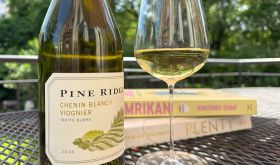
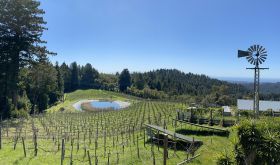
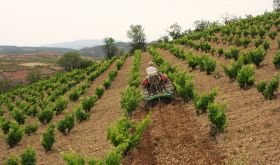
Others who try harder include Torres of Spain and Ridge Vineyards in California, which have long shared every detail of their wines with us. And they are literate to boot. Some graduates clearly work there.
BACK LABELS OF NOTE
Creative writing prize
Oxford Landing for:
'On the banks of South Australia's mighty Murray river where drovers once took their sheep to water', which means 'this wine comes from Australia's inland irrigated wine factory'
Prize for chutzpah
Gallo (5,000 employees, estimated sales $3.6 billion) for:
'You can taste the Gallo family's dedication to the art of winemaking, passed down through four generations, in this Chardonnay.'
Favourite meaningless phrases
'lovingly grown'
'selected parcels'
'limited edition'
'meticulously blended'
'optimum ripeness'
Calling thirsty graduates

A shorter version of this article was also published in the Financial Times.
At this time of year many recent graduates will be wondering what to do with their hard-won degrees. While I cannot point them in the direction of specific vacancies, I can assure them that the world of wine needs many of their skills.
Scientists, you would not believe how many of the most basic questions about wine remain unanswered. For example, although wine is treasured for its ability to age – better quality wines are virtually the only things we eat or drink that can improve over years and sometimes decades – we know remarkably little about what actually happens as wine matures. It would be wonderful to put some graduate students to work on studying this in order to work out exactly why some wines age so well and others don't. Perhaps they could establish a proper scientific way of accelerating ageing, as opposed to the various bits of hardware such a magic spoons and magnetic bases marketed as alternatives to patience and years of expensive cellarage.
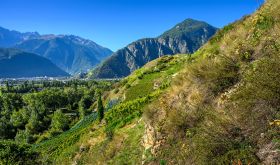
Another massive area for potential research by perhaps a combination of geologists and soil scientists is the currently much-discussed relationship between rocks, soils and the grapes and then wines that spring from them. Because there seem to be strong, tasteable correlations between certain sorts of wines and the vineyards that produced them, wine tasters have liberally applied 'rocky' tasting terms to wines. Mosel Rieslings, often grown on vineyards littered with shards of slate, are sometimes described as 'slaty'. For decades the wines of Pouilly-Fumé have been called 'flinty' by English speakers while French tasters have found a taste of pierre à fusil (gunflint) in them, a reference to the flinty look of the silex soils found in vineyards there.
Similarly, many of the wines grown on the decomposed lava on the slopes of Mount Etna seem to have some discernible warmth and pungency in common which it is awfully tempting to label 'volcanic'. And there seems to be a flavour common to many of the concentrated reds of Priorat in Catalunya that is most obvious in wines from vineyards high in the sparkling mix of black slate and quartz known locally as llicorella.
We winos were all happily relating rocks and soils to our tasting notes until geologists such as Professor Alex Maltman at the University of Aberystwyth in Wales finally rapped us over the knuckles and pointed out just why, scientifically speaking, there could not possibly be a direct relationship between a wine and the geology of the vineyard that produced it. Rocks have no flavour and plants have no direct communication with them anyway. Everyone is agreed that rock and soil structure has a huge influence on the all-important availability of water to the vine. But it's over to the soil scientists to examine exactly how the composition, as opposed to structure, of the soil may influence the taste of a wine. Or not. The most important component of terroir that is nothing to do with topography, climate or man may be all down to the particular complex of micro-organisms in the soil and atmosphere. The world of wine awaits more research in this area. Who knows? One day, thanks to recent graduates, we may know enough to use the tasting term 'mineral' with something approaching precision.
But it's not just scientists we need. Recent activity in the usually sleepy port wine trade has opened my eyes to the opportunities for historians in the world of wine. For much of the second half of the 20th century wine producers were falling over themselves to demonstrate how modern and technologically proficient they were. But this century has seen a sharp about-turn with a major return to historic methods (horses in the vineyard, bottling by phases of the moon), with tradition valued above all else. It is no surprise then that wine producers have become much more interested in the past in general and in their own past in particular.
In the last month alone we have seen the launch of nineteenth-century ports aged in wood and now available in carefully handcrafted luxurious packages from each of the major groups of port shippers, Symington Family Estates and The Fladgate Partnership. The Symingtons' Graham Ne Oublie bottling comes from a cask of 1882 tawny bought by the current generation's great grandfather to commemorate his arrival in Portugal from a troubled childhood in Scotland. It could hardly have more back story.
If the Symingtons have been busy writing history, their rivals at The Fladgate Partnership (Taylor, Fonseca and Croft) could be said to have been rewriting history. In the course of some recent researches I see that the start date of the Croft port house is no longer the 1678 that features in all previous literature and whose tercentenary celebrations in the Douro I enjoyed enormously when Croft was part of Grand Met (later subsumed into Diageo). According to a recent self-published monograph and the port house's new logo, port shippers Croft now date from 1588, conveniently making it 'the oldest company still active today as a Port wine producer'. Clearly there are currently great opportunities for historical researchers in the wine trade.
But how about all those English graduates? Opportunities here are legion. The proportion of wine sold via the spoken word has shrivelled to a tiny fraction. Most wine nowadays is sold by the written word, whether on a website, as part of a shelf talker, decreasingly in a catalogue or, increasingly, on a back label. Here's where I'd like to see a major invasion of well-educated English graduates.
I am hugely in favour of back labels. I know that some producers think their wines are too smart to need any information other than the bare legal minimum. But consumers nowadays are as thirsty for knowledge as they are for wine. They love being given a bit of background to what they are thinking of buying, or are about to drink.
Supermarkets fall over themselves (under government pressure) to tell us how many units each bottle contains and what the 'safe' drinking guidelines are. They also nowadays (admirably) tell us how long we should keep the bottle and (usually hilariously) list exactly what we should eat with its contents. We therefore currently have a situation in which the less smart the wine, the more we are told and vice versa. According to the back label, Blossom Hill Moscato will deliver 'ripe aromas of freshly crushed grape and tangerine with soft melon and lime fruit and a clean crisp finish' (commas are extra) but about Château Lafite we are told nothing. Bravo then to classed-growth bordeaux Domaine de Chevalier, which has since the 2005 vintage put the precise assemblage, with percentages, on each of their back labels.
Olivier Bernard of Domaine de Chevalier (and current head of the Union des Grands Crus) explains: 'Whenever I taste a wine, from anywhere in the world, I always want to know which grape varieties went into it, and sometimes learn a new expression of one. So I thought if I felt like that, probably a lot of people would too. Furthermore, the proportions of our four red wine grapes and two white wine grapes varies enormously according to vintage, so it seems worth being explicit. And the great wines of Bordeaux have always benefited from their various assemblages, so we should show them.'


- Zugang zu 294,756 Weinbewertungen und 16,080 Artikeln
- Zugang zu The Oxford Companion to Wine und The World Atlas of Wine


- Zugang zu 294,756 Weinbewertungen und 16,080 Artikeln
- Zugang zu The Oxford Companion to Wine und The World Atlas of Wine
- Frühzeitiger Zugang zu den neuesten Weinbewertungen und Artikeln, 48 Stunden im Voraus
- Zugang zu 294,756 Weinbewertungen und 16,080 Artikeln
- Zugang zu The Oxford Companion to Wine und The World Atlas of Wine
- Frühzeitiger Zugang zu den neuesten Weinbewertungen und Artikeln, 48 Stunden im Voraus
- Gewerbliche Nutzung von bis zu 25 Weinbewertungen und -punkten für Marketingzwecke
- Zugang zu 294,756 Weinbewertungen und 16,080 Artikeln
- Zugang zu The Oxford Companion to Wine und The World Atlas of Wine
- Frühzeitiger Zugang zu den neuesten Weinbewertungen und Artikeln, 48 Stunden im Voraus
- Gewerbliche Nutzung von bis zu 250 Weinbewertungen und -punkten für Marketingzwecke
More Gratis für alle




More from JancisRobinson.com