Is the Carignan grape – known as Carignane in the US and so widely planted in southern France that for ages it was the most widely planted red wine grape in the world – good, bad, ugly or great? I have been consistently critical of the poor old Carignan vine over the years, which is why, I suspect, the organiser of the first known international celebratory Carignan tasting last summer was so keen for me to attend.
Far too many southern French reds have been spoilt for me by that harsh, green, acrid smell of over-produced Carignan – and I have been sympathetic to the authorities' attempts to reduce the amount of Carignan planted in the Languedoc Roussillon.
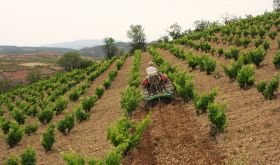
For most of the second half of the 20th century, the productive Carignan vine was the single most common vine variety in France. It was the vine of choice to replace the even worse (more vapid, even more productive) Aramon in the vineyards of the Midi, chiefly because of its high yields and good frost resistance. The pieds noirs returning from Algeria knew how dependable it had been in the heat of North Africa and were only too happy to plant it in their new-found wine estates in the south of France. By the end of the1970s there were more than 500,000 acres of this inconveniently late-ripening variety in France – far, far more than the area devoted to Merlot or Cabernet for example. Nowadays Cabernet and Merlot reign supreme and Carignan(e) is only the eighth most planted wine vine in the world, but there are still nearly 300,000 acres of it, even though it has been overtaken by the more noble Syrah according to the calculations of Pat Fegan of the Chicago Wine School, the only man I know as fascinated by these statistics as I am.
With 6,000 acres planted, Carignane is still the tenth most planted red wine grape in California, but in France the real sea change came in the 1990s when, thanks to heavy financial inducements, southern French growers were encouraged to rip out Carignan in favour of more fashionable, ‘improving’ varieties or other crops entirely. I for one can quite see why the appellation authorities have been steadily reducing the proportion of Carignan allowed in wines such as Minervois,
Corbières, Fitou, Faugères, St Chinian and Coteaux du Languedoc in favour of gentler, fruitier grapes such as Syrah, Grenache, Mourvèdre and Cinsault.
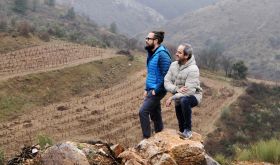
And yet, and yet. There are wines made almost exclusively from Carignan that are very impressive. Some of the most obvious are grown not in France but over the Spanish border on the distinctive brown schists of Priorat in Catalonia.
After all, as its name suggests, Carignan is presumably Spanish in origin,
from around the town of Carineña due west of Priorat in the province of
Aragon, whose rulers at one time conquered much of the Mediterranean.
Cariñena is still grown in northern Spain with some seriously old vines
still clinging to the precipitous slopes of Priorat. Wines such as Cims de
Porrera, Vall Llach and the new Clos Manyetes from René Barbier depend
almost exclusively on them.
This summer’s Carignan Renaissance event was held in an old wine cellar transformed into hip lighting manufacturer (sic transit…) just outside Beziers, organised by John Bojanowski, an American married to a Frenchwoman who makes Clos du Gravillas wines in St Jean de Minervois. He had been clever enough to realise that there is now a body of wine producers, many of them young and including Nicole Bojanowski, who are staking a substantial part of their future on the viability of Carignan. Hence the existence of www.carignans.com and this gathering of tasters from Spain, Paris, Japan, England and all over southern France.
We tasted 24 Carignans blind from the Languedoc, Roussillon, Priorat, South Africa and California (examples from Coturri, Fritz, Mazzocco, Pellegrini and Wild Hog). The grape is barely known in Australia and South America but it was a shame we did not taste some of the voluptuous examples of Carignano del Sulcis made in southern Sardinia. The wines were mainly 2001s and, as usual, we came to almost as many conclusions as there were tasters.
For what it's worth, these are mine:
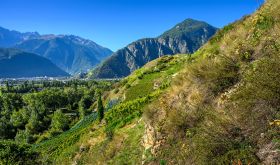
*Seriously old Carignan vines can produce concentrated, characterful wine if yields are not too high and the terroir is interesting. Many of my favourite wines came from Priorat where all these conditions apply – although these are not gentle wines. They are as tough as the terrain and tasting them can literally be like sucking a stone – truly terroir-driven wines.
*But this is dependent on the existence of ancient Carignan vines in the
right place – just as, for example, some not-especially-promising sites in
Contra Costa and Barossa Valley are currently able to produce remarkable reds simply because of the age of their ancient vines. In neither case does this prove the superiority of the combination of place and variety above all else. I cannot honestly see the point of planting young Carignan anywhere – although I know Paul Draper of Ridge is a great fan of its inclusion in field blends with old Zinfandel vines, and the pope of Languedoc Carignan, Sylvain Fadat of Domaine d'Aupilhac in Montpeyroux, is keen to keep Carignan as a blending ingredient in his Coteaux du Languedoc for its usefully high acidity and is even planting a little. In Montner in Roussillon, young Marjorie Gallet of Roc des Anges is so devoted to the Carignan plants that constitute 60 per cent of the vines she bought a few years ago that she is also planting more of it.
*Then there is the question of oak. Fadat, who has a particularly gentle hand as a winemaker, is adamant that Carignan and too much new oak are not a pretty combination. I agree with him and found one or two wines, including Roc des Anges ‘1903’ 2001 and Wild Hog 2001 Sonoma Carignane, just overwhelmed by the oak.
But this was hardly an impartial group. It was a bit like discussing the
existence of God at a prayer meeting. The discussion tended to revolve
around the lack of decent planting material and which rootstock suits
Carignan best rather than around the essential quality of Carignan as a
varietal, which was taken by most of the gathering as a given.
My main criticism of Carignan at its least successful is its combination of
high acidity and green, unripe flavours. And I'm afraid I found that
characteristic in quite a number of this supposed crème de la crème of the Carignan firmament (which for obvious reasons ignored the great underswell of the French wine lake which is made up of a tide of sour Carignan).
Among non-European wines the Fairview Pegleg Carignan 2002 from South Africa, the second vintage of a wine I had already admired, acquitted itself well. It was the favourite of Perpignan's resident wine writer Michel Smith who considered himself vindicated when told that the landscape of Pedeberg granite in Paarl where it is grown looks just like Corbières in southern France (something I cannot help doubting).
I am also sure that California can field more impressive Carignanes than the examples mustered by Tom Bojanowski – though as I know from experience, it is by no means easy to import non-French wines into France. The Mazzocco 1999, Pellegrini 2002 and Coturri 2002 did not score highly with me although the Fritz Colombini Vineyard 2001 from Mendocino was impressively sophisticated on the palate, even if marred by my old friends, offputtingly green notes on the nose.
For me the finest French Carignans managed to avoid this characteristic – presumably because the grapes ripened fully either because 2001 was such a good vintage in the south of France and/or because of the age of the vines and/or because of the terroir and/or because yields were low enough (though Sylvain Fadat says 40 hectolitres per hectare is quite low enough). His Le Carignan 2001 from Domaine d'Aupilhac was certainly a model of restraint, the wine from the first flight I set on one side for all subsequent wines to be measured against. And my very favourite wine of all came from the Fitou village of Paziols, from Domaine Bertrand Bergé's Les Mégalithes 2001 which was refined, sophisticated and appetising.
But perhaps this is to miss the point of Carignan. Perhaps it is meant to be a cussed brute, like the rocks that litter the Languedoc landscape? If so, let others wallow in it.