See this guide to our many South American tasting notes
South America has become an invaluable source of great-value wine, but wine lovers' view of the continent as a wine supplier is probably completely skewed by which side of the Atlantic they live.
To the British, South American wine comes from Chile. Much of it is reliable and inexpensive (despite copper-burnished Chilean prices), but the country's winemakers have been moving determinedly, occasionally recklessly, upmarket. Chile can now produce not just well-made Cabernet, Merlot and Carmenère (the old Bordeaux variety long confused with Merlot in Chile's vineyards) but full-throttle Syrah, surprisingly delicate Pinot Noir, some of the most interesting old-vine Carignan in the world. and a wide range of very competent white wines.
An American would probably be surprised by this enthusiastic assessment. In the US Chile means cheap, and however hard Chilean exporters try (which is probably not as hard as they try in the UK), relatively few American wine drinkers are prepared to look to Chile for anything other than a bargain.
American wine drinkers, on the other hand, have fallen hook, line and sinker for Malbec, the emblematic red wine of Argentina and the fastest growing varietal red in the US. Argentine Malbec offers effortless ripeness, spiciness, robust alcohol and accessibility but at a fraction of the price of a comparable California Cabernet. For this reason, in these budget-conscious times, it has been making real inroads in the crucial $15-20 per bottle bracket. In fact, so popular has Malbec become in the US that Cahors, the once super-traditional south-west French appellation dependent on the same grape variety, has jettisoned the local names for the grape, Cot and Auxerrois, and pinned its marketing hopes on the newfound M-word. Even to the extent of erecting hoardings emblazoned with it in vineyards next to the main A20 autoroute, as I discovered this summer.
Meanwhile, Argentine wine, while approximately 100 times better than it was 15 years ago, struggles to make an impact in Europe. The US is by far the biggest export market for Argentina, followed by Canada (boosted enormously by the popularity of Zuccardi's inexpensive Fuzion brand in Ontario's liquor monopoly stores) and only then the UK, closely rivalled by the Netherlands – despite the fact that Wines of Argentina has invested more in the UK than anywhere else.
Last year 35 wine writers and sommeliers were apparently invited to travel from the chilly British Isles to Argentina's stupendously sunny wine country – more than from the US. Yet such largesse does not seem to result in sales. While Chilean wine accounts for about nine per cent of UK wine sales, Argentina's tally is only just over one per cent. (In the US, both countries represent about nine per cent of imported wine by volume, but Argentina has already overtaken Chile in terms of value.) Part of the explanation is presumably that there are relatively few big-volume brands in Argentine wine compared with the likes of Concha y Toro, Cono Sur, Isla Negra and Los Robles – all part of the same giant Chilean producer and able to make a real impact on British supermarket shelves with bottles retailing from £3.99 to £6.99.
But Argentina can offer wines with real personality a little bit higher up the scale and specialist UK importers such as Hispamerchants of Shepherd's Bush in London and Las Bodegas of East Sussex provide a short cut to some particularly toothsome examples. Argentine producers in more mainstream distribution which I have found make wine to my European taste include Catena (whose labels include Argento, Tarquino, Piropo and Alamos) and Fabre Montmayou with their new joint-venture Viñalba label aimed at the mass market.
As Hervé Fabre, who moved from Bordeaux to set up his Fabre Montayou bodega in Argentina in the early 1990s, puts it, 'our philosophy in the cellar is to use Malbec as it is, showing just the fruit and the terroir. We want to avoid the sort of make-up that modern technology can provide. We're not very pro what you might call the American style of wine. We're more in favour of making Argentine wine using French methods.'
I think it is possible that for many European palates, the ripest, sweetest, strongest Argentine reds are just a bit too much, whereas to palates more used to California reds, they taste just fine. That said, I would like to put in a special plea for Argentina's luscious but well-structured and often rather deliciously mineral Cabernet Sauvignon, which is in danger of being overlooked in the current climate of Malbec mania – a reversal of the situation in the 1980s when the indigenous and ubiquitous Malbec was thoroughly scorned in favour of the imported Cabernet that seemed so exotically French and smart. Argentine growers ripped up 80% of all Malbec plantings between the 1960s and 1990 so that only in more recent years has the total area of Argentine vineyard planted with Malbec exceeded that planted with the rather less noble Bonarda.(Argentine Bonarda is not the same as the Bonarda of Piemonte and has been identified as the French variety Douce Noir, also known as Corbeau.)
There has been a huge improvement in white winemaking in Argentina but for the moment, barring the local scented Torrontés grape and some extremely successful Chardonnay in the higher reaches of Mendoza, this is a red-wine country arguably dangerously dependent on one grape variety – and one giant wine region, Mendoza, whose 392,800 acres (158,961 ha) are only just being more finely delineated.
The same certainly cannot be said of widely diversified Chile, and perhaps the single most exciting thing about the long, narrow country is how rapidly its wine scene has been evolving, with an ever wider range of successful grape varieties and newer, cooler wine regions emerging all the time.
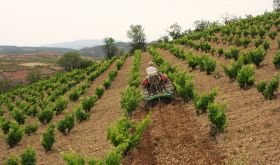
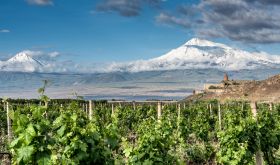
Both Chile and Argentina put on their annual generic wine tastings in London earlier this month (the Chilean one in the Horticultural Hall is shown above left, the Argentine one overlooking Lord's cricket ground above right). At these events we tasters could take advantage of the probably greatest selections of wines available outside the countries themselves. In each case I concentrated on the mid-priced wines that the producers themselves chose to feature and listed below are those I scored 17 out of 20.
TRANS-ANDEAN FAVOURITES
CHILE
Chocalán, Malvilla Sauvignon Blanc 2009 Leyda Valley
£13.99 imported by Liberty Wines
Casa Silva, Paradones Cool Coast Sauvignon Blanc 2010 Colchagua Valley
£12.95 Frank Stainton Wines (Kendal), Averys of Bristol, Field & Fawcett Wine Merchants (York), The Naked Grape (Hants)
Arboleda Cabernet Sauvignon 2008 Aconcagua
£14.15 slurp.co.uk
Marqués de Casa Concha Cabernet Sauvignon 2008 Maipo
£8.11 Bellwether Wines (Peterborough), £9.07 Rodney Densem Wines (Cheshire)
MontGras, Intriga Cabernet Sauvignon 2007 Maipo Alto
Available in Germany, Switzerland and Canada
Terrunyo, Block 27 Peumo Carmenère 2007 Cachapoal Valley
£14.50 slurp.co.uk
Santa Carolina, Cauquenes Dry Farming Carignan 2008 Maule Valley
£12.99 imported by Percy Fox & Co
ARGENTINA
Cruz de Piedra, Umbral Cabernet Sauvignon 2007 Mendoza
£9.60 imported by Morgenrot
Fabre Montmayou, Gran Reserva Cabernet Sauvignon 2008 Luján de Cuyo
£13.50 Vinothentic.com
Finca Sophenia, Reserve Syrah 2009 Tupungato
£9.95 imported by Ellis of Richmond
Catena Zapata, Catena Malbec 2008 Mendoza
£11.99 Majestic
Viñalba Gran Reserva Malbec 2008 Luján de Cuyo
£12.99
International stockists from www.wine-searcher.com.
See this guide to our many South American tasting notes