As anyone who has ever been to a gym or on a racing bike knows, it’s important to have the right equipment. Wine producers are no different. They like to have the latest kit.
Fashions come and go. In the winery the accoutrements du jour include optical sorting machines designed to eliminate imperfect grapes without human intervention, wooden fermentation tanks fitted with narrow glass panels that allow the winemaker to see exactly what’s going on inside, or even smartphone apps that relay the same sort of information to a winemaker lying on a beach. In the vineyard, we are starting to see the odd drone programmed to report on vine health. But by far the most common recent innovation between the vines is the soil pit. All over the world vignerons are digging – digging holes that look disconcertingly like graves deep below their vineyards in order to discover and display precisely which soil types lie beneath the vines and to see how deeply their vine roots penetrate. (I took this picture at Viña Leyda in the Leyda Valley in Chile last February but it was just one of the soil pits I was shown with great pride on my recent trip to South America.)
While tramping vineyards over the last few months, from Santiago de Chile to St-Émilion, I have had to dodge these vineyard hazards increasingly often. The Zuccardi family, for example, have hacked through the stony subsoil to dig no fewer than 60 soil pits in their new vineyard up in the Argentine foothills of the Andes. The wife of the man in charge, Martin Di Stefano, is apparently always complaining about the amount of soil in the turn-ups of his jeans.
As wine producers the world over become more and more interested in transmitting the essence of place via their wines, they are increasingly mapping the soil types in their vineyards so that, for example, Araujo Estate’s famous 38-acre Eisele vineyard in the Napa Valley has been divided into 45 different blocks considered to have similar characteristics in terms of soil, grape variety, rootstock, vine age and local characteristics. (The current viticultural ideal is to pick grapes when they have ripened homogeneously.)
Vine growers’ and winemakers’ conversations that once centred on oak types and fermentation temperatures are nowadays peppered with references to schist, limestone, sand, clay, basalt, slate and the like. This is all very laudable, but meanwhile those who really understand geology are increasingly insistent that, despite the suggestions given by much wine literature and many a tasting note, there can be no direct relationship between what is below the vineyard and what is in the glass. For example, the final sentence in the completely new entry on geology in the forthcoming fourth edition of The Oxford Companion to Wine by Professor Alex Maltman of Aberystwyth University, one of the most wine-aware academic geologists, is ‘Anecdotes notwithstanding, vineyard geology cannot – in any direct, literal way – be tasted in wine.’
His point, frequently and vociferously reiterated by Dr Peter Dry of the University of Adelaide and other scientists, is that the common notion that vines are able to absorb minerals from the soil which are eventually transmitted to the resulting wine is nonsense. These minerals are simply not available to the plant in any absorbable way nor in any meaningful concentration. He also dismisses as beside the point any discussion of the age of bedrock. On my travels I am increasingly told how many million years ago the rocks under a given vineyard were formed, Cambrian trumping Devonian which trumps Jurassic and so on. But for Professor Maltman, even though the age of the soil on the surface may well have some bearing on vine growth and therefore the resulting wine, the age of the bedrock is immaterial.
He demolishes many of the myths surrounding geological eras in an article in the current issue of The World of Fine Wine, rapping vignerons of Heathcote in Victoria, Australia, over the knuckles for boasting that their soils are the world’s oldest when in fact the bedrock in Margaret River, Western Australia, is many, many millions of years older. He ticks off Austrian wine producers too for persisting with a distinction between ‘primary rock’ (Urgestein in German) and the rest, pointing out that geologists dispensed with the term and concept 200 years ago.
This scientifically based spring clean of wine terms and long-held beliefs is welcome in one way. Wine language is notoriously imprecise. And we all need to be shaken out of lazily repeated saws.
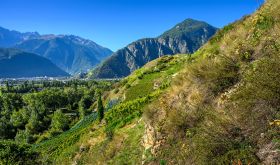
And yet, and yet. Those of us who taste thousands of wines a year find inescapable the fact that wines from different places taste different in what seem like predictable ways. And many of us with tasting experience can see relationships between wine character and vineyard soil types. A wine grown in sandy soil will invariably taste lighter and softer than one grown next door on clay. The Rieslings of the Mosel grown variously on blue/grey and red slate taste very obviously different. Wines grown in the Achleiten vineyard by those naughty Austrians, and the most characteristic reds of Priorat in north-east Spain, for instance, are grown on very particular rock formations and, in their very different ways, they taste perceptibly distinctive.
So something seems to be going on, even if for the moment it cannot fully be explained scientifically. Scientists such as Gérard Seguin of Bordeaux long ago pointed out that the principal role of vineyard soils and rocks is physical rather than chemical. The exact shape, consistency, particle size, permeability and absorbency of the soil determine the crucial supply of water to the vine, thereby shaping how grapes ripen. On this we can all, geologists and tasters alike, agree.
As for more precise influences on the flavour and texture of wines, it may be that there is simply a missing link in our knowledge. In the Oxford Companion we have added a new entry, microbial terroir, to supplement the long (and updated) one on terroir. It has already been demonstrated that there is considerable variation between vineyards, or even between vineyard blocks, in the precise population of all the microbes in the soil, the atmosphere and on the grapes, including the ambient yeasts. Some even seem to be unique to certain regions or countries. Study of this aspect of wine production is in its infancy but is surely a rich seam to mine for those fascinated by the links between wine and place.
The challenge now is to fully explore the links between all the micro-organisms to be found in and above vineyard soils and the soils themselves.
RECOMMENDED WINES
These are just some examples of wines that give the impression of communicating vineyard soils especially eloquently, although I’m sure geologists would disagree.
Hatzidakis or Sigalas Assyrtiko, Santorini (volcanic)
J J Prüm, Wehlener Sonnenuhr Riesling, Mosel (blue slate)
Dr Loosen, Ürziger Würzgarten, Mosel (red slate)
Prager or Domäne Wachau, Achleiten Grüner Veltliner Smaragd, Wachau (gneiss)
Passopisciaro, various Contrade, Etna (volcanic)
Quinta do Vallado, Field Blend Reserva, Douro (schist)
Alvaro Palacios, Finca Dofi, Priorat (llicorella)