
10 August 2017 Today's Throwback Thursday article was published for Purple Pages members only yesterday but we're making it free today because it's so topical.
9 August 2017 As I write this, Italy and much of southern Europe is in the grip of a heatwave with temperatures soaring as high as 43 ºC (109 ºF). Heat is nothing unusual for large parts of Italy, but the mercury rising well above 38 is, and it compounds an already difficult situation caused by two other phenomena that are already putting a considerable stamp on the 2017 vintage throughout the peninsula.
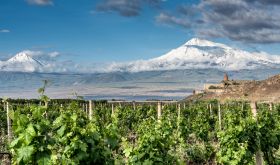
The first is a severe late-spring frost in April that hit every part of Italy – a very rare phenomenon – and with the Veneto, Piemonte and Franciacorta particularly badly affected. But it also affected vineyards as far south as Marsala on Sicily’s extreme western point, as my picture shows. The second marker of 2017, going hand in hand with the extreme heat, is ongoing drought, with large parts of central and southern Italy not having seen any rain since May. A recent article in the Independent reported on a major scientific study claiming that ‘climate change will almost certainly heat the world so much it can never recover'.
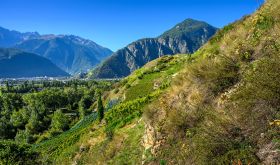
As a rule, from north to the very south of Italy, almost all lower-lying vineyard areas were hit, some more than others, by the spring frost, a forceful reminder that hillside vineyards are naturally better protected. The late-spring frost in April is set to shrink yields dramatically, especially in Franciacorta with the early budding Chardonnay and Pinot Noir the most affected. It is estimated that between 15 and 20% of vineyards there have been affected, up to 50% in lower-lying areas on plains. Vines trained on Sylvoz, a common training system here with a high cordon, didn’t suffer at all.
Harvest of the early-ripening varieties Chardonnay and Pinot Noir began here as early as 3 August, and the most pessimistic prognosis is of a yield 50% lower than the norm. While the Consorzio of Franciacorta, the producer association, is more upbeat in its official communication, the fact is that the frost has led to extremely heterogeneous development and ripening in the vineyards caused by the various times it took the individual vines to recover (if at all) from the damage.
In the Veneto the picture is much the same, with hillside vineyards hardly affected while those on the plains in the western part have been hit hard. This area had not seen any frost since the beginning of the 1980s and has therefore been densely planted with vines since then. Luckily, Valpolicella’s hillside vineyards as well as those of Soave have largely been spared.
Piemonte was by no means unscathed. Asti, the classic zone for Barbera and Moscato, is expected to harvest 10–15% less than is considered the norm here, again due to the frost, while hailstorms in the same period hit parts of Barbaresco and Barolo, notably La Morra. The actual damage might be less serious than initially thought, because the frost was followed by a period of dry weather, preventing damaged leaves from rotting and affecting healthy buds. Producers who did the labour-intensive work of removing all the damaged leaves as fast as possible may see a less severe impact on yield than initially expected, but it will have come at a cost.
After the frost, dry and warm weather set in throughout Italy, which at first seemed a blessing as it kept fungal disease at bay. But already at the end of June the continuing drought started to weigh heavily not only on vineyards, but also on the cultivation of vegetables and wheat, so much so that by then four regions – Sardinia, Emilia-Romagna, Toscana and the Veneto – had asked the government to declare a state of emergency, which would help to release financial compensation at a later stage. Since then the Veneto has seen rain at intervals in the form of violent storms.
Drought is also the main concern in Tuscany [see the recent addition to last week’s article about Trinoro – JR], where the lack of rain is expected to cause a drop in volume of between 20 and 30%. I bumped into a worried Francesco Baricci of the Brunello estate at Catania airport in mid July, he going back to Montalcino after a wedding party in Taormina, and I returning from a three-day immersion in Malvasia on the Aeolion islands on which I will report later.
Baricci told me that temperatures had been high from the beginning of the growing cycle and that the vines were at breaking point thanks to drought stress. To alleviate this they would soon have to water the vines by hand (irrigation systems are still relatively rare in Italy) at night to keep the water from evaporating on the hot soils. Some relief came at the end of July with several spells of rain, as well as incidental hailstorms. Nevertheless, the Consorzio of Brunello di Montalcino is optimistic about the potential quality of the vintage, although it is much too early for any meaningful assessment.
The summer of 2017 is already set to be the hottest ever on record and, as a result of the extremely dry conditions, fires have been reported on Sardinia, Sicily and in Campania with several fires raging on Vesuvius, threatening the vineyards producing Lacryma Christi. On 12 July the European Forest Fires Information System recorded no fewer than 24 fires in Italy alone. It immediately sent three French Canadair fire-fighting planes after Italy requested help from the EU through the Civil Protection Mechanism. Fire risk remains at very high levels for Lazio, Campania, Basilicata, Calabria and Sicily.
So far 2017 resists any meaningful comparison with past vintages due to the extreme weather pattern, even if 2003 and 2007, two particularly hot and dry vintages in recent history, are regularly mentioned. Assoenologi, the association of Italian oenologists, is particularly alarmed by premature assessments and last week issued a warning, saying it is too early for any kind of prediction as the growing cycle for many of Italy’s indigenous varieties still has another 40 days ahead of it. This warning comes on the back of the 2014 vintage, which at a very early stage, well before any grapes were harvested, was condemned as the worst in memory, some going as far as to say that anyone wanting to make red wine in 2014 was doomed to fail, yet in reality there were many positive surprises, especially for Italy’s whites.
Assoenologi is keen to point out that in a country with climates ranging from alpine to subtropical and with 70% of its vineyards located on slopes, with many different elevations and expositions, it is impossible to generalise. Its warning reveals the fear that 2017’s reputation will be decided far too early, for wines that do not even exist at this stage.