From €15.40, $22.99, £20.68
This is a thrilling, truly unique, dry white that embodies the symbiosis of Austria and Hungary – a hark back to the Austro-Hungarian empire perhaps?
Roland Velich is one of the more influential winemakers in Austria. I first profiled him 11 years ago here when he was pioneering varietal Blaufränkisch. Moric is his principal label.
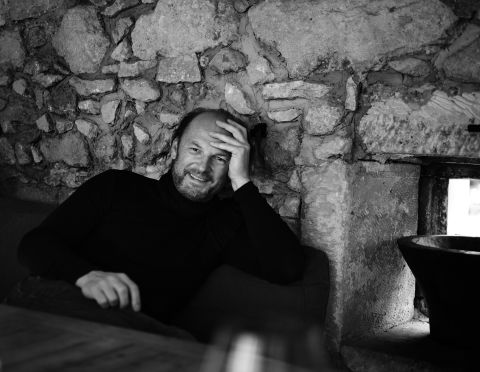
He was also a major influence in the Blaufränkisch Summit in Lech that I attended in early December and describe in Blaufränkisch goes uphill.
The day after we all debated the future of Austria’s signature red wine grape, he showed some of his other wines. I had to leave for the airport, British Airways having done its usual cancellation trick, so couldn’t taste everything, but before I left, the 2020 vintage of his Riesling/Furmint blend made a huge impression on me and my taste buds.
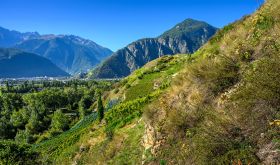
It’s made from a 50:50 blend of two of my favourite grape varieties and was grown in the Hungarian wine region of Balaton (where the picture above was taken), on the shores of the famous lake that does duty as the nearest Hungary gets to a sea shore.
You can read about the firm, dry wines of Tokaj’s signature grape variety in Furmint – Hungary's trump card. My love of Germany’s Riesling is, I hope, well established. I am on the record declaring that it is the world’s greatest white wine grape. Velich apparently would like the wine to be labelled Furmint/Riesling, to prioritise the Hungarian grape, and future vintages will be.
The profile of Moric on Velich’s faithful UK importer Clark Foyster’s website, incidentally, points out that this wine is ‘one of four wines he [Velich] has released in collaboration with producers from other regions in Austria and Hungary. He points out that national borders here are very arbitrary, and recent, and that many wines from the Carpathian Basin, Hungary and Austria share a common ancestry and wine-making culture.’ [Strictly, there have been up to seven wines in the Hidden Treasures range, but the tally varies from year to year.]
The Hidden Treasures project started with vintage 2013 in Tokaj. In 2016 a Somló wine was added and then this Balaton blend in 2017. Here’s how Velich explains the philosophy behind the project:
‘At first it was above all the fascination with the country in which I was born and grew up. An enthusiasm that I had to approach; an enthusiasm that grew on the defiance and rebellion of an adolescent bewildered. An enthusiasm that grew very slowly from understanding what constitutes beauty.
‘It was the silence, the vastness and the shimmering of the Seewinkel, the view over the lake, the winding hills of northern Burgenland, the shadows cast by the last peaks of the Eastern Alps against the light. It was an enthusiasm for the place, a space between worlds. At my back I could feel the barbed wire and watchtowers of the east, but the view of the future was to the west. Later I had the idea of being able to live not only in the country, but maybe make a living out of it. The medium for this should be wine. That was the beginning of a long and intensive “inspection”. From the east of the lake over its western shore, the hills of Sopron to the foothills of the Günser mountains.
‘I was full of new ideas. Took a categorical approach to finding beauty, but also to learning to understand. In this sense, I am still on the way today. Seek. Understand. Learn. Take on new perspectives. Discard paradigms, set up new ones.
‘What I have found so far is a magnificent cultural history of viticulture. Ancient cultivated land that has been kind of lost in the last hundred years. Wine treasures that were among the most valuable and most sought-after in the world, but are now dusty and overlaid, sunk in the depths of perception, so to speak.
‘These hidden treasures must be unearthed. I feel privileged to be able to portray these beauties again. That's part of the fascination that drove me from the start, without even having a clue what to expect. There was only a vague feeling and the excitement of an adolescent.
‘Hidden Treasures is a continuation of the thought that guided me in the development of Moric. Trying to capture a region and represent it with means that are as pure and direct as possible. Old, traditional methods and full trust in the existing substance. An ancient wine culture, which has been successful for centuries producing some of the most famous wines worldwide. The soils and climate of the Pannonian Plain, stretching from the last hills of the Eastern Alps to the Carpathian arc. Grape varieties that have proven to be suitable and valuable over a long period of time. And of course the people, a grown mixture of Slavs, Germans and Hungarians, Orthodox, Catholic, Protestant, Jewish and probably a few more.
‘I have decided to undertake this treasure hunt together with young, innovative winegrowers. We share the enthusiasm for wine and the willingness to get involved with the company. Because it is time to make this great wine culture accessible to the inclined public again in an original and authentic form.’
Other Hidden Treasures wines include various Blaufränkisch reds, a Somló blend of 70% Furmint, 20% Olaszrizling and 10% Hárslevelü from the upper slopes of the big hill there and a Tokaj that’s 100% Furmint from old vineyards predominantly around Tallya. ‘So the whole concept for these white wines’, says Velich, ‘is based on Furmint, which is for me the white counterpart of Blaufränkisch/Kékfrankos.’
Velich continues:
‘Around Badacsony there’s a long and interesting history for Riesling (Rajnai Rizling as the Hungarians call German Riesling), so after doing some experiments with Riesling in 2004 and 2005 I based the Balaton Hidden Treasures wine on Riesling and Furmint. These two varieties showcase perfectly the distinct character of Pannonian wine culture at its best!
‘From my point of view this blend shows exciting results, the wine itself of course but also as narrative … Furmint has so often been described as Riesling of the east, even though these varieties are very different. Predominantly the grapes grow on the Badacsony mountain, on south-facing slopes on basalt, exposed to the lake, and also on the Csobanc hill, about 5 km [3 miles] north on the lake, on south- and south-east-facing slopes on basalt and partly on calcareous sediments of the Pannonian sea. But even though 100% of the grapes come from the Badcsony region, we are not applying for this appellation [and use Balaton instead].’
The two varieties are picked separately and then fermented and aged in 750- to 2,500-litre barrels for at least 12 months. After blending the wine spends another six months in tank or barrel. The 2020 Balaton was released in September 2022, for instance.
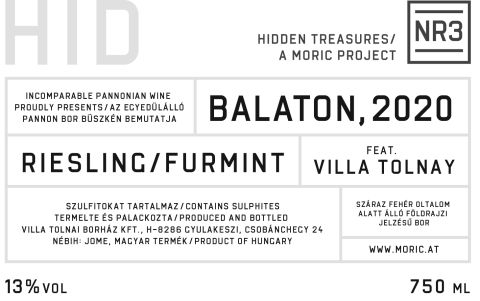
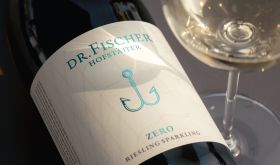
The wine is quite arrestingly labelled – lots of stark typography – and quite confusingly named Hidden Treasures/A Moric Project Riesling/Furmint 2020 Balaton. We list it in our 235,000-strong tasting-notes database as produced by Moric & Villa Tolnay because it’s a collaboration with this Balaton producer.
Below is my tasting note on the 2020 vintage:
A 50:50 blend from Hungary, made by Austrian Roland Velich in conjunction with Villa Tolnay of Balaton.
Such tension and refreshment here! Real grip and density. Hints of spearmint as well as the structure and acidity of these two grape varieties which, in this wine, don’t seem to cancel each other out but rather provide a brilliant combination. Dry finish and masses of substance. A sort of electric shock of a wine. Wonderful stuff. 13% alcohol 17/20 Drink 2022–2027
I got back to London from Lech determined to suggest this as a wine of the week but to my disappointment found no one offering the 2020 in the UK, although it was already listed by Clark Foyster.
I was delighted therefore when UK online retailer Lay & Wheeler, big fans of Moric wines, recently added the Riesling/Furmint 2020 to their listings – and suggest it may even be drinking well in 2035! It’s £90 for six bottles in bond from them or £20.68 for a single bottle. The 2020 is also available in Austria (not surprisingly), Germany, the Netherlands and Belgium.
But the US is still on the 2019 vintage, which is widely available elsewhere too, not just Austria, Germany, the Netherlands and Belgium but also Spain, Hungary and France. So I tracked it down in the UK and bought a bottle of the 2019 from York wine merchants Field and Fawcett who ask £22.95 for it.
My tasting note on the 2019 vintage:
Full bottle 1,471 g. One of Roland Velich’s ‘hidden treasures’ in his Hungarian range.
Much less piercing nose than the 2020. But wonderfully pure and linear on the palate. I think you’d have to be a fan of Riesling and/or Furmint to love this. Underneath there is definitely some passion-fruit flavour and depth and length here. A really distinctive, interesting wine. I’d love to see this with more bottle age; I suspect it may last longer than my drinking window suggests. 13% 16.5+/20 Drink 2022–2026
But you don’t have to take my word for it. Our German and Austrian specialist Paula Sidore also raved about the 2019 when she encountered it at VieVinum in Vienna last year:
One of Moric’s ‘hidden treasures’ series of collaborations, this time featuring Villa Tolnay (a winery founded in 2004 by Swiss owner Philipp Oser and located in the former villa of actress Klari Tolnay) on the north shore of Lake Balaton in neighbouring Hungary.
Stunning. Delicate herbal notions on the nose give way to a taut and edgy palate, marked with the drying nuttiness and contoured philosophy of the Furmint. Fine citrus flavour coated with a bit of creamy yellow fruit on the edges. Deep and dense and will benefit significantly from decanting. Not a natural charmer but I’d gladly drink this all day long. (PS) 13% 17/20 Drink 2022–2027
I think any fan of dry, minerally whites will share our enthusiasm for a potentially long-lived wine here, which is arguably underpriced. Just the sort of wine we like to highlight in this weekly spot.
Explore the wines of Hungary through dozens of articles on JancisRobinson.com.