For full tasting notes, see Chile's revolutionary new reds, Chile's fresh whites and Chile answers back to red bordeaux. Stockists can be found on wine-searcher.com.
In a bid to fill in gaps in my wine knowledge while cunningly escaping the worst of the British winter, I found myself in Chile two weeks after re-acquainting myself with South Africa’s wine scene. The similarities are extraordinary.
Each is one of the world’s most important wine producers outside Europe with an industry until recently based on big companies making national variations on themes dictated by European classics. But in the last few years in both countries a new generation of much smaller-scale, younger, iconoclastic producers has emerged which has turned its insouciant back on the tenets of old and is making an entirely new set of wines based on the country’s oldest and previously disparaged grapevines in regions that were barely mentioned 10 years ago.
South Africa’s Swartland revolution probably pre-dates what one might loosely call The New Chile by a few years, but there is no causal effect between the two movements – just a shared awareness of the global wine Zeitgeist which is now valuing freshness, authenticity and vineyard character above mass, alcohol and winemaking technique.
The regions being plundered by Chile’s new generation of wine producers (they would probably eschew the term winemakers) are to the south of the traditional ones, in particular Maule and Itata, regions until very recently regarded as beyond the fine-wine pale. But, they have very old vines, vines planted with encouragement from the government after serious earthquakes in the late 1940s and the 1960s – particularly Cinsault and Carignan – to add colour to the traditional variety of the region, the long-scorned País, the first European vine variety introduced to Latin America by the Conquistadores and encountered today as the ancient Mission vine in California and Criolla Chica in Argentina.
The Chilean wine industry has traditionally been based on Latin American answers to red bordeaux and run by a small number of powerful families whose operations, typically ranging far beyond wine, have been based around the capital Santiago. There have been more recent sorties to areas such as Apalta that could deliver the rich, powerful wines that were in vogue at the end of the last century. And an increasing number of vineyard regions cooled by the bracing fogs of the Pacific have been developed in order to produce fresh Chardonnays and, particularly, Sauvignon Blancs as well as some experimental Pinot Noir.
But on 1 June 2009 12 small Chilean wine producers got together and formed an association called MOVI whose aims were thus described: ‘MOVI aims to be a breath of fresh air in a healthy but comfortable and conservative Chilean industry known well for blue blazers, grey flannels, incessant potential, and industry concentration.’ Since then, the MOVI T-shirt-wearers have grown and stirred things up in no uncertain fashion, spawning a group of wines called VIGNO based on Maule’s ancient, dry-farmed Carignan vines and made according to a strict set of rules that resemble nothing more than one of France’s appellation contrôlée regulations. (This move almost exactly coincided with the drawing up of a similar set of rules for wines described as Swartland Independent in South Africa.)
The MOVI and VIGNO crew are a cheeky lot and have clearly enjoyed cocking a snook at the old guard of Chilean wine, which makes it all the more remarkable that there has been such a rush to copy them from precisely the big companies that they set out to shake. Casa Lapostolle, Miguel Torres, Santa Emiliana, Undurraga, Valdivieso, De Martino, the American Jackson Family Estates and now the biggest of them all, Concha y Toro, have all asked to join the VIGNO club and use its eye-catching logo on at least one of their labels.
If there is one wine among the hundreds I tasted in Chile recently that illustrated the turnaround in the fortunes of the southern wine regions most vividly it was the latest addition to Concha y Toro’s ambitious Marques de Casa Concha range. I could hardly believe that this range, previously made up of Sauvignon Blanc, Chardonnay, Pinot Noir, Merlot, Cabernet Sauvignon, Syrah and Chile’s signature variety Carmenère, now includes a 12% alcohol 2014 ‘Old Vines, Dry Farmed Pais-Cinsault’ blend from Maule. Only two or three years ago this would have been unthinkable.
With climate change all too obvious in the Andes’ visibly shrinking snowcap, and pressure on supplies of water becoming ever more acute, only the very richest industrialists can afford real water security in the northern wine regions. At the turn of the century Limarí north of Santiago was being developed as a Pacific-cooled wine region with exciting potential. It has already virtually run out of water and everyone in the Chilean wine industry acknowledges that the future lies in the wetter south of the country. So much so that when Concha y Toro recently decided to invest in a lavish new research centre, they chose to locate it in Maule.
Andrés Sanchez of Maule wine producers Gillmore, current president of VIGNO, told me that MOVI and VIGNO had already had a benign effect on the smallholders of Maule. Carignan grape prices have risen tenfold from 100 pesos a kilo, a price that prevailed virtually from 1939 to 2010, to $1.50 a kilo, and land prices have also risen considerably as the big companies have been moving in. The younger generation can now see a future on the land.
But Maule is by no means the end of the story. While some small-scale producers have been pressing ever further up the Andes to produce dramatic mountain wines, an increasing number of producers, including some of the old guard, have been busy exploring the potential of the Itata region even further south than Maule. Cinsault and Muscat are its characteristic grapes here and companies such as De Martino have been producing to great acclaim wildly novel versions aged in the traditional clay jars, or tinajas (see, for example, this wine of the week).
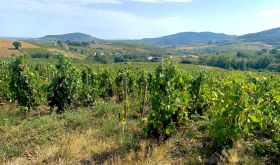
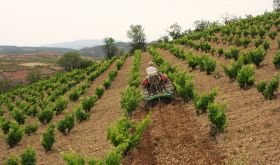
Both Maule and Itata are dominated by widely spaced old bushvines that have thrived without agrochemicals, unlike the productive trellised vines of the fertile Central Valley to the north that have over the last quarter century reliably delivered keenly priced, if slightly predictable, international varietals. Partly because Chinese demand for Chilean copper wooed away the old vineyard labour force, many of these northern vineyards have now been fully mechanised. As Concha y Toro’s head winemaker Marcelo Papa puts it, ‘I’d rather pick by machine exactly when I want to than have to wait for a crew to be ready.’ But the bushvines of Maule and Itata require manual labour, and part of the MOVI movement’s aims has been to regenerate the local economy.
Chile and China now have a strong wine link. A free-trade agreement from last year has seen China’s Chilean wine imports grow so rapidly that only France sends more wine to what is now one of the world’s biggest wine markets.
RECOMMENDED NEW CHILEANS
The following were my favourite new-wave Chilean wines, from Maule, Itata or particularly high up in the Andes, but I tasted many excellent ones in more conventional styles too.
Aristos, Duque d’A Chardonnay and Cabernet Sauvignon 2010 Cachapoal
£41 Justerini & Brooks
Bodegas Re, RE Nace Carignan de las Tinajas 2011 Maule
£73.50 Berry Bros & Rudd
Concha y Toro, Marques de Casa Concha , Old Vines Dry Farmed Pais-Cinsault 2014 Secano Interior Maule
£13 RRP, not yet available
De Martino Muscat, Viejas Tinajas 2013 Itata
£82.23 for six bottles Exel Wines in Scotland. Also available in Spain, Norway and British Columbia.
Garcia y Schwaderer, Bravado Red Blend 2013 Itata and Mourvèdre, Piedra Lisa Vineyard 2013 Itata
Expected at Naked Wines in UK and Vine Connections in US
Gillmore, Vigno Carignan 2011 Maule
£15.49 to members of Naked Wines
Koyle, Don Cande Muscat 2014 Itata
£8.75 The Wine Society
Pandolfi Price, Los Patricios Chardonnay 2012 Itata
£17.50 from Stone Vine & Sun, £19.75 from Berry Bros & Rudd
Tabalí, Roca Madre 2013 Limari
£20 RRP to be released April 2015 by Boutinot in the UK, Biagio Cru in the US
Miguel Torres, Vigno Cordillera Carignan 2012 Maule
Undurraga, TH Pais-Cinsault 2014 Secano Interior Maule
£15 RRP, not yet available
For full tasting notes, see Chile's revolutionary new reds, Chile's fresh whites and Chile answers back to red bordeaux. Stockists can be found on wine-searcher.com.