No other wine-producing country is as dependent on a single grape as New Zealand is on Sauvignon Blanc. Nearly 60% of the country's vineyards are planted with this prolific variety and about 85% of all NZ wine sold in its hugely important prime export market, the UK, is Sauvignon Blanc, an aromatic wine that is so crisp it tastes dry even though in many if not most examples quite marked sweetness lurks.
New Zealand may not produce all that much wine – only a sixth as much as, say, Australia – but it has long prided itself on maintaining the highest average wine price in the world, even though Sauvignon Blanc, with its generous yields, no need for expensive oak barrels, and rapid turnaround in the winery, is far from expensive to make. But New Zealand Sauvignon wine style has been shown to be reproducible. Fans of it can now quite easily find similar wines made elsewhere, particularly but by no means exclusively in South Africa, Chile, Australia and Touraine in the Loire – often at lower prices.
Although there was a time when other non-European countries were deeply envious of New Zealand's having an emblematic grape (Argentina played the Malbec card hard and Chile considered pushing its Carmenère into the spotlight), this is decidedly out of fashion. Diversity is in and it was notable that when three of New Zealand's finest wine producers separately trekked to London recently to show off their past and present vintages, among more than 50 wines shown not a single one was a Sauvignon Blanc.
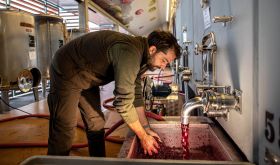
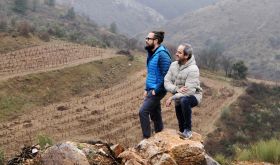
Felton Road of Central Otago in New Zealand's ski country in the south of the South Island is arguably the country's internationally best-known fine-wine producer. Its owner Nigel Greening (pictured) showed his flagship Pinot Noirs and some fine Chardonnays and Rieslings in London recently. A pioneer of organic and biodynamic viticulture and already producing widely admired wines, he had thought they had little to learn. In fact at a similar tasting five years ago he actually said that they did not propose to change their vine growing and winemaking techniques. But last month he admitted that Felton Road was in a decidedly transitional state.
Thanks to the country's relative proximity to the South Pole, the distinguishing mark of most NZ wines is high acidity but according to Greening, 'for reasons no one really understands, in most New Zealand regions and especially Central Otago, Pinot Noir loses acid during fermentation and the pH rises. So traditionally winemakers would add acid to bring it back to what it had been at the beginning'. But as their vines have aged, this pH increase happens less and less and they now find there is no need to acidify musts from their older vines, especially those on the most calcareous soils.
And, mirroring a global trend we identified while writing the new seventh edition of The World Atlas of Wine, at Felton Road they are also deliberately picking grapes earlier because freshness is now seen as a positive virtue. Whereas their harvest used to be spread over 30 days, it is now more likely to be compressed into 10, with more pickers. 'The question is, according to Greening, 'How early can you nudge picking without tripping over green tannins?' They always picked earlier than their neighbours but in 2012 they picked a good two weeks earlier and Greening feels they could have picked even earlier than that – presumably helped by the fact that biodynamically grown grapes generally tend to ripen faster and in a healthier state than conventionally grown ones. I was certainly struck by how much drier, more elegant and subtle the Felton Road 2012 Pinots were than those made in earlier vintages.
Greening reported delightedly that when François Millet, the fastidious winemaker at the famous Domaine Comte de Vogüé in Chambolle-Musigny, visited them, he remarked that the Pinot Noir grapes arriving at the Felton Road winery looked like those in Chambolle after they had been painstakingly sorted.
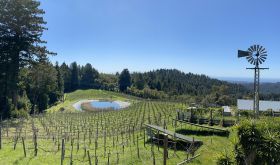
Another much-admired producer of biodynamically grown South Island Pinot Noir, Bell Hill, was showcased in London 10 days later. Whereas Felton Road is big enough to send its winemaker around the world most years and donate hundreds of cases of wine to help victims of the Christchurch earthquakes, Bell Hill has a mere 6 acres (2.4 ha) of vineyard – so showing off a vertical of their Pinot and, arguably even better, Chardonnay in London was a major sacrifice of their stocks.
Marcel Giesen (whose family have their own NZ wine business) and Sherwyn Veldhuizen scouted out this small but unusual site near an old limestone quarry in Weka Pass, North Canterbury, in the late 1990s. Because limestone is the informing rock of Burgundy's Côte d'Or, mecca for lovers of fine Pinot Noir and Chardonnay, which the great majority of New Zealand's most ambitious producers are, it is highly sought after by prospective New Zealander vignerons. Indeed its precise distribution in the South Island is much discussed and disputed. Virtually everyone agrees, however, that it can be found in North Otago (and not in the much more widely planted Central Otago), in the Hawke's Bay vineyards of Lime Rock (who make an excellent Pinot Noir in this Cabernet and Merlot region), at Bell Hill's neighbours Pyramid Valley and, of course, at Bell Hill. The scale of this two-person operation is so small that when I visited them a few years ago, their cabin on the property didn't even have electricity. The contrast between Bell Hill, where total production of their super-taut burgundian Chardonnay occasionally rises sufficiently to fill a whole five barrels, and the typical opportunistic Marlborough Sauvignon Blanc grape grower hoping to make a quick buck by selling to one of the big label owners could not be greater.
And then, two weeks later, I was treated to a historic tasting of a third biodynamic NZ Pinot Noir nut, Nick Mills of Rippon vineyard, one of the first to be established in Central Otago, by Mills' father Rolf and beside a lake so beautiful that the vineyard has featured in a thousand photographs (including a Tesco own-label Sauvignon from the North Island). Invalided out of New Zealand's ski team just before the 1994 Winter Olympics, Mills was redirected to wine, via long stints in Burgundy. He showed us Pinots from 1990 that were stunning by any measure, and, by dint of raiding his mother Lois's cellar, it was a historic collection of mature wines that even he had not seen together before.
There should be absolutely no doubt that New Zealand has very much more to offer than Sauvignon Blanc.
See full tasting notes on Felton Road, Bell Hill and Rippon.
SOME NEW ZEALAND TREASURES
I have included only wines that it is (sometimes only just) possible to find commercially today.
Felton Road, Central Otago
Block 2 Chardonnay 2011 £26.49 Noel Young, also Berry Bros, Uncorked
Bannockburn Pinot Noir 2012, 2011, 2010 about £30, delicious and widely available
Cornish Point Pinot Noir 2012 about £40 and widely available
Block 5 Pinot Noir 2011 Uncorked £49.95, also Handford, Smiling Grape, Fine Wines Direct
Block 3 Pinot Noir 2012 £58.20 Hedonism Wines, also Handford, Bibendum
Bell Hill, North Canterbury
Bell Hill Chardonnay 2010 £461.94 for six Armit Wines
Old Weka Pass Pinot Noir 2010 £329.94 for six Armit Wines
Bell Hill Pinot Noir 2010 £539.94 for six Armit Wines
Rippon, Central Otago
Rippon Mature Vine 2010 £33.50 Lea & Sandeman
Emma's Block Mature Vine 2010 £49.50 Lea & Sandeman
Tinker's Field Mature Vine 2010 £56.50 Lea & Sandeman