There were other notable aspects to it – perhaps particularly the identity of the organisers. Nicholas de Roumanie (aka Nicholas Medforth-Mills) is the grandson of Michael of Romania, who sat on the throne for a few years as a young boy and then reigned as King in the 1940s before being forced to abdicate soon after attending the wedding of his cousins Queen Elizabeth and Prince Philip. My invitation to the tasting was issued by Nicholas’s wife Alina-Maria de Roumanie.
Nicholas and Alina-Maria have taken on the mantle of promoting what the country has to offer, including being ambassadors for Romanian wine. They seemed to have taken expert advice in choosing the wines to show at this London tasting. Representatives of 16 different private estates were pouring their current wines, overlooked by the club’s extensive book collection. No dangerous splashes observed.
The young couple had also assembled a guest list of particularly thirsty and talkative private wine enthusiasts, who obediently fell silent for short speeches by Nicholas of Romania and Romanian wine distributor Mihai Diaconu. Most importantly, the wines showed rather well.
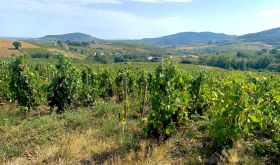
I visited Romania briefly in 2015 (remember when you could just fly in and out of distant lands?) and felt there was considerable, if not fully realised, potential for Romanian wine. Wine is almost as important to the nation’s culture as it is to Georgia’s. Within Europe, Romania has more vineyard than any country other than Italy, France, Spain and (just) Portugal. It’s a Latin country, surrounded by Slavs, and its per capita wine consumption is relatively heroic – even without counting the large amount of wine made on a small scale and drunk on a larger scale by private individuals. (As I drove around Timișoara in the south-west of the country, I was struck by how many households seemed to grow their own vines.)
Overall I was impressed by the progress made by wine producers in recent years. Apart from one bottle that seemed excessively volatile, all 46 wines I managed to taste despite the throng were remarkably clean and fresh. If there was a common fault – perhaps not regarded as a fault in Romania itself where there is a long tradition of making wines, red as well as white, a bit sweet – it was that many reds struck my western palate as a bit too sweet to be appetising. A few wines still seemed a bit late twentieth century with too much evident oak and alcohol, which is true virtually everywhere in the wine world. But there were several that, for what such numbers are worth, I scored 17 out of 20 – high praise from me.
Only 13 of the wines I tasted were white. There were a couple of very respectable Sauvignon Blancs (not, admirably, copies of Sauvignon made elsewhere), but by far the most thrilling of the whites were made from one of Romania’s dozen indigenous grape varieties, Crâmpoșia Selecționată. Both of them, one still and one made sparkling in the same way that champagne is, were made on the recuperated aristocratic wine estate Prince Stirbey. (The UK’s Wine Society buys wine from this estate but neither of these wines.)
Two whites from another Romanian grape from different estates – one still, one sparkling – made from the new, vaguely grapey crossing Sarba were also interesting. More widely planted local white wine grapes are the Romanian Fetească Regală and, slightly less common and possibly finer, Fetească Alba. Tămâioasă, or Tămâioasă Românească, is the Romanian name for the popular Muscat.
At this tasting, for whites and especially for reds, local varieties definitely triumphed over the international ones that have long been grown in quantity in Romania – perhaps because the country has had strong cultural links with the French, even if much recent foreign investment in the Romanian wine industry has come from Italy.
Every single one of my favourite reds listed below was made wholly or partly from Fetească Neagră, a variety that fell out of fashion in Romania in the late twentieth century when international varieties seemed more exciting, but one that is very clearly at home there. It makes lively wines with good acidity and good fruit that hovers somewhere on the spectrum between damson and plum. Some sense a certain smokiness about it. One thing is certain: it has a strong and distinctive personality that seems to blend pretty well with the principal Bordeaux red wine varieties Cabernet Sauvignon and Merlot.
Gitana, which is actually over the border in the republic of Moldova, demonstrated that this part of the world can also make a fine example of the deep purple Georgian grape Saperavi. Gitana also showed a very decent example of Rară Neagră, another name for the indigenous Băbească Neagră that is generally associated with high acidity and pale colour. But, yet again, this light red was just a bit too sweet for export markets, I felt.
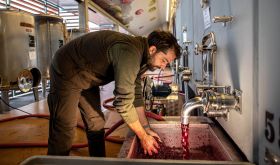
Mark Haisma, a winemaker who trained in Australia and is now stationed in Burgundy, initially advised on the new Dagon project in Dealu Mare in the south-east of the country, encouraging the locals to pick earlier when the grapes were fresher and more expressive. ‘These boys have talent, and now a nuance and sense of they want to do', he told me by phone from his locked-down bunker on the Côte d’Or. ‘The first vintage at 12.5% alcohol was a bit confusing for them when the norm had been 14%. But once they realised how good the wine was, they got very excited.’
Dagon’s owner Mihnea Vasilache is excited about the potential of oak from Romania’s own forests, whose seven million ha (17.3 million acres) cover more than a quarter of the country, even if Romanian coopers need a bit of encouragement to age the oak as long as necessary for wine barrels.
Once the many new wine estates that have sprouted since Romania joined the EU in 2007 run out of Romanians to drink their produce, they may have to make rather drier wines for export markets. That aspect apart, there is no reason why Romanian wines shouldn’t be welcomed.
My favourites
Whites
Gitana, Autograf Fetească Regală2018 Valul lui Trajan
Prince Știrbey, Crâmpoșie Selecționată Sec 2018 IG Dealurile Olteniei
Prince Știrbey, Crâmpoșie Selecționată Spumant Brut 2013 Romania
Reds
Aurelia Visinescu, Anima 3 Fete Negre Fetească Neagră NV Dealu Mare (blend of vintages 2014, 2015 and 2016)
Cramele Recaş Fetească Neagră 2017 Recaş
Dagon, Clan Jar Sr 2016 (blend of Cabernet Sauvignon, Fetească Neagră and Merlot)
£17 Vinoteca
Davino, Flamboyant 2016 (blend of Cabernet Sauvignon, Merlot and Fetească Neagră) Dealu Mare
Gitana Rară Neagră 2018 Valul lui Trajan
Gitana Saperavi 2017 Valul lui Trajan
Liliac Fetească Neagră 2018 Lechința
SERVE, Cuvée Charlotte 2013 (blend of Cabernet Sauvignon, Fetească Neagră and Merlot)
Vitis Metamorfosis, Cantus Primus Fetească Neagră 2017 Dealu Mare
See this complete set of tasting notes. Try Wine-Searcher.com for stockists.