Robert Slotover is a classical-music agent. But his virtuoso artists may find him rather elusive on their travels together all over Europe. Rather than checking out auditorium acoustics, he is just as likely to be skulking round independent wine shops trying to add to his collection of obscure grape varieties, the more obscure the better. He really is obsessive in this respect, and it could be said that the world is catching up with him.
For years the French were dismissive about grape varieties (cépages in French). A vin de cépage was viewed as distinctly inferior, one that couldn’t muster a geographical appellation to put on the label. Slotover remembers asking someone in the wine department of Galeries Lafayette in Paris whether they had any wines made from rare grape varieties. The salesman responded loftily, ‘ceci n’est pas un critère, Monsieur’.
In the 1990s wine consumers and producers were fixated on a small handful of well-known international grape varieties, a limited range dominated by Cabernet Sauvignon and Chardonnay. But since then, the world’s wine producers have been looking far beyond trying to make copies of red bordeaux and white burgundy respectively. The locavore movement and renewed interest in heritage varieties of other fruits have encouraged many of them to re-evaluate grape varieties that have a long history in their region instead, and even to recuperate some that are almost extinct. Eco-conscious wine producers Familia Torres of Catalonia and the Plaimont group of co-operatives in Gascony have been particularly active in this respect, but all over Italy in particular there are individuals who are busy bringing long-ignored grapes back into production.
The development of DNA profiling was a game-changer for varietal identification. Previously different varieties could be identified by only a handful of individuals in the world with the experience to know which sort of leaf and bunch belonged to which. But now specialist geneticists have been able to build massive family trees of different varieties, and to work out how mystery vines relate to known varieties.
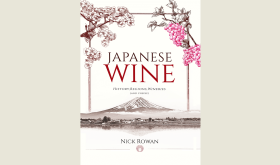
In 2012 with my fellow Master of Wine Julia Harding and grape geneticist Dr José Vouillamoz I wrote a book, Wine Grapes, designed to be a compendium of every single grape variety we could find that was then making a wine in commercial production. We found 1,386 but I’m sure we would find at least 1,500 today. More prey for Slotover.
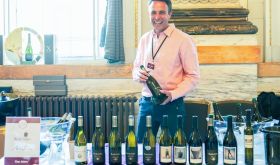
He recently found a crowd more enthusiastic than the Galeries Lafayette salesman when he was invited by his friend, the design critic Stephen Bayley, to put on a tasting of 57 of his latest finds at the London club The Athenaeum. Bayley is a member of the Athenaeum’s wine committee and is keen to broaden members’ horizons. (Memberships of London clubs’ wine committees are keenly fought over.) A total of 85 members and their guests had signed up for the tasting followed by a dinner with much more conventional wines: white burgundy and red bordeaux.
The club’s vast drawing room was reconfigured to allow space for two very long tables covered with white cloths and more spittoons than I have ever seen at a wine tasting together with the 57 bottles described by Slotover in an accompanying booklet. I was awarded the privilege of arriving at 3 pm so that I could taste them all in peace, accompanied only by the loud tick of the grandfather clock. I left just as everyone else was arriving and couldn’t help wondering which bottles would be drained first. Not, I hope, that of the Orpicchio made by Donne Fittipaldi on the Tuscan coast. It was, most unfortunately and through no fault of theirs, seriously affected by cork taint.
Having already tasted two or three more-modest selections of unusual grape varieties with Slotover several years ago, I wondered in advance whether it would turn out to be a bit of a chore. (Though when I sent the list of wines to my co-authors, Switzerland-based Vouillamoz was deeply envious.) In the event, I found this group of Slotover finds by far the most impressive. Perhaps this is because today these rarities are being cherished by increasingly serious wine producers as opposed to simply being local oddities. The quality of the wines, particularly the whites, which don’t always last as long as reds, was also impressive in view of the fact that Slotover had bought some of them as long as four years ago.
I noticed that quite a few of the wines were certified organic and found that a higher-than-average proportion of the whites had been made as though they were reds, leaving the grapes in contact with the skins before and/or during fermentation. Perhaps the thought was that this increasingly popular technique would imbue the wines with even more varietal character, but I found that some of these wines, often called orange wines, were more dominated by the chewiness associated with extended skin contact than by the actual flavour of the grape variety.
The tasting got off to a grand start with a white wine grape I had never heard of, Bouysselet, from the environs of Toulouse, that, at five years old, was still very much alive and kicking. It ended with a less impressive red wine made from a Piemontese grape called Slarina that, in this case anyway, tasted of dusty damsons and inky strawberry jam. Not perfect, but only 11.5% alcohol. In fact most of these wines were less alcoholic than the norm, with only five of the 57 more than 15% and some as low as 10.5%.
Italy supplied the greatest number of these wines – 15 – with 11 of them being Spanish and eight from each of France and Greece. As it happens, I have long enthused about Greece and Portugal as being valuable sources of fine wines made from indigenous grape varieties but only one example in this particular collection was Portuguese. Switzerland, Austria, Romania, Serbia and Chile also fielded one wine in this tasting (the minor Bordeaux variety Gros Verdot, called Grosse Mérille by its rescuer, in the case of Chile), with two from Croatia, three from Hungary and four from Germany – all from a Rheinhessen nursery specialising in ancient grape varieties. Perhaps the geographical spread of Slotover’s collection is heavily influenced by his concert calendar.
Slotover grouped the grape varieties according to whether he could find only a single producer of them and whether he found more. Within these groups, whites were presented before reds and the grapes presented alphabetically. Afterwards I checked which of them we had included in our 2012 book. We did have 24 of the 31 multi-producer grapes but only six of the 26 varieties represented in the first, single-producer group were featured in Wine Grapes. Time for a second edition?
Rare grape varieties with obvious potential
These are the grapes and their region that showed best in the recent tasting. But the wines are available in such small quantities that stockists are few and far between. So far.
Whites
Bouysselet from Fronton, south-west France 14%
Coda di Pecora from Campania, southern Italy 12.5%
Gelber Kleinberger from Rheinhessen, Germany 12.5%
Grünfränkisch from Rheinhessen, Germany 13%
Maturana Blanca from Rioja, Spain 13.5%
Maturano from Lazio, Italy 12%
Melissaki from Crete, Greece 13.2%
Monstruosa de Monterrei from Galicia, Spain 13.5%
Rossetto from Lazio, Italy 13%
Roussellou from Aveyron, southern France 11.6%
Verdejo Serrano from Extremadura, western Spain 12.5%
Vinyater from Catalunya, Spain 13%
Reds
Carrasquin from Asturias, northern Spain 14.5%
Hartblau from Rheinhessen, Germany 13.5%
Occhiorosso from Tuscany, Italy 14%
Picapoll Negre from Catalunya, north-east Spain 12%
Ribeyrenc from the Languedoc, southern France 12%
Sanforte from Tuscany, Italy 14.5%
Tasting notes in The rare-grape collector.