As a wine writer I don't expect to be caught up in an international news story, much less a national disaster. But I found myself in Victoria, just south of Melbourne, on Saturday 7 Feb, the day the bushfires started.
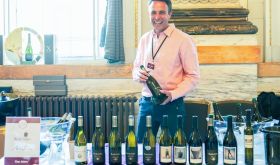
I have never known more peculiar weather in a single day. Down on the Mornington Peninsula the morning was quite cool, low 20s Centigrade. It was only at lunchtime that strong, hot, dry winds blew in temperatures in the 40s from the desert to the north. All afternoon was exceptionally hot – though far from unbearable thanks to the winds and the low humidity, even if the subtle Chambolle-Musignys shown then by Freddy Mugnier at the Mornington Peninsula Pinot Noir Celebration struggled as much as the air conditioning to maintain their power. The assembled Pinotphiles were, most unusually, allowed to leave their mobile phones on during the tasting in case someone wanted to warn them of a bushfire back home.
And then at around six as we filed out of the muggy, Pinot Noir-scented conference room, the most extraordinary thing happened. The winds turned and started to blow in cool air from the Antarctic. Before dinner the temperature suddenly dropped back to the low 20s, and by the following morning it was raining.
But the damage had been done. The previous week the state of Victoria, usually viewed as irredeemably cool and grey by the rest of Australia, had suffered a four-day run of record temperatures in the high 40s – as those who watched Federer and Nadal slug it out in Melbourne's Rod Laver Stadium were all too aware. The bush was dried to a tinderbox and needed only a tiny spark or the odd arsonist to ignite it into a human and commercial tragedy.
Some of the worst-hit areas were wine-growing regions: Gippsland, Beechworth and in particular the Yarra Valley where I was due to taste and sup that Sunday evening on a short fact-finding mission organised by Wine Australia, the generic body charged with promoting Australian wine worldwide. In the event, all roads in to the valley were blocked by police cars guarding what they called 'crime scenes', a grisly reference to those who had lost their lives in the fire and whose bodies are still painstakingly being identified by specialists who had the same grim job after the Bali bombing.
I am basically a thwarted travel agent and like nothing more than making travel arrangements, but in this case I was effectively a parcel to be handed on from one wine region to another. My job that day was simply to do as I was told. In this case, under leaden skies, to report to a helicopter pad afloat on the Yarra river in downtown Melbourne to meet a chopper that had somehow been magicked to drop me and my minders into the Yarra Valley.
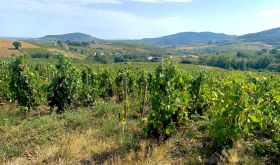
We hardly talked on this sombre flight, silenced by the blackened paddocks and smouldering fires below and in every direction, scattered apparently at random. You could see how the fire had encroached into some vineyards but seemed to have stopped politely and inexplicably at the boundary of others. It must have been terrifying just one day before.
We landed on the lawn in front of Yering Station's smart modern winery where a wedding party had apparently been trapped by the fires the previous day. Apart from a faintly acrid smell everywhere, and the fact that the tasting room was overlooked by a ridge behind which a series of fires was still smoking, it was business as usual here. The winery team calmly served me verticals and horizontals of all the wines in the Rathbone Group: not just Yering Station but their Yarrabank fizz, a joint venture with Devaux of Champagne, their great-value Yering Frog varietals, Mount Langhi Ghiran, Parker Coonawarra Estate from Coonawarra and Xanadu from Margaret River thousands of miles away in Western Australia (which has also had its fair share of bushfires).
I had been dimly aware of a few earnest telephone conversations in the background as I tasted, and duly I was asked whether I would mind terribly if not all the guests expected at dinner that night turned up. It was a difficult time and some of them were keen to stay comforting their families.
What was far more extraordinary was that anyone at all was both willing and able to travel to De Bortoli's winery for that evening's tasting and supper. The charred Yarra Valley was riddled by so many road blocks (including one at the entrance to the winery) that in the event we had to travel the five miles from Yering Station to De Bortoli back in the helicopter (three more minutes of desolation viewed from the air).
De Bortoli's winemaker Steve Webber met us in a rough paddock next to the winery, looking part phlegmatic, part shellshocked after a day spent 'defending the boundaries'. Undaunted, he took us straight off on a tour of the vineyards. We saw one house, completely untouched but marooned in a sea of blackened undergrowth. We saw a Merlot vineyard with a neat scorched tongue of fire incursion. 'I was never that happy with that block', he said laconically.
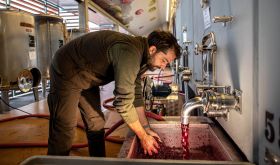
And then inside for yet another tasting, this time without any perceptible smoke effects, although Webber did say that he would be carefully rinsing the Pinot Noir grapes that were due to be picked the following day before fermenting them, just to be sure there would be no tasteable legacy of the bushfires in De Bortoli's 2009s.
One side effect of the increasing incidence of bushfires in Australia has been a growing preoccupation with smoke-tainted wine, with officials springing into action last week offering to test samples of vine leaves, grapes, juice and young wine for levels of guaiacol, a compound viewed as an indicator of smoke effects. They warn, however, that these can build up in bottle so that reassuringly low levels when the wine is bottled are no absolute guarantee that the wine will remain free of smoke taint forever. The Yarra Valley was relatively free of smoke for most of the week after the start of the bushfires but a wind change then blew smoke in off the fires still smouldering up in the Yarra Ranges.
The effects of the recent bushfires on the Victorian wine industry have of course been much more serious than a few wines that taste a bit singed. The Leonards of Steels Creek and wine distributor Rob Davy and his family all perished in the fires. Almost 30 Yarra Valley vineyards lost a total of more than 150 hectares to the fires, about five per cent of the region's total vineyard area, and three small wineries – Roundstone, Yarra Yarra and Calders – were destroyed. Rupert's Ridge winery was rescued from disaster by neighbours who set to to remove the melted bird nets, snip off the damaged grapes and replace melted irrigation pipes so that the surviving vines now have water.
Meanwhile, at De Bortoli's that eerily quiet Sunday night, no fewer than five talented local winemakers turned up to open bottles and demonstrate that, as the Yarra Valley Winegrowers Association has been busily broadcasting over the last couple of weeks, the Yarra Valley, Melbourne's closest wine region, is still very much open for business. Although if temperatures continue to rise, its Shiraz may become more famous than its Pinot Noir.
YARRA VALLEY FAVOURITES
De Bortoli Estate Pinot Noir 2007 and Reserve Release Syrah 2007
William Downie Gamay 2008
Gembrook Hill Pinot Noir 2006 and Sauvignon Blanc 2006
Mayer, Bloody Hill Chardonnay 2007
Luke Lambert Syrah 2006
Melba, Lucia 2006
PHI Sauvignon Blanc 2008 and Chardonnay 2007 and 2008
Yarrabank, Late Disgorged Cuvée 2001
Yering Frog Chardonnay 2007
Yering Station, Willow Lake Old Vine Chardonnay 2007, Carr C Block Vineyard Shiraz/Viognier 2006 and Reserve Shiraz/Viognier 2006
See my much more detailed tasting notes.
International stockists at www.wine-searcher.com