I’m increasingly concerned about the massive gap that persists between what non-Americans think about the world’s fourth-biggest wine producer, California, and the current reality.
Most wine lovers I discuss California with, even those well informed about the rest of the world, think primarily of extremely expensive, potent Napa Valley Cabernets and, if they spend any time buying wine in supermarkets, they may be aware of mass-market, high-volume brands such as Barefoot, Blossom Hill and Echo Falls.
But in fact California’s vitality and excitement lies neither at the top nor the bottom of the price range but in the lower middle with a much, much wider range of grape varieties, styles and appellations than there were 10 years ago. They are typically produced by young, dynamic, innovative and independent winemakers. And that, I hope, is where California’s wine future, and power, lies.
Campaigners such as the author Jon Bonné with his 2013 book The New California Wine (Ten Speed Press, 2013) and the sommelier-turned-winemaker Raj Parr, instigator of a series of tastings of these sort of wines called In Pursuit of Balance, have done their best to draw attention to the evolution of California wine, but the effects have been largely within the US.
The problem is that American wine producers aren’t great exporters. Italy and Spain export more than six times as much wine as California does, France four times as much. So even wine drinkers in major wine-importing countries such as the UK are relatively ignorant about the dramatic widening of what’s on offer from vintners on the west coast, which produces the great majority of American wine.
New Yorkers, perhaps not surprisingly, are much better informed about the California wine revolution than wine drinkers in Europe and Australasia. Currently fashionable in that trend-conscious market are light, fresh wines made in California from relatively obscure French grape varieties such as Trousseau, Valdiguié and Counoise, and such Italian varieties as Refosco, Ribolla Gialla and Friulano (see What's hot in New York). Even Mission, the grape known as País in Chile that was scorned until recently and was brought north by the missionaries who settled along the west coast in the late eighteenth century, is enjoying newfound esteem and ingenuity.
The grape glut on the west coast is turning American vintners’ thoughts to the possibilities of export, and California’s Wine Institute, the generic body, is currently focused on encouraging this. Just before lockdown a team of Americans bravely flew over to London to host a showing of about 450 California wines being shipped to the UK, with not a supermarket brand among them. Among the 50-odd Napa Valley wines, there were only 12 Cabernets, none of them in the triple-digit per bottle price range. Instead there was Napa Albarino, Grenache and Pinot Grigio, as well as creative blends of all sorts.
In terms of appellations, Napa, Sonoma and Central Coast no longer have a monopoly. In my tastings both in London and in California last February, I, co-author of The World Atlas of Wine, kept coming across such relatively unfamiliar names as Dunnigan Hills, Coombsville, Borden Ranch, Clements Hills, Yorkville Highlands and Red Hills Lake County.
Just as in Australia and South Africa, ambitious younger California producers without land or much capital are making silk purses out of grapes with sow’s-ear reputations. The grapes are so much more affordable – you could buy a ton of Friulano grapes from Mendocino for just $1,500, while some Napa Valley Cabernet Sauvignon grapes sold for as much as $50,000 a ton last year. That makes a heck of a difference to the selling price per bottle.
And some of the ‘Cinderella vines’, varieties that are not international classics but, thanks to the work of these new-wave winemakers, are becoming increasingly fashionable, are usefully old and therefore produce low yields of particularly flavourful grapes. (Thanks to Prohibition in the early twentieth century, California has some of the oldest vines in the world, plants that were not worth replacing when there was no market for their produce – see our Old Vines Register.)
If the varieties on the labels of these new-wave California wines are not the most familiar, some of the producer names are just as original: Dirty & Rowdy is now quite well established but there is Ashes & Diamonds, The Federalist, Jolie Laide, Angels & Cowboys, Benevolent Neglect, Bread & Butter, Donkey & Goat, Notary Public, Once & Future and Reckless Love. You get the picture.
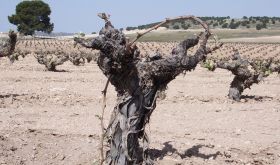
A leader of the pack in this sort of enterprise is the Napa-born Tegan Passalacqua (his own name is presumably quite arresting enough for him to choose a simple name, Sandlands, for his personal wine label). It produces things like Lodi Cinsault, and Mataro (Mourvèdre) from the ancient vine stumps that push out of sand in Oakley, Contra Costa Country (see the main image above New-wave California A–J), saved from property developers only by their proximity to the PG&E power plant.
In February on our first night in Napa, so readily associated with some of the most expensive wines in the world, we had dinner with Tegan. He took us aback by claiming that only about 25% of wineries in Napa Valley are profitable. I had naively assumed that high prices guaranteed margins that were easily high enough to cover costs and much more. But during the rest of my week in northern California I floated this statistic and everyone agreed it was about right.
Land costs are by a considerable margin the highest of any American wine region. The cost of vineyard labour has increased enormously and is typically provided, via a management company, by decreasing numbers of highly skilled Mexicans who often need local lodging. And then there are the fees of the well-known consultants who help to bolster the quality and image of the wines and wineries respectively. A very high proportion of Napa wineries are owned by well-heeled incomers without proven winemaking expertise.
All this is in stark contrast to the typical model of the new-wave winemakers: buying inexpensive grapes and making wine themselves in the corner of a shared shed, often in the evenings and weekends while holding down a day job at a better-funded winery.
It may be difficult for newcomers to make money out of wine production in Napa but that doesn’t seem to be putting off potential investors. Owning a Napa winery, or at least a Napa wine label, seems still to be a widespread ambition – or perhaps even a tax write-off – for many a successful American who has made a great deal of money elsewhere. And the number of high-profile French wine producers investing in California wineries continues to grow, with the most recent acquisition, just before lockdown, being Champagne Louis Roederer’s of Diamond Creek, one of Napa’s most terroir-conscious producers.
Some recommended new-wave Californians
UK importers who specialise in new-wave California wines include Indigo, Nekter, Roberson and Tiger Vines.
Whites
Pax, Buddha’s Dharma Vineyard Chenin Blanc 2017 Mendocino
$27.30–$32 various US retailers
£34.90 Indigo
Minus Tide, Mariah Vineyard Chardonnay 2017 Mendocino Ridge
$36 Flatiron Wines & Spirits, San Francisco
DeSante, Old Vines White 2014 Napa Valley
£39.99 AG Wines
Paul Lato, Matinee Sauvignon Blanc 2016 Santa Barbara County
£44.40 [email protected]
Matthiasson, Matthiasson Vineyard Ribolla Gialla 2017 Napa Valley
$45–$54 various US retailers
Reds
Mountain Tides Petite Sirah 2018 California
$19.99 K&L
£22.95 Jeroboams
Minus Tide, Feliz Creek Vineyard Carignan 2018 Mendocino
$30 Flatiron Wines & Spirits, San Francisco
Kutch range of Sonoma Coast Pinot Noirs
Widely available in Europe and the US.
2017s from £36.80 Roberson
Birichino, Bechthold Vineyard Old Vines, Vignes Centenaires Cinsault 2018 Mokelumne River
$23.69–$31 various US retailers
2016 is about £29 Noel Young, Butler’s Wine Cellar, The Salusbury Winestore
Matthiasson, Matthiasson Vineyard Refosco 2017 Napa Valley
2015 is £55 Nekter Wines or $45 various US retailers
Dirty & Rowdy, Maple’s Spring St Petite Sirah 2016 St Helena
$55–$73 various US retailers
Halcón, Elevación Syrah 2018 Yorkville Highlands
$32 Halconvineyards.com
To be imported into the UK by A&B Vintners
Tasting notes in New-wave California A–J and New-wave California K–W. International retailers can be found on Wine-Searcher.com.