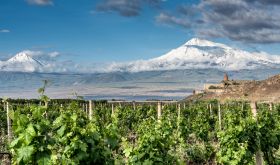
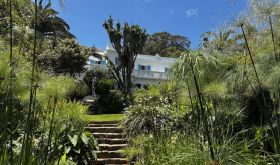
Gilles Besse is a handsome jazz saxophonist-turned-wine-producer and TV pundit who is also president of Swiss Wine Promotion. His belief is that Swiss Wine is not celebrated enough abroad. When I last saw him in November he expressed some exasperation at how difficult his job was and how hard it is to manage the diversity of the Swiss confederation with its three main languages and three wine cultures.
Since the recent liberation of the Swiss franc, the value of his promotional funds abroad may have soared, but so will the price of Swiss wines on export markets. Swiss wines have long seemed relatively expensive and even before the national bank’s abrupt end to the euro cap, Switzerland managed to export only 1.8% of its wine.
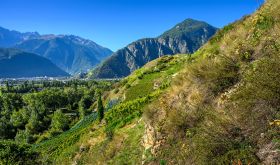
My co-author of Wine Grapes, Swiss grape geneticist José Vouillamoz, is a human promotional aid for Besse, living in the middle of some of the most stunning vineyards I have ever seen in the Valais canton and lecturing energetically about the virtues of Swiss wine on the international wine circuit. His argument is that most of Switzerland’s vineyards are so steep and difficult to work that each hectare requires up to 1,500 hours of work each year, ‘so taking that into account, Swiss wine should cost between three and five times the price of Bordeaux'.
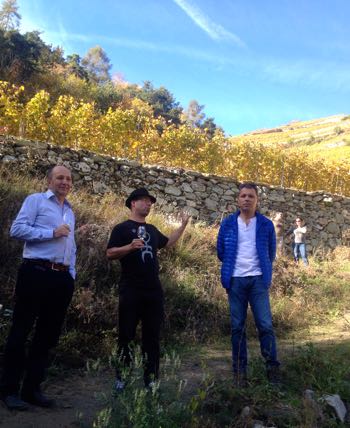
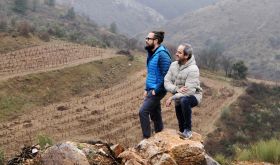
When I last saw him in action he was presenting a dozen diplomatically chosen Swiss wines to an audience of hundreds of international wine bloggers at the DWCC annual get-together, last year’s on the lake in Montreux, Gilles Besse having seen the promotional possibilities of offering to host the bloggers in Switzerland. Few of them had tasted much Swiss wine before. Most were impressed, not least with the assembly of 40 top producers who personally showed a range of their wares after José’s presentation. (José is in the middle of the picture on the left, flanked by Gilles Besse (right) and Gilles' youthful uncle and co-owner with Gilles of Domaine Jean-René Germanier, showing a small group of us an amazingly steep recuperated vineyard in the Valais, where the photograph above was also taken by Ewan Murray of The Wine Society.)
It had been some time since I had tasted many Swiss wines and I was truly excited by much of what I saw (while turning a blind eye to its price). Nowadays, rather to my surprise, Switzerland produces more red wine than white, with Pinot Noir, Gamay and Merlot being three of the four most planted grape varieties. Pinot, which thrives all over the country apart from in Italian Switzerland in the south, has overtaken the country’s controversial signature white wine grape Chasselas, also sometimes called Fendant.
Wine drinkers in French Switzerland worship this grape, revelling in tiny differences between the produce of handkerchief-sized vineyards, many of them climbing steep terraces buttressed by painstakingly built dry stone walls. I was told by someone who had recuperated an old vineyard that these terraces cost about 600 Swiss francs per square metre to rebuild. Switzerland is the only country I have come across where yields are measured not in tonnes per acre or hectolitres per hectare, but in kilos per square metre. Everything is small scale. One village, Saillon in the Valais, is proud of being home to the smallest vineyard in the world, with precisely three vines that apparently belong to the Dalai Lama. Much is ridiculously scenic. The vineyards of Vaud that cling to the north shore of Lake Geneva, Chasselas country par excellence, are deemed a UNESCO World Heritage site.
No Swiss will welcome my mentioning this but outside Switzerland, Chasselas is regarded as a rather ordinary grape, sometimes a grape for eating rather than vinifying. To non-Swiss palates the relatively bland, soft style of even the finest examples takes some getting used to. I always get a shock when taking my first mouthful of Swiss Chasselas, at how low in acidity it seems. But the best do have an attractive raciness and, sometimes, a certain saltiness – perhaps identified by my palate as the opposite of acidity? It is still common to encourage the second softening malolactic fermentation of Chasselas but I wonder whether it is wise. In Montreux there was discussion of how well Swiss Chasselas can age.

I was agnostic on this topic but I then had a chance back in London to try a selection of mature examples from some of the most celebrated Chasselas villages from vintages 2008 back to 1976. I loved the labels. They are truly quite unlike any others and hugely varied but are in some cases Victorian period pieces that a marketing company nowadays might seek to emulate. I tried to love them all but succeeded in enthusing, considerably, about only one, Luc Massy’s 1984 Chemin de Fer bottling from Dézaley that was old but a fascinatingly rich cocktail of aromas. The rest seemed just a bit too muted or old for my personal taste. See Chasselas in all its glory.
The vineyards of the Valais, in the upper Rhône Valley to the east of Lake Geneva, were looking almost absurdly beautiful on the sunny autumn day I visited them after the bloggers’ conference. We passed an oenothèque by the road, a country wine bar where locals were sitting in the sun this Sunday morning, sipping wine and nibbling snacks – something that would probably be banned over the border in France. The vineyards were a neat patchwork of gold, amber and orange. Static paragliders hovered overhead. The snow-covered alps glistened above them. The vineyards literally seemed to be sunbathing, lying back at an angle with eyes closed willing the rays to kiss them. Some vineyards were carefully covered with nets, the grapes deliberately left after the main harvest to shrivel on the vine to produce sweetish wines from grapes described as flétri. Valais vineyards luxuriate in 2,500 hours of sunshine in an average year (Burgundy has less than 2,000). Irrigation is essential, and expensive.
This is the hotspot (literally) for the Valais’ admirably well-curated (for once I use the term correctly) collection of indigenous grape varieties. This is the one region in the world that was ahead of the curve, researching and rescuing nearly-extinct local vines, way back in the early 1990s. So the Valais village of Fully is famous for (Petite) Arvine, the attractively grapefruity grape that is the most planted of Switzerland’s 20-odd native and hugely varied vine varieties. The village of Leytron is famous for its Humagne Rouge, while Vétroz is the kingdom of the heady Amigne grape. All very neat and Swiss.
Switzerland’s real wine treasures are its indigenous grapes, including Completer and the super-rare Rèze for white wines (there are a total of 2.7 hectares, or 7 acres, of Rèze in the world) and Cornalin and Petit Robert/Robez for reds. Païen/Heida are Swiss names for Savagnin, of which Gewürztraminer is an aromatic mutation.
Specialist importers of Swiss wine such as Alpine Wines in the UK and Neal Rosenthal in the US don’t have an easy job, but they should not be ignored by curious wine lovers. Huntsworth Wine of London W8 offer some of the exceptional wines of Histoire d’Enfer.
SOME FAVOURITES
All the wines below, arranged by canton roughly west to east, are world class. To help make sense of the names, I have put the grape varieties in italics.
WHITES
Domaine Grand'Cour, Grand Cour Blanc (Sauvignon/Kerner) 2013 Geneva
Bolle, Collection Chandra Kurt, Yvorne Grand Cru (Chasselas) 2011 Vaud
Domaine La Colombe, Le Brez (Chasselas) 2013 Vaud
Blaise Duboux, Haut de Pierre Vieilles Vignes Dézaley (Chasselas) 2013 Vaud
Pierre-Luc Leyvraz, Dézaley Grand Cru (Chasselas) 2013 Vaud
L’Orpailleur Petite Arvine 2013 Valais
Marie-Thérèse Chappaz, (dry) Petite Arvine 2013 Valais
Didier Joris, Arvine 2013 and Païen 2011 Valais
Domaine des Muses,Tradition Heida 2013 Valais
Domaines Rouvinez, Ch Lichten Petite Arvine 2002 Valais
Weinbau Schwarzenbach, R3 Raüschling 2013 Zürichsee
Weingut Donatsch Completer 2012 Graubünden
REDS
Domaine Grand’Cour Merlot 2011 Geneva
Blaise Duboux, Epesses Plant Robez 2013 Vaud
Domaine Mermetus Plant Robert 2013 Vaud
Clos de Tsampéhro, Rouge Edition I Cornalin and others 2011 Valais
Jean-René Germanier, Réserve Cornalin 2012 Valais
Histoire d'Enfer, Valais (amazing range of Pinot Noirs and Humagne of both colours)
Domaine des Muses Syrah Réserve 2010 Valais
Cantina Kopp von der Crone Visini, Balin Merlot 2009 Ticino
Peter Wegelin, Malanser Blauburgunder Reserva 2011 Graubünden