
16 June 2016 We continue our Throwback Thursday series by republishing this five-year-old article by Luis Gutiérrez, Ferran Centelles' predecessor as our Spanish specialist, about the Catalan wines at the top of the Torres range. It is designed to be read as a companion piece to today's article Catalan grape varieties recuperated.
6 June 2011 You are in the middle of nowhere. It's time to eat; you find what seems to be the only place around. You cannot have a meal without wine (otherwise you probably wouldn't be reading this…). You ask for the wine list. A quick scan shows one name: Torres. You are safe. You can always drink Torres. Well I'm not sure what it is like in other parts of the world, but in Spain this is the way it is. Torres wines are always honest and well made, reliable wines you can trust. But don't think they stop here. Because there's more. Yes, the more popular labels can represent good value in quantity and be widely available. But many people don't know, and we often forget, is that there are two Torres, the one we have described, and another one producing high-end fine wines.
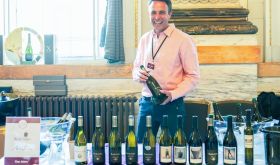
Of course it is the very same company but the wine ranges, and the markets they are aimed at, are quite different. The former are widely available, from supermarkets to speciality shops, but the latter are harder to find, and in a different price range, too. To remind us wine writers about this high-end range, the winery recently organised a vertical tasting they called 'historical tasting' of their Vinos Colección Torres. The objective was to show how these wines have evolved over time. We were lucky enough to have CEO Raül Bobet (pictured) directing the tasting.
Bobet was winemaker at Torres for years, and then technical director. He then, more or less, left the company to start two personal projects, a new venture in Priorat together with Sergi Ferrer-Salat under the name Ferrer-Bobet, where they are producing elegant (within the powerful nature of the area) reds, and his own adventure up in the Pyrenees in Lérida. This is something completely different, Castell d'Encus, where he started making very personal whites from mountain vineyards in the Costers del Segre DO planted with Sémillon, Sauvignon Blanc, Riesling and Albariño! He has recently released some reds made with French grapes, one Pinot Noir, one Syrah, and a typical Bordeaux blend of Cabernet Sauvignon, Cabernet Franc and Petit Verdot. [See my enthusiasm in Great value from Spain – JR]
In the mean time he has secured a new position in Torres, and is now no less than the CEO of the company. He is a much respected figure on the Spanish wine scene, quite a technical guy (with that background, you cannot expect anything else…), but very clear in his explanations, as well as being very honest and candid in explaining some of the things he was asked about. For example, we tasted different vintages of five different labels. For each of them, the alcohol levels had gone up consistently from the older to the newer vintages. When asked about the reason for this, he gave an answer that was clear and straightforward: 'it was the fashion, everybody was looking for more ripeness. It was what the market demanded'.
But he talked mainly about vineyards, about wines coming from a specific place, about homage to the landscape, about… terroir. Along with Sogrape in Portugal, Torres own more vineyard than any other European wine producer – almost 2,600 ha (6,425 acres). [Concha y Toro own almost 10,000 ha in Chile and Argentina, and now Fetzer's in California too, and Foster's Treasury Estates are big vineyard owners in Australia – JR.]
So which wines are we talking about? Well, we tasted two whites, Fransola and Milmanda, and three reds, Mas La Plana, Reserva Real and Grans Muralles. Fransola is mainly Sauvignon Blanc with just 5% of Parellada (early bottlings had some Chenin Blanc but that was discontinued) made without malolactic fermentation to preserve the acidity with the aim of making a fresh white, somewhere in between Sauvignon from Bordeaux and those from New Zealand. Fransola is the name of the vineyard in Penedès.
Milmanda is also the name of a vineyard close to a 12th-century castle of that name in the DO Conca de Barberà planted with Chardonnay. The wine is in the style of a white burgundy, in which we saw the clear evolution from a heavier style in the end of the 1990s – full malolactic, more lees and wood – to a much fresher style in 2008.
Mas La Plana might not mean much to you, but 'Torres Black Label' may well remind you of the famous 1970 Spanish wine that beat some of the top clarets at the 1979 Gault Millau Paris Wine Olympics. Mas La Plana is the vineyard in Penedès next to the family house, and the source of the grapes for this wine. It is 100% Cabernet Sauvignon today but had 10% Cabernet Franc in the 1976 we tried, with prominent American oak notes that reminded us of some classical old riojas in the style of La Rioja Alta.
The 1976 was a very different animal from the 2007, and not only because of the alcohol levels of 12.4% and 14.8% respectively. When we asked about the mid- and long-term evolution of today's wines, Bobet was also quite assertive. 'It won't be the same as in the past. In the past wines needed time, but now nobody wants to wait. Wines are made in a more approachable and immediate style, which means the ageing ability is altogether different'. He also explained, 'from 2008 we have changed the style of the wines. We are clearly aiming to make more elegant wines'. When this is happening in a big house, it is clear that the change is taking place. For a while only the tip of the iceberg was shifting but now it's the whole structure turning, slowly but surely. This is good news, because we are going to see fewer and fewer over-extracted and over-oaked wines and more and more balanced, elegant ones.
Next came two wines made in limited quantities: around 2,000 bottles of Reserva Real and around 20,000 of Grans Muralles, but both with a heavy price tag, retailing in Spain for €168 and €100 per bottle respectively. The story of Reserva Real (Royal Reserve, in case you hadn't guessed) is that in 1992 King Juan Carlos I visited them on their 125th anniversary, and to commemorate this memorable occasion, they decided to make a very special wine from old Cabernet Sauvignon, Merlot and Cabernet Franc from their vineyard Santa Margarita de Agulladolç in Penedès, where the llicorella soils (decomposed slate or schist like those of Priorat), a real rarity in the region, yield no more than 15 hl/ha. As you can guess, the wine is black and powerful.
But it was when he poured the Grans Muralles, made with local grapes, Monastrell, Garnacha Tinta, Garró, Samsó and Mazuelo, in Conca de Barberà, that he revealed some very interesting information and his technical/scientific vein showed at its best. But first, some detail on nomenclature.
Cariñena and Mazuelo are two different names for the same grape, but Mazuelo is more commonly used in Rioja. Then Cariñena is the name of a DO in Aragón, where the grape must have originated, but where you can no longer find a single vine of the variety. So there you go, two names, but the DO Priorat did not like either of them, and banned its wineries from using either name, instructing them to use instead the name Samsó, which they thought sounded better (?). But, hold on… Torres says Grans Muralles contains Samsó and Mazuelo. Aren't they the same (according to the Priorat bureaucrats)? Well, Samsó sounds very much like you'd pronounce Cinsaut (or Cinsault), a grape found... in Châteauneuf-du-Pape. And many of us suspect they are the same grape, with just two different names in the different languages. And Raül Bobet, an authority on the subject, confirmed it: Samsó and Cinsault are the same grape variety! [Or at least, as we will explain in our big grape book out next year, Samsó is a synonym for both Mazuelo/Carignan and for Cinsaut – JR.]
All this talk about the local varieties must have been what inspired Bobet to continue talking about the subject, as they put a high percentage of their resources into R&D, and one of the things they have been doing for quite some time is to rescue forgotten, ancestral grape varieties, collecting up to 23 different varieties from old vignerons (and old vines!), experimenting with them, cultivating them in vitro because all old plants have some kind of virus or other and propagating them. Up to now they have three or four new heritage varieties that they are going to slowly introduce to the blend of Grans Muralles. One of them, to be introduced quite soon, is a variety they want to name Querol, the name of the village in the province of Tarragona where it originates (if they get permission from the mayor of the village, that is).
And the wine? Oh, yes, the 2006 resembled a modern Châteauneuf-du-Pape – but not just any one; my neighbour murmured something about Clos St-Jean's Deus ex Machina – while the 1996 showed more complexity and elegance, also with a Châteauneuf whiff, maybe more in La Nerthe style this time.
My favourites from the tasting? The 1996 Grans Muralles, yes, with its little bit of brett and everything else that added complexity, but was not overwhelming, and the Mas La Plana 1989, very Cabernet, but also Mediterranean, perfect for current drinking – although I must say that (as with other wines) there was some bottle variation. Old wines are not good per se but when they are good, they are very, very good.
Coincidentally I was lucky enough to find a couple of bottles of a Torres label long gone, Gran Magdala, from 1961 and 1978, both vibrant and alive. These were great wines, I would say, made with… Pinot Noir! In fact in 1961 the wine also contained some Monastrell, but both were eminently burgundian, and the 1961 was at the same level as the greatest wines from that (very good) year. Nowadays Torres still make a Pinot, from what must be the same vines since I don't think they have much Pinot, called Mas Borrás, but somehow I feel that it does not reach the heights of these old bottles. I also enjoyed enormously a 1979 Cabernet Sauvignon from Torres' sister company Jean León, which, when poured blind, I identified as 'a Bordeaux from Priorat'. But that, as Kipling would say, is another story since this article is about one of the two Torres.