
‘I have discovered a truly marvellous proof of this, which this margin is too narrow to contain.’ With that remark, scribbled in a mathematics textbook, Pierre de Fermat unleashed a puzzle which would take 358 years to solve.
Known as Fermat’s Last Theorem, it is an ostensibly simple question that is devilishly difficult to answer, not unlike the recently released MW exam questions.

It states that the equation above can never be true where n has a value larger than two. I think it’s something to do with not drinking Chardonnay. Anyway, creating a universal proof for this problem evaded mathematicians for centuries, until the English scholar Andrew Wiles finally managed it in 1995. Combining several arcane mathematical disciplines, including some he had to invent himself, his proof manifested itself in a research paper of 129 pages that took seven whole years to write. Again, not too dissimilar to the MW.
(To find out more about how Fermat’s Last Theorem was solved, try Simon Singh's excellent account – read a summary here.)

Yet despite decades of combined research undertaken by MW students, some of the most fundamental questions in wine remain unanswered. So what are the great unanswered questions of wine? And what would it mean if they were finally solved? Let’s investigate the vinous equivalents of Fermat’s Last Theorem.
1. How does soil influence wine quality?
Until relatively recently, little was understood about what made one wine better than another (assuming we all agree with the consensus opinion about quality in wine – ie one that has complexity, persistence, intensity, balance and reflects its variety/ies and origin/s authentically). Much is made of Romans identifying the prime slopes of the Mosel by observing where the snow first thawed, but proper scientific understanding of viniculture started as recently as the twentieth century.
This has allowed us to understand the impact of clones, rootstocks, training and pruning, vine density, the benefits and drawbacks of fertilisers and chemical treatments, canopy management and harvest methods. Technology has improved winemaking via temperature control, optical sorting, gentler pressing, protective handling and all sorts of other techniques.
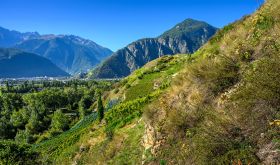
Consequently, we understand how virtually all aspects of climate, variety and human intervention affect wine, but the impact of soil remains largely mysterious. The idea that wine can literally transport flavours from the soil is now largely debunked (see Faith versus fact) yet soil is cited as the most important factor for quality in every fine-wine region across the planet. Indeed, it’s precisely because of this inexplicability that this is the case.

The Rocks District of Milton-Freewater in Washington State
Many experiments have taken place, but nothing has yet been concluded. In the last decade, a German experiment attempted to discover exactly what difference soil made to Riesling quality, when all else was equal. According to this report, the results indicated that:
‘Wines produced on slate were citrussy with markedly sharp acidity. Basalt showed richer fruit flavours and smoother acidity. Limestone showed more intense colour and more tropical fruit and even honey aromas. Sandstone showed mineral and citrus characters on the nose, and pronounced acidity on the palate.’
Does limestone soil really confer deeper colour? Does sandstone always result in more pronounced acidity? If not soil, how else do we account for the micro-divisions within Burgundy and Barolo, or explain why Petrus's ‘exceptional concentration of colour, bouquet, and richness of flavour derives from a pocket of clay in the middle of the vineyard', according to the Oxford Companion? While soil temperature and drainage properties may account for some of these differences, there must be more to the role of soil. Much of the latest research focuses on the role of microbes within the soil, suggesting that the subterranean fauna of a site have a direct impact on grape chemistry. See the Oxford Companion entry on microbial terroir and Microbial terroir: UC Davis leads the way for more on this subject.
If it becomes possible to comprehensively prove how different soil types contribute to quality in wine, then we will be able to gaze upon the face of God. Or Bacchus, anyway.
2. Can bottle variation be controlled?
Surely this is one of the greatest frustrations of wine: the mysterious way in which wine evolves in bottle cannot be discerned until it is tasted. While systems such as Coravin may now allow us to sample wines without breaching the closure, there is still no way of predicting how a wine will age. Bottle variation is therefore a scourge of wine appreciation, making certain bottles better than others.

Wine is a living thing, people say – but it is in fact the exact opposite. Wine is an entirely dead thing, decaying in the bottle, and that decay happens unpredictably. Assuming that all the bottles are filled in a consistent way with the exact same raw material (by no means guaranteed, but it shouldn’t be impossible either) then the essential variables affecting bottle variation are closure and storage conditions.
It can’t be beyond the wit of humanity to devise an experiment that gives both chemical and sensory analysis of different wines that have aged in controlled, varied conditions. Just as with the effects of soil, understanding exactly how and why bottled wine evolves would unlock a huge new chapter in our appreciation in it.
3. Is biodynamic viticulture efficacious?
On the face of it, this should be the easiest riddle to solve, because experiments to test biodynamics are carried out in vineyards around the world on a regular basis. Few if any of them stand up to scientific scrutiny, however. The problem is that measuring organic reactions to homeopathic treatments is very difficult to achieve in controlled conditions. Furthermore, the overall change in attitude that generally accompanies conversion to biodynamic practice is just as likely to make a difference, since it demands an attention to detail that is often missing from conventional viticulture.
From the evidence of the wines themselves, no conclusion is possible. Plenty of the world’s greatest estates are biodynamic, and plenty are not. It’s easy to find examples of biodynamic wines that are excellent, abysmal and everywhere in between. Unpicking all these variables and drawing a conclusion that is both decisive and accurate makes Fermat’s Last Theorem look like a piece of cake.

Of course, whether a solution to these questions would ultimately be a good thing – thereby sacrificing the limitless mysteries of wine for mundane, functional formulae – that is the greatest question of all. Perhaps whoever eventually claims to discover such proof might find that their margin is too narrow to contain it.