We like our wine to be dry, don’t we? Unless of course it is unashamedly very sweet (and even this, alas, is a minority taste). But the supposedly dry wines on our shelves can vary very substantially in how much unfermented sugar they contain – and those that fall between dry and sweet present real challenges.
Sweetness in wine, ‘residual sugar’ or ‘RS’, is usually measured in grams per litre of liquid, although Americans generally express it as a percentage. It is impossible to get residual sugar levels down to zero (wine begins life as very sweet grape juice) but the general threshold of perception of sweetness is around 2 g/l, or 0.2% and most fine red wine is well below this, often below 1 g/l, so don’t taste at all sweet.
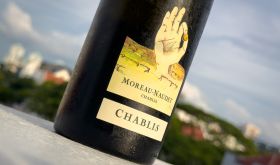
It’s a very different story with mass-market brands, however. Some of them are really quite sweet. Yellow Tail, the archetypal ‘critter’ brand that has been so successful that it now accounts for almost half of all Australian wine imported into the US, is famously relatively sweet – as is one of the most successful brands of California Chardonnay, Kendall Jackson Vintner's Reserve. These brands are likely to notch up sugar levels of at least 5–6 g/l, and some of the California whites naughtily labelled ‘Chablis’, even though it is a controlled geographical appellation in Europe, can notch up well over 10 g/l of sugar, often in the form of deliberately added sweet grape-juice concentrate.
Those who routinely analyse a wide range of wines report that in general inexpensive wines, reds as well as whites and pinks, made in California, Australia, Chile and New Zealand have notably higher sugar levels than Europe’s ‘dry’ wines: 3–8 g/l rather than 1–2 g/l. Because of New Zealand’s relatively high latitudes, acid levels in the grapes tend to be higher than in wine regions closer to the equator. The higher the acid, the less sweet a wine tastes, so New Zealand wines’ sweetness tends to be less obvious than those grown in hotter climes.
Sweetness can be used deliberately by a winemaker to counteract excessively high acidity. Some of France’s cheapest ‘dry’ white labelled Vin de Pays des Côtes de Gascogne from armagnac country, for example, tends to be naturally extremely high in acidity, so winemakers often soften this by boosting the natural sugar level. The same technique may be applied to some of the more commercial whites from Italy, where high yields leave the grapes and therefore wines particularly high in acid. European reds that are sold as dry but often in fact contain up to 8 g/l residual sugar include some of the less artisan wines from Sicily and Puglia in southern Italy.
Another factor that can affect how sweet a wine tastes is temperature. At a recent blind tasting exploring perceptions of sweetness, we were, unbeknown to us, served the same wine twice, once at room temperature and once well chilled. We all thought the chilled version of this sweetish wine (60 g/l residual sugar) was drier than the warmer one because acidity is more prominent at lower temperatures.
Although virtually all red wines are relatively dry, the level of residual sugar in white wines can vary enormously – from under 2 g/l to hundreds of grams per litre in naturally sweet wines made from really ripe grapes. Wines at each end of the sweetness spectrum are generally easy to identify and we more or less know how they are going to taste.
But a considerable proportion of white wines lie somewhere in between dry and very sweet. It can be very frustrating to buy a bottle of wine and find that it is much sweeter (or drier) than expected. The wines of Alsace have been particular sinners in this respect. They can vary from bone dry to medium sweet without any indication on the label to help the consumer – which has driven a handful of producers such as Zind Humbrecht to devise their own systems for indicating sweetness.
Because Riesling wines come in a particularly wide range of sweetness levels, and because, largely thanks to the efforts of Washington state’s dominant wine company Chateau Ste Michelle and their joint venture with Erni Loosen of Germany’ Mosel Valley, Riesling has had a head of steam behind it in the US, an American-based organisation called the International Riesling Foundation has also come up with a graphic to be used on wine labels to show how sweet wines are.
It was to test how well this scale, the Riesling Taste Profile, from Dry through gradations of Medium Dry and Medium Sweet to Sweet, could be applied to a wide, international range of Rieslings that 25 of us tried to grade the sweetness levels of 26 examples ranging in sweetness from 0.92 to 207.50 g/l (see Tasmanian Riesling sweetness workshop.) We were shown International Riesling Foundation guidelines of extreme complexity beforehand that indicated what influence acidity and the level of pH (the intensity of the acidity) should have in addition to the residual sugar level (see below). One of the tasters was Wendy Stuckey, responsible for Chateau Ste Michelle’s highly successful Washington state Rieslings. She confessed that, when deciding exactly which point on the Riesling Taste Profile should be applied to each wine, they took no notice of the complex formulae and did it all on how it tasted to them.

I’m not sure average consumers can be bothered with comparing nuances of gradation – and I'm sure they wouldn't want to see the table above. They probably just want to know whether a wine is Dry, Medium Dry, Medium Sweet or Sweet – and many consumers will already be prejudiced against any wine not in the first category. This is a great shame since many delicious fine white wines taste a little sweet, though, thanks to counterbalancing acidity, are far from cloying. I have listed some of my current favourites below.
The only trouble with medium-dry and medium-sweet wines is working out how to serve them. If, like a German Kabinett and Spätlese, they are low in alcohol, they may well be too light to stand up to anything other than the most neutral white fish dish and are best drunk on their own. But whites such as the richer examples from Austria, Alsace and Tokaj and medium-dry Chenins made in the image of Vouvray have quite enough body to accompany food and can be particularly delicious with rich shellfish, creamily-sauced savoury dishes and smooth pâtés.
MEDIUM DRY TO MEDIUM SWEET RECOMMENDATIONS
These whites taste richer than bone dry and are listed in (very) approximately ascending order of apparent sweetness. Average prices per bottle as calculated by wine-searcher.com.
Millton, Te Arai Chenin Blanc 2009 Gisborne, New Zealand £14
Mullineux 2010 Swartland, South Africa £15
Dr Loosen, Ürziger Würzgarten Riesling GG 2009 Mosel, Germany £22
Huet, Le Mont Demi-Sec 2008 Vouvray, Loire, France £23
Botani Moscatel Seco 2008 Sierras de Málaga, Spain £11
István Szepsy, Estate Furmint 2008 Tokaj, Hungary £20
Dom Zind Humbrecht, Turkheim Riesling 2008 Alsace, France £19
Frankland Estate, Smith Cullam Riesling 2010 Frankland River, Australia £28
Hirsch, Heiligenstein Riesling 2009 Kamptal, Austria £25
Bründlmayer, Heiligenstein Riesling Lyra 2010 Kamptal, Austria £29
Ken Forrester, The FMC Chenin Blanc 2009 Stellenbosch, South Africa £29
A Christmann, Idig Riesling GG 2010 Pfalz, Germany £30
F X Pichler, Durnsteiner Kellerberg Grüner Veltliner Smaragd 2009 Wachau, Austria £43
Dr Loosen, Ürziger Würzgarten Spätlese 2009 Mosel, Germany £16
And Julia recommends:
Monte Cascas Fernão Pires 2009 Tejo, Portugal
Birgit Eichinger, Lamm Grüner Veltliner 2010 Kamptal, Austria
Bründlmayer, Alte Reben Grüner Veltliner 2010 Kamptal, Austria
Bründlmayer, Steinmassel Riesling 2006 Kamptal, Austria
Loimer, Steinmassel Riesling 2010 Kamptal, Austria
Umathum, Gelber und Roter Traminer 2010 Burgenland, Austria