Alice Paillard is the CEO and co-owner of Champagne Bruno Paillard, a still-young champagne house, established only in 1981 by Alice’s father Bruno when he was still in his twenties. Alice joined the business in 2007 and was appointed CEO in 2018. She is one of nine female leaders in Champagne to form La Transmission – Femmes en Champagne, an association created in 2016 to share knowledge with and encourage the next generation of women in the region.
Victoria At what age do you remember being involved in the world of wine?
It’s tricky because I’m certain your body remembers things before your mind does. I was first exposed to champagne during my baptism, with drops of wine on my lips. Growing up in Champagne means you’re surrounded by history, certain types of food, and a certain climate which all shapes your taste. Redcurrants and raspberries are flavours that remind me most of my childhood and they can be tasted in most of my favourite wines, so the preference has stayed with me into adulthood. I associate champagne with lots of history, lots of good friends and important milestones, and feel the culture fosters a strong belief in human resilience which I see in my business.
As you grew up, your father was ambitiously establishing a brand-new champagne house, the first for almost a century. How conscious were you of the significance of what he was doing at that time?
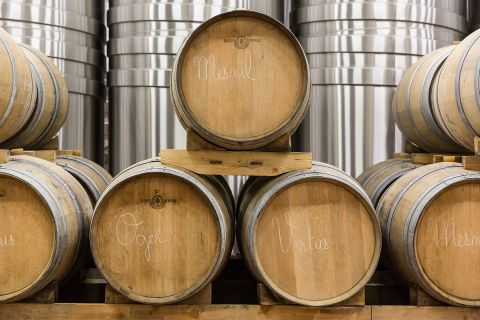
We saw it as hard work, passion and a strong commitment to the wine. My father wanted to produce wine that respected its origin and terroir. My father believed that you could feel this through the wine by selecting the right terroir and working a particular way in the vineyard that brought out these characteristics. They were simple but demanding principles, such as long ageing, that allowed the wines to be Extra Brut in a civilised and authentic manner. In the beginning of the 1980s this was revolutionary but now it’s a classical approach to wine production.
Do you remember when your love of wine began?
Not really. We were allowed to start trying it at the age of seven, only on Sundays and only a small amount, though we could drink it only once we had described what we saw and how it smelled.
After university, you studied management rather than oenology or viticulture. Why?
Studying management was a way of not closing any doors in terms of my future career and stopped me making any hasty decisions. Many things are possible when you have family in the business, so I wanted to have autonomy over my decision and give myself some time. The process of me joining the business therefore ended up being a very gradual one. Since the age of 15, I had a desire to explore and see the world and so I ended up studying in various countries before returning to the family business. I studied in Paris and Italy, then pursued wine studies in Burgundy. I then went on to London for a year then another year in New York before returning to France.
So, you officially joined Champagne Bruno Paillard in 2007?
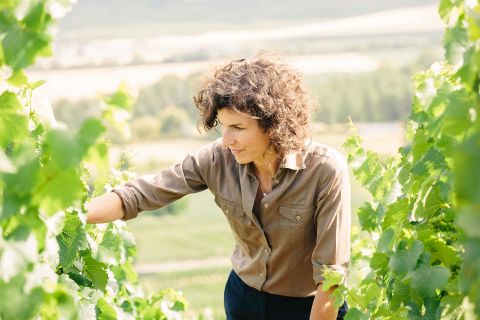
Yes, that’s correct. Initially, I had planned to return later, but my father presented me with an opportunity to join. He asked if I wanted to wait or if he should hire someone else. It was an invitation to come back, and I decided to take on the challenge. I spent the first year working in the vineyards, starting in January. I participated in base-wine tastings, which is a crucial lesson not taught in school. It was a natural process of absorbing the knowledge I was surrounded by since the age of seven which led to me being able to get involved with the decision-making.
Five years later you took on the role of deputy general manager. What did that involve?
It was like doing two jobs in one day – my own work and my father’s work, it was a lot. However, my path through the business and into this role was gradual and natural. We are different individuals, but having the same goals is crucial. If there were disagreements, which were rare, we’d take a break, reschedule tastings, and always come to an agreement. It’s not much different from the dynamics of any couple.
What would you say are the positives and challenges of working in a family business?
Working in a family business is great but it does come with its challenges. For the most part it’s the intensity of passion that brings up most of the positives and negatives, as you are working alongside family and doing something that you love, but then balancing personal and professional life is difficult. I am lucky enough to have three beautiful children, so they make maintaining a balance much easier.
In my younger years, however, it wasn’t easy, especially being one of the first to have children within the family business. There wasn’t a cultural norm or established practice for such situations.
Working in a family business involves a delicate balance. Communication is essential to navigate challenges. Having my mother and siblings who aren’t directly involved in the business adds another layer of respect and consideration during family gatherings. We consciously avoid discussing work during those times to maintain a healthy family life.
You became the CEO in 2018. How has the decision-making dynamic shifted?
My father holds the position of president in the company. I think it was difficult for him to step back from something that he founded and nurtured, but he’s been exceptionally supportive by allowing space for the next generation to carry forward and develop the vision while maintaining the founding principles. The challenge lies in preserving the core values while adapting to the evolving times.
Summarise the ethos of Champagne Bruno Paillard
Champagne Bruno Paillard is guided by a few fundamental principles. Love is a key element, not just love for the product but love for the process, the people involved and the customers. Respect is another core value, instilled from the beginning – respect for the land, the people, and transparency in our actions. Lastly, there’s a deep consciousness of the living nature of what we do, promoting an awareness of our impact and the constant effort to minimise it.
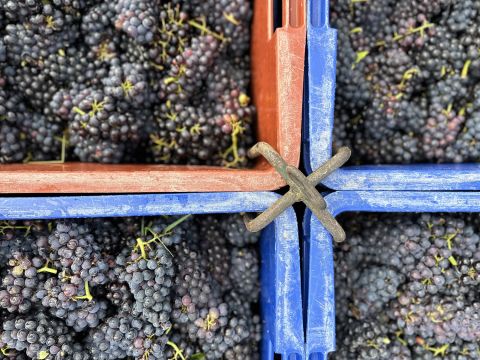
Additionally, our interactions with customers are marked by a shared passion for wine. We intentionally keep our production limited, engaging with customers who share our enthusiasm and values, fostering a connection beyond just a transaction.
What steps have you taken to minimise your environmental impact?
From early on, my father avoided the use of weedkillers and advocated for responsible practices. Recently, we’ve made decisions like discontinuing clear glass production and opting to use practices that are more planet-friendly. Just as we aim to regenerate the life in the vineyards, I aspire to apply the same mindset to every aspect of the business. This involves being aware of our impact and actively seeking ways to minimise and, where possible, regenerate.
What are you planning for the future?
It’s hard to predict in our industry considering how fast things change, especially in this current climate. I don’t mean to say I’m averse to growth, but it must be done for the right reasons and in a manner that is sustainable, not just ecologically, but economically and with all the people involved in mind.

In saying that, one of the significant projects on the horizon is the construction of a new location for our vineyard team. This building will be designed sustainably. The goal is to align our actions with our core values while adapting to the evolving landscape of the wine industry.
Tell us about La Transmission.
La Transmission was founded by a group of women who are now in the middle or towards the end of their careers. It was established because these women felt the need for such a platform when they were starting out in the champagne industry. It’s essentially a support system for women coming into it. It’s a tribute to the women who founded it initially – Evelyne Boizel, former CEO of Champagne Boizel, Krug’s CEO and president Maggie Henriquez, and Anne Malassagne, former owner of Champagne Lenoble. The association speaks about champagne in a very integrated manner. La Transmission represents different territories, types of producers and generations of women. We organise events and have discussions. We have common values but different perspectives, which makes it interesting. It’s a place where we can speak very openly, with no ego, and we work together.
Our events are designed to appeal to students, particularly those in hospitality and general education. Our workshops are small-scale and interactive, with a focus on specific topics like the impact of glass shape on the taste of wine. For instance, during the upcoming event, we plan to conduct several workshops, each accommodating around 20 participants. It’s not just about the theoretical aspects; we want attendees to experience and engage directly with the subject matter. We believe in fostering direct connections and counteracting some misconceptions about the champagne industry. We want to emphasise that it’s not just about the product but also about the people behind it. That’s why, during our tastings, each of us is present at the tables, engaging with attendees.
If you were able to make wine in another region, which would tempt you?
There are many regions that I’d love to visit, for example there are some wines from the Greek islands or Etna which have impressed me. However, to make wine, I only want to be in Champagne. I think what’s important to remember is that the wine from Champagne is what it is today because people have always adapted to necessity, and I want to face that and be a part of what we create next.
What wine is currently in your fridge?
I always keep a bottle of Première Cuvée Rosé by Champagne Bruno Paillard, of course, in my fridge. I call it my ‘24/7 bottle’ for any occasion! Although recently, I discovered a wonderful St-Émilion from Laurent Closel, a small producer. He has been growing his grapes organically for 15 years and we know that there are some incredible wines in Bordeaux, but it’s the smaller producers who suffer when times are hard. It was a very beautiful discovery and one I’m very happy about.
If you could give advice to your younger self when you joined the family business in 2007, what would it be?
I would tell my younger self to relax, take your time and breathe. Many of the challenges, at least in my case, were internal, within my own mind. Realising this allows for a different perspective and approach to challenges. To those starting out in the industry, embrace challenges, breathe and allow yourself to think differently. The connection between people and their surroundings is profound, and it’s essential to be a part of the ever-evolving narrative of winemaking.
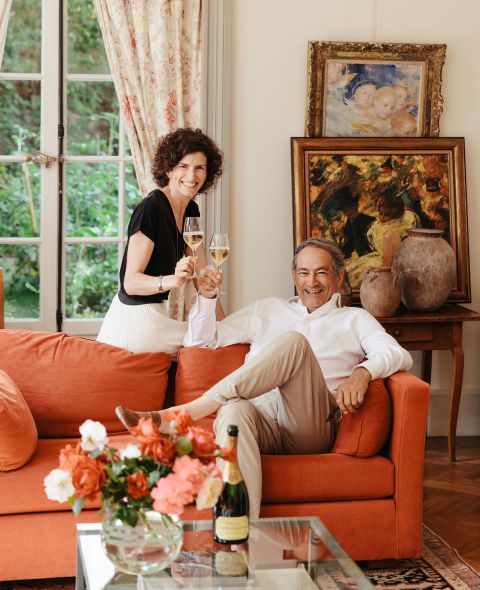
To read the entire interview, go to Bordeaux Index. You can also access more than 50 tasting notes for Bruno Paillard champagnes in our database, and watch for more in our upcoming sparkling-wine coverage this December.